A child sits at a small desk in Neuchâtel. Under the clothes there is no heart. There is a stack of sculpted brass.
When the mechanism is well, the figure dips a goose quill, shakes the excess, and writes. The eyes follow the line. The head tips toward the inkwell when the pen needs more. Demonstrators have sometimes asked it for a philosophical sentence, including Descartes’s I think, therefore I am, because the joke is almost too neat. The machine can be set for other strings. The Writer, built at La Chaux-de-Fonds between 1768 and 1774 by Pierre Jaquet-Droz, his son Henri-Louis, and Jean-Frédéric Leschot, stores a text of up to forty characters on a selection wheel and a cam program. Change the setting, and the same wrist writes a different hospitality.
That is the cleanest definition of an automaton this page needs. It is a self-moving performance with a script already cut into metal, wood, water, or air. It does not look around and decide. It repeats. We do the deciding. We decide it looks like intention.
A modern robot, in the engineering sense, is a different animal: sensors, computation, a chance to change the plan. Casual speech mixes the words. The workshop does not have to. The Jaquet-Droz Musician still presses real keys. The Draughtsman still blows imaginary dust from a pencil line. As of 2026 the Writer itself has been out of running order at the Musée d’art et d’histoire, waiting on a difficult repair, which is an oddly perfect afterlife for a machine whose whole point was never to get tired.
A Cam Is a Gesture You Can Hold
Clockwork automata share a small grammar.
A spring or a falling weight stores the argument. A gear train spends it slowly. A pinned cylinder, cousin to the barrel in a music box, trips levers on a schedule: a note, an eyelid, a bow. The figurative masterpiece is the cam, an uneven disk. A follower rod rides its edge. A rise lifts a forearm. A dip lets the wrist fall. Three cams on one axle can be a handwriting: left-right, near-far, and the pressure that makes a downstroke darker than an upstroke.
If that sounds like computing, it should, a little. It is not a chip. It is a three-dimensional graph of a movement, filed in brass. The clockmaker is not pretending to grow a soul. The clockmaker is carving the shape of a habit so that a public will supply the soul for free.
Hero of Alexandria, in the first century, had already used draining sand and wound cords to run miniature temple theatre: doors, libations, figures that enter and leave on a timer. In 1206, Ismail al-Jazari, engineer to an Artuqid court at Diyarbakır, described water clocks and serving devices in a book that is part workshop manual, part court spectacle. The famous Elephant Clock is a diplomatic pageant in hydraulics: a sinking bowl, falling balls, a mahout who strikes, a cycle that resets. These are not “early robots” in the science-fiction sense. They are timed ceremonies. The later Swiss androids inherit the same appetite: make matter rehearse a social act until the room applauds.
The Duck That Lied, and Why That Helped
Jacques de Vaucanson, showing in Paris in the late 1730s, wanted more than a pretty bow.
His Flute Player blew a real transverse flute. Bellows, lips, tongue, fingers: the point was that the sound came from the instrument, not from a hidden organ in the pedestal. The Digesting Duck of 1739 was the scandal. Gilded copper, hundreds of moving parts in the wings, a bird that drank, swallowed grain, and later produced a pellet that looked like the end of a meal.
It was not a meal. Grain went into one chamber. A prepared pellet left from another. Jean-Eugène Robert-Houdin later described the cheat, and historians have been grateful. The Enlightenment public was not simply gulled. It was hungry for the idea that digestion might be machinery you could open. A theatrical pouch is a disappointing viscera. It is a superb advertisement for a century that wanted nature to be intelligible.
The duck still matters because it draws the ethical line automata keep crossing. How much of the living process are you willing to fake in order to make the living process thinkable? The Jaquet-Droz Writer fakes less. It really writes. It does not think. Vaucanson’s duck faked the part audiences most wanted to believe.
The Machine That Named Its Maker
Around 1800, Henri Maillardet, who had trained in the Jaquet-Droz world, built a draughtsman-writer that now lives at the Franklin Institute in Philadelphia.
In November 1928 it arrived ruined, fire-scarred, the kind of brass wreck that looks like a closed case. Staff, notably the mechanic Halsey T. Roberts, put it back together without a maker’s manual. When the cams finally turned, the figure produced its stored repertoire: four drawings, three poems. In the border of the last poem it wrote, in French, that the text had been written by Maillardet’s automaton.
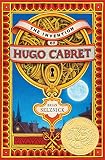
The donors had associated the wreck with other showmen. The machine filed a correction. Memory, in this family of objects, is not a mood. It is a stack of profiles that will still describe a letter after the workshop is gone and the costume has been changed. Later restorers, including Andrew Baron in 2007, had to recover even the mannerisms of the head and eyes, which had gone missing under earlier repairs. Brian Selznick saw the Philadelphia figure and wrote The Invention of Hugo Cabret. The novel and Scorsese’s Hugo are not documentaries. They are what happens when a culture recognizes the plot: a damaged child-machine that still knows a name.
If you want a dinner-table fact from this whole territory, that is the one. The automaton did not “remember” in the human sense. It performed a sequence that included a signature. The signature was enough.
Other Rooms, Same Argument
Not every masterpiece is a child at a desk.
The Silver Swan at the Bowes Museum, associated with John Joseph Merlin and James Cox and dated to the early 1770s, is life-sized silver on a stream of twisting glass rods. It preens, notices a fish, and strikes. Three clockwork trains keep the music, the water-lie, and the neck from arguing. You do not need a face. You need grace that should be impossible in metal.
Edo Japan built a parallel tradition under the name karakuri ningyo, dolls of hidden mechanism. The tea-serving chahakobi ningyo is a piece of hospitality engineering. The weight of a cup releases an escapement. Whalebone or spring power, wooden gears, a glide across tatami, a nod. Remove the cup and the doll stops. Return the empty cup and, in the classic telling, it can turn and go home. The point is not a European android’s uncanny portrait. The point is a guest ritual that happens to be wound.
Wolfgang von Kempelen’s Mechanical Turk, shown at Schönbrunn in 1770, belongs here as a warning label. The cabinet was opened. Gears were visible. The turbaned figure played chess against famous men. The mind was a person on a sliding seat, reading the board through magnets, driving the arm with a pantograph. Edgar Allan Poe, in 1836, argued in print that human reason was not going to fall out of a gear train. He was working from exhibition, not from a dismantling, and he still got the category right. The Turk is not an automaton that thinks. It is a theatre that uses the prestige of automata.
The Jaquet-Droz shop also helped make the singing-bird box, a luxury the size of a palm: a lid, a feathered thumb of a bird, a bellows and a sliding-piston whistle that can warble without a second bird in the room. It is the automaton argument miniaturized. You do not need a child-sized android. You need a beak that opens on time.
Later kinetic artists keep the wager without always keeping the court costume. Jean Tinguely’s machines look nervous on purpose. Arthur Ganson’s Machine with Concrete runs a motor through so many reducing gears that the last wheel, set in a block, is effectively immortal and still: a joke about time that a cam stack would recognize. Theo Jansen’s Strandbeests walk Dutch beaches on wind and plastic tubing, using a cranked leg of measured links. Movement itself becomes the subject. The cam, the crank, the eleven-bar stride: still a script. Still an audience leaning in.
Literature noticed immediately. E. T. A. Hoffmann’s Olympia in The Sandman (1816) is a social disaster about a man who cannot tell a workshop product from a person. Collodi’s Pinocchio wants the opposite miracle, wood into conscience. Those stories are not proofs. They are what the machines do to us after the demonstration ends.
What the Key Is For
We do not build automata because we lack computers. We build them because a predetermined gesture, executed in matter we can name, is a peculiar kind of honesty.
The Writer does not believe Descartes. The swan does not want the fish. The tea doll does not love the guest. Maillardet’s figure did not miss its maker. Each of them will do the beautiful thing anyway, for as long as the spring and the restorers agree.
That is why the cabinet of curiosities wanted them, why carnival architecture still borrows their timing, and why a child in a museum still waits for the eyes to move. The art is not that brass is alive. The art is that we are so ready to forgive it for not being.