In 1822, in Paris, Louis Daguerre and Charles-Marie Bouton opened a theatre that did not need actors.
The thing they named a diorama (through-view) was a giant painting on translucent linen, lit from the front and the back in sequence. Crews opened and shut skylights and lamps so a cathedral interior could pass from daylight to candlelight on the same cloth. Audiences sat in a rotating hall and watched weather happen to a picture. Photography was still years away. Daguerre would later put silver and mercury to work. First he put a building on a hinge of light.
The museum alcove most people now mean by “diorama” is a grandchild of that trick, not a copy of it. A panorama wrapped the viewer in a cylinder of paint. A habitat case frames a bounded foreground of dirt, plants, and mounted animals, then spends its genius on the moment those solids meet a curved painted sky. If you can find the join, the spell is over.
The animal as sculpture
Nineteenth-century museum mammals were often upholstery. Skins went over straw and wire until the creature looked like a sofa in a pelt. Carl Akeley (1864–1926) treated the carcass as a problem in anatomy. He modeled muscle in clay over bone, cast a mannequin, and dressed it with the skin so a tendon still seemed to pull. In 1890, at the Milwaukee Public Museum, his muskrat group put the animals back into water, lodge, and food: a small ecology instead of a trophy on a stick.
The American Museum of Natural History’s Akeley Hall of African Mammals is the large version of that idea. Expeditions measured ground and light, sometimes with the same violence toward animals that the finished hall then asks you to mourn as habitat. Botanical workers molded plants. Landscape painters (James Perry Wilson, William R. Leigh, Francis Lee Jaques among them) built the weather on plaster. Stephen Quinn’s Windows on Nature, written from inside that museum, is still the clearest account of who did which labor. Akeley died of fever on Mount Mikeno in 1926 while gathering for the gorilla group, and was buried on the mountain. The hall opened without him. You still meet the gorillas in a late afternoon that does not move: real moss and dust in front, a painted range behind, the city audible once you remember to listen.
That stillness is not a failure of cinema. It is a different contract. Film decides your looking. A diorama lets you hunt lichen on a rock for as long as your feet hold. Deep time in a fossil hall is a sequence of extinct bodies. A habitat case tries to hold one living second of a place that collecting had already begun to empty.
The seam called the tie-in
The optical crime is the tie-in: where three-dimensional ground meets the backdrop.
Foreground earth is often pitched slightly up so it meets the painted horizon at the visitor’s eye. Logs and shrubs are parked on the crack. Pigment is mixed under the same lamps that will light the finished case, because gallery light is not window light. Wilson, who had trained as an architect, treated the concave plaster as a projection problem. Straight geology painted as if the wall were flat will bow. He laid grids that looked drunken on the curve: stretched near the edges, pinched toward the center. From the one permitted standing place, those drunk lines become a level lake. Take two steps to the side and, if the glass allowed you, the horizon would start to sulk. The hall does not allow you. That is part of the craft. Forced perspective elsewhere in art is cousin to this. Here the viewer is not allowed to walk around the lie. The glass and the darkened hall nail you to the one angle that makes the mathematics kind.
Light has to be a single weather. Physical branches cast real shadows. Painted clouds have painted ones. If the attic lamps above the glass ceiling do not match the implied sun, the eye files a complaint before the mind has a word for it. Color temperature is part of the fiction: amber for a low desert afternoon, colder daylight for ice. None of the fixtures should be visible. The diorama is allowed to have a sun. It is not allowed to have a bulb.
Leaves that cannot rot
Live plants in a closed case become compost and insects. So the foliage is made.
Workers took plaster molds from living leaves, pressed wax, celluloid, or acetate, wired stems with copper so they would hang with weight, and painted veins in oil. Rocks are plaster and burlap over mesh, dusted with real grit. Water is resin and acrylic, sometimes with silicone wrinkling. Snow has been crushed glass and marble dust, chosen because it will not yellow into cake frosting in a decade. A single tree can be months of botanical labor. The “wild” cane in the foreground may be more handmade than the painted volcano.
Human scenes have a harsher history. World’s fairs and older ethnographic halls put living peoples into cases as if culture were a habitat like muskeg. Museums have had to unlearn that. Archaeological reconstructions (a workshop, a vanished street) are a different, still arguable, use of the same optics. The craft is not innocent just because the gorilla group is beautiful.
Rooms an inch to the foot
Between 1932 and 1940, Narcissa Niblack Thorne directed sixty-eight miniature period rooms, now at the Art Institute of Chicago, at 1:12 scale: one inch for a foot. Petit-point rugs with stitches that behave like fabric instead of paint. Brass hardware that could almost be jewelry. Windows with little painted courts lit from behind so the “daylight” has a direction. A French salon with parquet from real oak, cut small. A New England kitchen with herbs on a rafter you could pick up between finger and thumb.
There are no dolls. A chair is left out from a desk. The emptiness does the acting. You supply the person who just stood up, which is why the rooms feel slightly haunted without a ghost story attached.
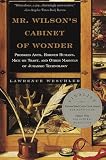
Joseph Cornell’s shadow boxes, assembled in a Queens basement from hotel labels, corks, and star maps, are not habitat science. They are the diorama’s private cousin: a glassed world that admits it is a poem. Lawrence Weschler’s Mr. Wilson’s Cabinet of Wonder walks the same border at the Museum of Jurassic Technology, where the voice of scholarship and the voice of fable share a vitrine. Useful, if you have just come from Akeley Hall and need to remember that belief at the glass is always a negotiation.
Conservation is the last craft. Dust on a gorilla’s hair is a historical object. So is fading in a sky Wilson mixed for lamps that have since been replaced with new spectra. Preparators argue about whether to “restore” a 1920s afternoon or to keep the afternoon the 1920s actually painted. The frozen second is aging in real time.
When you next stand at a habitat window, do not start with the animal’s face. Start at the horizon. Run your eye along the place dirt should become paint. If you cannot find it, someone did weeks of work so you would fail. If you can, you have learned the diorama’s actual subject: not Africa, not a French cathedral on linen, but the human appetite for a world that holds still long enough to be believed.