On the Berwickshire coast, at Siccar Point, two kinds of rock meet in an argument you can stand beside.
Vertical greywacke, already ancient when it was standing on end, had been worn down to a stub. Horizontal red sandstone was laid over that stub like a new floor. James Hutton looked at the join in the late eighteenth century and understood that he was not seeing a week of weather. He was seeing deposition, mountain-building, erosion, and deposition again: a sequence that refused to fit inside a chronology measured in thousands of years.
In 1788 he wrote that the result of the enquiry was “no vestige of a beginning, no prospect of an end.” The phrase is famous because it is slightly terrifying. Deep time is not a poetic mood. It is the admission that Earth is 4.54 billion years old, that recorded human history is a rounding error on that clock, and that the meadow under your shoes is the roof of other climates.
The history of life on Earth is what happened in those climates. It is not one story with dinosaurs in the middle. It is a stack of planets that used the same globe.
How a Dead World Leaves a Receipt
Nicolas Steno, in 1669, gave later geology three working habits that still hold in undisturbed sedimentary rock. Older layers lie below younger ones. Sediments are usually deposited flat, so a tilted bed has been through trouble since. A layer that stops did not evaporate; it thinned, hit a shore, or changed character.
William Smith, walking canal cuttings in the 1790s, added the biological key. Particular fossils travel with particular beds. Match the fossils, and you can correlate a cliff in one county with a cutting in another. The rock becomes a library whose volumes have been shelved by death.
Absolute numbers arrived later, when radioactive decay became a clock. Uranium-lead in zircon, potassium-argon and argon-argon in volcanic crystals: these date igneous events, not the mud that holds a bone. Paleontologists therefore bracket. A fossil in sandstone is younger than the ash below it and older than the ash above it. Carbon-14, with a half-life of 5,730 years, is almost useless for dinosaurs and indispensable for the late Ice Age.
None of this reconstructs a living animal by itself. It only proves that the animal’s world had a place on the calendar.
The rest is forensic: what can be asked of a fragment, and what must be confessed as unknown.
A Mudslide Full of Impossible Animals
In 1909, Charles Doolittle Walcott began collecting from a deposit in the Canadian Rockies now famous as the Burgess Shale. The rock is not impressive until you realize what it kept. Soft parts that usually rot, guts, gills, and the thin film of a body plan, were buried fast enough to become a Lagerstätte: an exceptional window, not a typical graveyard.
The Cambrian seas, around 500 million years ago, were already a theater of predation and armor. Anomalocaris swam with flaps and a circular, plated mouth. Opabinia carried five stalked eyes and a nozzle like a mistaken trunk. Hallucigenia was reconstructed upside-down and backward for years, a worm that science had accidentally stood on its head, until later microscopy found the face and put the spines on the correct side of the animal.
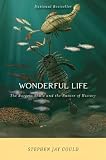
Stephen Jay Gould’s Wonderful Life made the Burgess a public parable about contingency: if you replayed the tape, other body plans might have inherited the Earth. Later work has argued with Gould’s taxonomy. The fascination survives the argument. These are not failed drafts of lobsters. They are working animals from a world whose water, chemistry, and food webs are gone.
You do not need a complete geologic timetable in your pocket to feel the shock. You need one slab, one ridiculous silhouette, and the knowledge that it is not a fantasy drawing. It is a receipt.
The official calendar still helps as a set of doors, not as a recitation. Cambrian seas invent hard parts and predation. Ordovician and Silurian waters grow reefs and the first convincing land plants. Devonian fishes include armored giants such as Dunkleosteus, while lobe-finned cousins such as Tiktaalik test the mud at the edge of rivers. Carboniferous swamps stack the coal. Permian Pangaea dries the interiors and raises saber-toothed gorgonopsians before the Great Dying. Triassic, Jurassic, and Cretaceous then spend 186 million years arguing about who owns the sunlight. After Chicxulub, the Paleogene and Neogene belong increasingly to mammals, grasses, and whales. The Quaternary is ice, megafauna, and us.
Other windows as sharp as the Burgess exist: Chengjiang in Yunnan, Solnhofen in Bavaria, the feathered Cretaceous beds of Liaoning, the Eocene oil shale of Messel, the asphalt of La Brea. Each is a local accident of burial. Together they are why we can pretend, briefly, to have seen a world.
Forests That Became Fuel, and a Dying That Almost Emptied the Sea
Move the camera forward into the late Paleozoic and the planet grows humid along equatorial belts. Scale-trees and giant horsetails stand in swamps whose fallen trunks, buried wet and starved of oxygen, accumulate as the raw material of coal. Oxygen in the Carboniferous air was higher than today’s roughly 21 percent. Insects and other arthropods, which do not ventilate lungs the way we do, reached sizes that look like illustration errors: griffinflies with wings wider than a dinner plate, millipede-relatives more than two meters long.
This is a lost world you can still burn. The Industrial Revolution ran, in part, on sunlight stored in those swamps.
Then the Permian ends badly.
About 252 million years ago, the Siberian Traps poured flood basalts across a huge province of northern Pangaea. Magma found coal and other buried carbon. Greenhouse gases, warming, acidifying water, and marine anoxia followed on a scale that makes ordinary catastrophe language feel shy. More than 90 percent of marine species disappear from the record. On land, a majority of vertebrate families go with them. Dimetrodon, the sail-backed synapsid people still casually file under “dinosaur,” had already lived and vanished tens of millions of years before the first true dinosaurs. It belongs to our own deeper family tree, the line that will eventually produce mammals, and it died in a world that was not yet theirs.
The Great Dying is the closest complex life has come, in the fossil record, to being erased. Recovery was not a sequel. It was a different casting call.
The Long Afternoon of Reptiles, and the Morning After
Dinosaurs did not stroll into an empty set. After the Permian, archosaurs argued over the wreckage. Crocodile-line beasts held a great deal of the Triassic. The end-Triassic extinctions, tied to the volcanic opening of the Atlantic, cleared enough space that dinosaurs inherited the better rooms.
What followed was not one Age of Reptiles but three climates. Triassic Pangaea was harsh and seasonal. Jurassic continents pulled apart into wetter forests of conifer, ginkgo, and cycad; sauropods became walking weather systems; Archaeopteryx in the Solnhofen limestone kept teeth, a long tail, and feathers that already knew how to be a wing. Cretaceous seas drowned the interiors of continents. Flowers appeared and remade insect life. Horned faces and duck-billed crests diversified on floodplains. Tyrannosaurus is a late, local specialist, not the mascot of 180 million years.
Marine reptiles, meanwhile, were never dinosaurs. Ichthyosaurs, plesiosaurs, pliosaurs, and, much later, mosasaurs are separate returns to the sea, with paddles and, in several lineages, live birth. The ocean had its own lost worlds stacked under the terrestrial ones.
Sixty-six million years ago a carbonaceous asteroid, perhaps six miles across, struck the Yucatán. The Chicxulub impact is the celebrity ending, and it deserves the fame: fire, darkness, a collapse of photosynthesis. Non-avian dinosaurs, pterosaurs, ammonites, and the great marine reptiles go. Small, stubborn things remain: some birds, crocodilians, turtles, and mammals that had spent the Mesozoic being nocturnal footnotes.
The Cenozoic is their radiation. Whales become whales in a hurry, geologically speaking. Grasslands open. Ice ages later assemble mammoths, saber-toothed cats, and ground sloths the size of mistakes. Then humans arrive and the extinctions start carrying our fingerprints as well as climate’s.
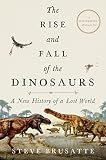
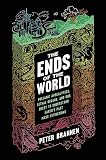
If you want the dinosaur story as a continuous narrative, Steve Brusatte’s The Rise and Fall of the Dinosaurs is built for that walk. Peter Brannen’s The Ends of the World stays with the five major dyings. Thomas Halliday’s Otherlands tries something rarer: to make sixteen extinct ecosystems feel like places with weather.
What a Bone Will Not Confess
A skeleton is an argument about joints, not a photograph of an animal.
Muscle scars suggest bulk. Trackways give speed and whether anyone walked together. Coprolites are rude and useful. Isotopes in enamel can hint at diet and travel. Soft tissue is a lottery: a feather film in volcanic ash, a nodosaur so complete it still has a color strategy.
Lawrence Witmer’s phylogenetic bracketing is the grown-up version of “what did it look like?” If the closest living relatives on both sides of an extinct animal share a trait, that trait is a reasonable default. For a non-avian dinosaur, the living brackets are birds and crocodylians. Air sacs that invade bone, for example, are not a paleoartist’s whim. They are an inherited possibility with evidence.
Color, for a long time, was considered gone. Then researchers found melanosomes, the tiny pigment organelles, preserved in some feathers and skins. Sinosauropteryx came back with a ginger-and-white tail. Microraptor came back glossy black. These are not palette picks. They are organelles.
The reconstructions still change, and they should. Early public dinosaurs at Crystal Palace, modeled by Benjamin Waterhouse Hawkins in the 1850s, were mammal-shaped lizards because that was the anatomy on hand. Charles R. Knight later put leap and muscle into museum halls. The late-twentieth-century “shrink wrap” habit pulled skin tight over every hole in the skull, as if cows had no lips. All Yesterdays (2012) made that habit look as silly as it was. The longer visual story belongs to The History of Paleoart. This page only needs the moral: a drawing is a hypothesis wearing paint.
Museum dioramas, from Carl Akeley and James Perry Wilson onward, added another hypothesis: that a lost world can be entered as a room. That is theater. It is also one of the few ways a human body can stand at the correct scale beside a vanished climate.
The Fiction That Would Not Leave the Fossils Alone
Once the nineteenth century had deep time, it needed doors back into it.
Jules Verne sent a professor down a volcanic throat to a subterranean sea. Arthur Conan Doyle put a plateau above the Amazon clouds and dared an expedition to climb into the Jurassic. Edgar Rice Burroughs mapped evolution onto the geography of an island. Willis O’Brien and Ray Harryhausen later made the climb kinetic: Kong’s island, Gwangi’s valley, the pleasure of a creature that throws real shadow on a miniature tree.
Michael Crichton and Steven Spielberg’s Jurassic Park is not important because it “has dinosaurs.” It is important because it arrived after the Dinosaur Renaissance and insisted the animals be fast, bird-hipped, and smarter than a swamp legend. The genetics are a plot engine. The cultural shift is the point.
The spatial myths, tepui, hollow earth, fog-bound island, are mapped in The Geography of Lost Worlds. Speculative evolution, the disciplined game of inventing plausible futures or aliens, is a different sport from paleontology and is treated in The Art of Speculative Evolution. Cryptozoology that claims a sauropod in a living swamp is not a third scientific method. It is a refusal to let the fossil record be enough.
The fossil record is enough. It is also incomplete on purpose. Most lives become nothing. The few that become stone are the ones we use to accuse the rest of the planet of having been here.
The Ground Is Temporary
Hold an ammonite, if you ever get the chance, and follow one suture with a fingernail. That zigzag is the wall of a buoyancy chamber. The animal is gone. The geometry is not.
Hutton’s unconformity, Walcott’s shale, a coal seam, a shocked quartz grain from Chicxulub, a ginger stripe in a feather: these are not decorations for a timeline graphic. They are the only reason the phrase “lost world” is more than a mood.
Egyptian funerary books, treated in the Egyptian underworld essay, tried to get one person through a night. Deep time is the opposite scale. It does not care about one person. It will still let one person stand on a coastal join of rock and feel, briefly, the vertigo of a planet that has already been many planets.
A field, a city park, a museum hall of hanging hips: all of them are roofs. Under them there were other weathers, other lungs, other colors we are only beginning to recover. The present biosphere is not the setting of the story.
It is the latest draft that has not yet been filed in stone.