In 1586, Mary Stuart, Queen of Scots, believed she was writing in a private language.
She was using a nomenclator: a mix of cipher alphabet and code names for people. Sir Francis Walsingham’s office intercepted the packets, and Thomas Phelippes, a decipherer with a gift for other people’s habits, read them. He is widely held to have added a forged postscript asking for the names of the conspirators in the Babington Plot. The letters were not “decoded” in a flash of genius so much as processed: copied, compared, and turned into a brief that a courtroom could read. Mary was tried on the recovered meaning of her own correspondence, including the trap that may not have been hers. The paper still looked like paper. The secrecy had already been spent.
A lock is not an alphabet
A code replaces words or ideas (a plan becomes a single agreed token). A cipher replaces letters or bits by a rule. Steganography hides the existence of a message: invisible ink, a microdot, a sentence whose first letters spell another sentence. Encoding (Morse, Braille, an alphabet) is a public transformation. It is not a lock. Tolkien’s Elvish scripts, runes on a tourist mug, and a child’s pigpen alphabet are writing systems or games until someone treats them as keys.
The fingerprint in the letters
In ninth-century Baghdad, the philosopher and polymath al-Kindi described what later Europe would keep rediscovering: in a given language, letters do not appear equally often. If your cipher is a simple substitution, the most common ciphertext symbol is probably the most common plaintext letter. Count. Guess. Peel. Arabic scholarship on this is not a footnote to a Roman emperor’s toy shift. Frequency analysis is why “Caesar ciphers” die as soon as the message is long enough to have a personality.
Polyalphabetic systems (Giovan Battista Bellaso’s work, later wrapped in the name Vigenère) rotate the substitution so that E is not always the same mark. They postponed the autopsy. They did not abolish pattern. A repeated key is a repeated weakness. The one-time pad, used correctly, is the rare case of a cipher that does not give the enemy a statistical handle. Used twice, or with a key that is a quotation, it becomes a puzzle again.
Invisible ink and blank-looking paper belong to the other family. Heat, reagents, and suspicion turn them back into mail. The Babington letters were not magic. They were logistics plus a man who liked counting.
Machines, huts, and other people’s nights
The German Enigma machine of the Second World War dressed a polyalphabetic nightmare in rotors and a plugboard. Each keypress advanced the rotors, so the same letter was not allowed to mean itself in a simple, repeating way. Operators still had habits: repeated weather reports, stereotyped addresses, the itch to begin a daily key with a name. Those habits were as useful as the wiring diagrams.
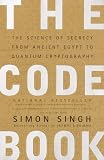
Polish cryptologists (Marian Rejewski, Jerzy Różycki, Henryk Zygalski) reconstructed the machine’s mathematics in the 1930s, before Britain turned a Buckinghamshire estate into a campus. Bletchley Park is photographed as a country house. It was a shift system: huts, intercepts, bombes, punched cards, and thousands of people (many of them young women) who could not tell the truth in a pub. Sinclair McKay’s The Secret Life of Bletchley Park is useful because it keeps the bikes, the cold, and the unclassified boredom next to the legend.
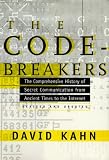
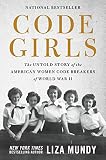
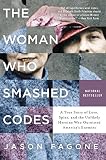
The American story is not only Arlington Hall’s echo of that work. Liza Mundy’s Code Girls follows the recruitment of women into offices that broke Japanese and German traffic while popular memory kept a few male mathematicians in the frame. Elizebeth Smith Friedman, long before the Park became a heritage brand, sat in Washington offices reading rum-runner and wartime traffic the public was not supposed to know existed. She did the counting. Her husband William got more of the official statues. Jason Fagone’s The Woman Who Smashed Codes is useful because it restores the desk, not a myth of a lone savant. David Kahn’s The Codebreakers remains the book that treats this as a profession rather than a riddle page.
None of that is a complete history of cryptology. It is enough to kill the movie version in which one lonely genius stares at a chalkboard until the war ends.
A language is not a rotor
The Navajo Code Talkers of the U.S. Marine Corps in the Pacific used Diné Bizaad, an Athabaskan language with a grammar and a community that existed long before the Corps needed a field code. Military terms that had no everyday Navajo equivalent were assigned words by agreement (a kind of codebook in the head). This is not “a cipher based on Native mystery.” It is a living language, used under fire, by speakers whose country had spent years punishing children for using it in schools. The unbreakability, in practice, came from the combination of linguistic distance, training, and the absence of published keys in Tokyo. Speak of it as labor and as Diné history, not as a prop in a general romance of secrecy.
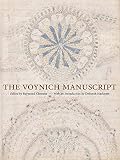
The Voynich manuscript (Beinecke MS 408) sits at the other end of appetite. It looks like a cipher or an unknown script, with plants that do not settle into a flora. It may be encoded, invented, or a sophisticated nonsense. Facsimiles let you look. They do not let you win. Unfamiliar writing is not automatically a lock. Sometimes it is a book whose purpose we have not earned.
What you can take away from a desk in 1586 or a hut in 1943 is a perceptual habit. If a message was meant to be read by someone, it has a pattern. If it was meant to be missed entirely, the pattern is somewhere else: in the paper, the timing, the courier. Secret writing always leaves two lives. One is the intended sense. The other is the residue of the hiding. The second life is what Phelippes was paid to love.