There is a distinct, private appetite that leads a reader to search for a book like Alice in Wonderland.
It is not simply a desire for talking rabbits, pocket watches, or eccentric tea parties. It is the suspicion that our ordinary waking logic: the predictable chain of cause and effect, the tidy definitions in dictionaries, the straight angles of street grids: is only one possible way a world can behave.
When Lewis Carroll sent seven-year-old Alice tumbling down the rabbit hole in 1865, he did not write an escape from thought. As an Oxford mathematics lecturer, Charles Lutwidge Dodgson understood that literary nonsense is not the absence of logic; it is logic pushed so far that it turns inside out.
THE SPECTRUM OF LITERARY WONDERLANDS & PORTAL ODYSSEYS
Victorian Nonsense & Logic Inversion
Lewis Carroll · Norton Juster · Mervyn Peake
Mathematical paradoxes, literalized idioms, and rigid chess-board social structures.
Labyrinthine Otherworlds & Strange Portals
Catherynne M. Valente · Neil Gaiman · Clive Barker
Green wind thresholds, button-eyed mirrors, and dream archipelagos.
Philosophical Parables & Linguistic Play
Walter Moers · Jasper Fforde · Haruki Murakami
Book-eating shadow worlds, BookWorld police bureaus, and subterranean well portals.
Gothic Subversions & Dark Reveries
Clive Barker · Kelly Link · Guillermo del Toro
Uncanny threshold creatures, pocket universe dimensions, and bittersweet awakenings.
In true nonsense literature, words become physical objects. If you tell a character to “take a seat,” they might pick up a wooden chair and walk away with it. If a rule says you must run twice as fast to stay in the same place, the characters run until their lungs ache without ever questioning the geometry. The delight comes from witnessing a world whose rules are entirely rigorous, completely uncompromising, and totally foreign to our own.
For readers, collectors, and curious minds looking to tumble past the edge of conventional reality, here are eighteen exceptional books across five distinct movements that capture the brilliance, humor, eccentricity, and dream logic of Wonderland.
Movement I: Mathematical Wordplay, Impossible Rules, and Pushed Logic
In this movement, language and mathematics are treated as kinetic toys. Words carry literal physical weight, equations govern social etiquette, and ordinary grammar is stretched until it sings.
The Annotated Alice: 150th Anniversary Deluxe Edition
By Lewis Carroll | Edited and Annotated by Martin Gardner | Illustrated by John Tenniel
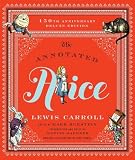
Before seeking successors, one must return to the primary source with the proper set of lenses. Martin Gardner’s definitive companion to Alice’s Adventures in Wonderland and Through the Looking-Glass is a revelatory reading experience.
Gardner unpacks the intellectual games hidden beneath Carroll’s nursery surface: the Victorian moral poems being parodied line by line, the mathematical disputes over non-Euclidean geometry, the actual eighty-move chess problem that structures the looking-glass world, and the linguistic puns that tickled Oxford dons. Paired with John Tenniel’s sharp, uncanny woodblock engravings, this edition proves that Carroll’s dreamworlds were among the most intellectually rigorous labyrinths ever constructed in the English language.
- The Mechanism of Wonder: Puns treated as absolute legal mandates; characters who take metaphors literally to expose the absurdity of adult speech.
- Audience & Tone: All ages; sparkling, satirical, cerebral, and endlessly rewarding to reread.
- Collector Edition: Explore The Annotated Alice on Amazon
The Phantom Tollbooth
By Norton Juster | Illustrated by Jules Feiffer
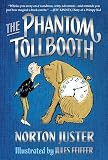
Bored young Milo finds nothing interesting in school, play, or life until a mysterious blue tollbooth appears in his bedroom with a map of the Lands Beyond. Driving his small toy car through the gate, Milo embarks on an epic quest to rescue the exiled princesses Rhyme and Reason from the Castle in the Air.
Written by architect Norton Juster with scratching, expressive pen-and-ink illustrations by Jules Feiffer, The Phantom Tollbooth is the undisputed American heir to Carroll’s linguistic throne. Milo visits Dictionopolis (where words grow on market stalls and letters taste like their sounds: an “A” is sweet, a “Z” is dry like sand) and Digitopolis (where miners dig numbers out of gem quarries). From the watchdog Tock (who has an actual ticking alarm clock built into his flank) to the Mathemagician and Chroma the Great conducting the sunrise like a symphonic orchestra, every chapter is a firework of philosophical wit.
- The Mechanism of Wonder: Abstract ideas made physically tangible: eating your own words when you make a mistake, jumping to the Island of Conclusions, or climbing the steep Mountains of Ignorance.
- Audience & Tone: Middle grade through adult; joyful, brilliant, buoyant, and deeply encouraging to curious minds.
- Collector Edition: Explore The Phantom Tollbooth on Amazon
The Eyre Affair
By Jasper Fforde
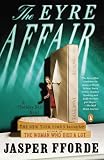
In an alternate 1985 Great Britain where the Crimean War has lasted over a century and literary disputes are settled by street gangs, Special Operations agent Thursday Next works for the Literary Detectives division. When the villainous Acheron Hades steals the original handwritten manuscript of Charlotte Brontë’s Jane Eyre and begins murdering characters from within the text, Thursday must use her father’s time-bending technology to jump directly onto the printed page to set the story right.
Jasper Fforde crafts a dizzying, hilarious playground of literary surrealism. Characters keep genetically cloned pet dodos, discuss the authorship of Shakespeare over tea, and communicate through footnoting technology. The world operates under a delightful, matter-of-fact absurdity that treats classic literature not as museum relics, but as living, volatile habitats that can be altered with a misplaced comma.
- The Mechanism of Wonder: Fiction operating as physical terrain: stepping through margins, changing plot outcomes from the inside, and evading grammatical traps.
- Audience & Tone: Adult crossover; fast-paced, deadpan, bookish, and inventively comic.
- Collector Edition: Explore The Eyre Affair on Amazon
Haroun and the Sea of Stories
By Salman Rushdie
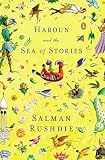
In a sad city that has forgotten its own name, young Haroun Khalifa lives with his father Rashid, the greatest storyteller in the land. When Rashid suddenly loses his gift of speech, Haroun discovers the secret plumbing of the imagination: the Water Genie Iff and the mechanical Hoopoe bird who fly him to the hidden moon of Kahani.
On Kahani, the Ocean of the Streams of Story flows in swirling, multi-colored currents, each stream carrying a different tale told in thousands of different languages throughout human history. But the ocean is being polluted by Khattam-Shud, the sinister ruler of the Land of Chup, who hates stories and wants to seal the Source of Story in eternal silence. Rushdie wrote this sparkling, allegorical masterpiece for his son, creating a breathless celebration of language, spoken rhythm, and the unstoppable freedom of the creative voice.
- The Mechanism of Wonder: Stories existing as tangible, warm currents of liquid light that can be drunk from golden cups to experience living dreams.
- Audience & Tone: All ages; vibrant, musical, lyrical, and warmly triumphant.
- Collector Edition: Explore Haroun and the Sea of Stories on Amazon
Movement II: Labyrinths, Infinite Mansions, and Dream Topography
In these works, the focus shifts to impossible architecture. These books explore endless rooms, shifting cities, and surreal geography where space expands according to its own quiet, poetic rules.
Piranesi
By Susanna Clarke
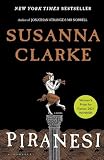
Piranesi lives in the House. The House is not a normal building; it contains thousands of classical halls lined with marble statues of minotaurs, children, and kings. The lower halls are flooded with ocean tides that crash against stone stairways; the upper halls are home to clouds and flocks of birds. Piranesi spends his days charting the tides, tending to the bones of the dead, and documenting his observations in meticulous journals.
Susanna Clarke strips away the noise of modern life to create a work of astonishing spiritual stillness and uncanny mystery. Piranesi’s innocence and unshakeable reverence for the House create a dreamlike resonance reminiscent of the quietest corners of Alice’s journey. When clues emerge that another person: “The Other”: is conducting dangerous occult experiments to reach a forgotten world, the story gently unfolds a mystery of memory, identity, and the danger of treating wonder as a mere tool.
- The Mechanism of Wonder: An infinite interior world governed by the physics of tides, sea foam, and marble architecture, experienced with pure, uncorrupted reverence.
- Audience & Tone: Adult crossover; contemplative, beautifully measured, atmospheric, and unforgettable.
- Collector Edition: Explore Piranesi on Amazon
Invisible Cities
By Italo Calvino | Translated by William Weaver
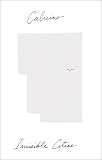
In a fragrant garden in the evening twilight, the aging emperor Kublai Khan listens to young Venetian traveler Marco Polo describe the far-flung cities of his vast empire. But the fifty-five cities Polo describes are not physical places; they are conceptual dreamscapes constructed out of memory, desire, signs, and the dead.
Calvino’s masterpiece is structured like a mathematical chess game. There is Octavia, the spider-web city suspended over a precipice by ropes; Isaura, the city of a thousand wells built above a subterranean lake; Eudoxia, whose geometry mirrors an intricate Persian carpet; and Valdrada, built entirely of mirrors so that every human gesture is instantly repeated by its reflection. It is an astonishing feast of pure architectural surrealism that expands what literature can build on a blank page.
- The Mechanism of Wonder: Cities constructed around single philosophical paradoxes, treating urban space as a reflection of the human soul.
- Audience & Tone: Adult; poetic, architectural, crystalline, and infinitely rereadable.
- Collector Edition: Explore Invisible Cities on Amazon
The Starless Sea
By Erin Morgenstern
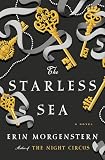
Graduate student Zachary Ezra Rawlins finds a mysterious book in his university library containing stories of lovelorn pirates, key collectors, and a childhood memory of his own: the moment he found a painted door on a brick wall and chose not to open it. Determined to discover the origin of the book, Zachary follows a trail of bees, keys, and swords to a secret masquerade ball and down into a vast subterranean library on the shores of a Starless Sea.
Erin Morgenstern crafts an intoxicating, sensory labyrinth of stories folded within stories. With ballroom floors of polished wood, rooms filled with thousands of glowing lanterns, sweet honey tea, and cats walking across velvet cushions, the book operates on pure dream logic. It is a warm, romantic sanctuary for anyone who has ever dreamed of finding a secret door at the back of a wardrobe or down a rabbit hole.
- The Mechanism of Wonder: Metaphors materialized into physical architecture: doors opened with iron keys, seas of liquid story, and rooms where time pauses.
- Audience & Tone: YA / Adult; lush, romantic, puzzle-like, and deeply atmospheric.
- Collector Edition: Explore The Starless Sea on Amazon
The Third Policeman
By Flann O’Brien

An unnamed narrator commits a robbery and murder to fund his scholarly research on the obscure eccentric philosopher de Selby. Walking into a strange police barracks to recover his stolen money, he encounters three bizarre policemen: Sergeant Pluck, Policeman MacCruiskeen, and the elusive Policeman Fox: who are obsessed with bicycles, infinite nested wooden chests, and an underground domain where time has stopped.
Flann O’Brien’s masterpiece is one of the darkest, funniest, and most deeply original surrealist novels ever written. The book’s famous “Atomic Theory” posits that when a man rides a bicycle on rough country roads, atoms are exchanged between his body and the frame until he is partially bicycle and his bicycle is partially human. Filled with scholarly footnotes debating non-existent philosophers and eerie spatial distortions, it is a glorious descent into an Irish comic purgatory.
- The Mechanism of Wonder: Scientific and bureaucratic logic pushed to absolute madness, creating an uncanny world that feels terrifying and hilarious in equal measure.
- Audience & Tone: Adult; darkly funny, eccentric, philosophical, and utterly singular.
- Collector Edition: Explore The Third Policeman on Amazon
Movement III: Unabashed Whimsy, Eccentric Biologies, and Wonder
In this movement, the imagination erupts in vivid color, linguistic exuberance, and strange biological marvels. These stories celebrate the joy of pure, unbridled creative invention.
The 13½ Lives of Captain Bluebear
By Walter Moers | Translated by John Brownjohn | Illustrated by the Author
Born at sea and rescued by miniature Minipirates, Bluebear embarks on an epic journey across the mythical continent of Zamonia, living through thirteen and a half distinct lives before reaching adulthood.
Walter Moers is the undisputed titan of modern European visual and literary fantasy. Captain Bluebear is a torrential masterpiece of worldbuilding, bursting with hundreds of Moers’s own charming, grotesque illustrations. Bluebear studies under Professor Abdullah Nightingale at the Nocturnal Academy in the Dark Mountains (where you learn by having darkness poured directly into your brain), navigates the Sweet Desert of pure sugar crystals, befriends a giant Megamollusk, and outwits the Bollogg giant whose brain is so large that its individual ideas can be seen moving under its skin.
- The Mechanism of Wonder: A relentless, joyful explosion of fake encyclopedic biology, eccentric geography, and linguistic inventions that redefine high fantasy.
- Audience & Tone: All ages (10 to 100); wildly funny, brilliant, deeply creative, and visual.
- Collector Edition: Explore Captain Bluebear on Amazon
The Girl Who Circumnavigated Fairyland in a Ship of Her Own Making
By Catherynne M. Valente | Illustrated by Ana Juan

Twelve-year-old September is washing teacups in Omaha, Nebraska, when the Green Wind taps on her window, offering her a ride on the back of his leopard into Fairyland. But the Fairyland September arrives in is not a gentle kingdom; it is ruled by the iron-willed Marquess, who has outlawed fun, taxed imagination, and forced magical creatures into rigid administrative categories.
Catherynne M. Valente writes with a rich, baroque linguistic cadence that feels like vintage Lord Dunsany or George MacDonald updated for the modern era. September befriends A-Through-L, a book-loving Wyverary (the offspring of a wyvern and a library), sails on a ship made of shadows, and navigates a world of autumn lanterns, brass mechanical keys, and dangerous magical covenants. Ana Juan’s dark, elegant chapter heading illustrations make the book feel like a treasured Victorian heirloom.
- The Mechanism of Wonder: High literary wordplay paired with fearless fairy-tale logic: magic bound by contracts, curses broken through wit, and courageous moral independence.
- Audience & Tone: Middle grade through adult; sumptuous, poetic, courageous, and beautifully crafted.
- Collector Edition: Explore The Girl Who Circumnavigated Fairyland on Amazon
Un Lun Dun
By China Miéville
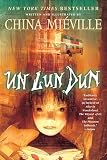
Twelve-year-old Zanna and her pragmatic best friend Deeba notice strange things in London: broken umbrella handles twitching in storm drains and words unscrambling themselves on billboards. Slipping through a secret valve into UnLondon: the “abcity” where all of London’s discarded objects find living purpose: Zanna is hailed as the long-prophesied “Shwazzy” destined to defeat the living chemical Smog.
China Miéville brings his extraordinary speculative imagination to young-adult surrealism. When the chosen hero fails early in the book, Deeba must become the “Unchosen” hero, saving the city not with magical destiny, but with common sense, observation, and courage. The world of Un Lun Dun is packed with un-umbrellas, bin-ninjas, flying double-decker buses, and a forest made entirely of discarded telephone poles.
- The Mechanism of Wonder: Urban junk and linguistic cast-offs transformed into a vibrant, self-consistent parallel reality that playfully dismantles heroic fantasy clichés.
- Audience & Tone: Middle grade / YA / Adult; inventive, witty, brisk, and fiercely original.
- Collector Edition: Explore Un Lun Dun on Amazon
Finn Family Moomintroll
By Tove Jansson | Illustrated by the Author
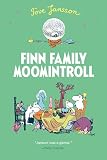
On a bright spring morning in Moominvalley, Moomintroll, Snufkin, and Sniff find a tall black silk top hat resting on top of a mountain peak. Bringing it home to the round blue Moominhouse, they discover that the hat belongs to the Hobgoblin and possesses strange metamorphic powers: eggshells placed inside turn into fluffy rideable pink clouds, and an English dictionary tossed in transforms the entire living room into a lush, creeping tropical jungle.
Finnish author and artist Tove Jansson created one of the most comforting, eccentric, and quietly philosophical universes in children’s literature. Moominvalley is a place where absolute oddities: the cold, terrifying Groke who freezes the earth wherever she sits, the tiny Hattifatteners who charge themselves with thunderstorm electricity, and the secretive Thingumy and Bob carrying their red ruby in a suitcase: coexist with warm pancakes, raspberry juice, and total domestic hospitality.
- The Mechanism of Wonder: Ordinary household security brushing gently against strange, unpredictable magical forces with zero panic and infinite warmth.
- Audience & Tone: All ages; cozy, gentle, whimsical, and deeply comforting.
- Collector Edition: Explore Finn Family Moomintroll on Amazon
Movement IV: Surrealist Portals, Eccentric Old Age, and Subversive Dreams
In these works, surrealism becomes an act of psychological liberation, feminist wit, and existential defiance. These stories challenge authority figures, subvert institutional rigidity, and explore the power of late-life eccentricity.
The Hearing Trumpet
By Leonora Carrington | Introduction by Ali Smith
Ninety-two-year-old Marian Leatherby lives a quiet life with a short gray beard and a hearing trumpet gifted by her psychic friend Carmella. When her family ships her off to the sinister “Well of Light” retirement home run by the pseudoscientific Dr. Gambit, Marian discovers that the institution’s bungalows are shaped like toadstools, igloos, and birthday cakes, and that a portrait of a winking seventeenth-century abbess conceals a secret tunnel to the Holy Grail.
Leonora Carrington, one of the greatest surrealist painters of the twentieth century, writes with unmatched wit, anarchic charm, and visionary brilliance. When the Earth tilts on its axis and enters a new ice age, Marian and her elderly companions take charge of the apocalypse, befriending werewolves, anointing sacred cauldrons, and dining on post-civilizational feasts. It is an unforgettable antidote to conventional patriarchal fantasy.
- The Mechanism of Wonder: Dream imagery and eccentric folklore mobilized as a tool of hilarious, triumphant female autonomy.
- Audience & Tone: Adult; eccentric, wildly imaginative, satirical, and feminist.
- Collector Edition: Explore The Hearing Trumpet on Amazon
The Master and Margarita
By Mikhail Bulgakov | Translated by Richard Pevear and Larissa Volokhonsky
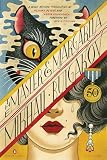
On a sweltering spring evening at Patriarch’s Ponds in Moscow, two literary bureaucrats are approached by a mysterious foreign professor named Woland. Within hours, heads are severed by streetcars, theater managers vanish to Yalta, and Woland’s demonic entourage: including the unforgettable Behemoth, a giant talking black cat who drinks vodka and rides tramcars: turns the entire Soviet bureaucratic apparatus into an uproarious circus of magical chaos.
Intertwined with the tragic romance of the Master and Margarita and a luminous historical retelling of Pontius Pilate’s trial of Yeshua Ha-Notsri, Bulgakov’s masterpiece is one of the supreme achievements of world literature. Written in secret under Stalin’s terror and published posthumously, the novel proves that true art, love, and imaginative freedom can never be silenced by state control.
- The Mechanism of Wonder: Superb supernatural satire where magic exposes the hypocrisy and cowardice of human institutions.
- Audience & Tone: Adult; operatic, hilarious, tragic, and philosophically profound.
- Collector Edition: Explore The Master and Margarita on Amazon
The Manual of Detection
By Jedediah Berry
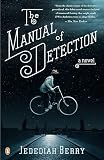
In an unnamed city drenched in perpetual rain, Charles Unwin is a meticulous filing clerk at the colossal, labyrinthine Agency of Detection, where thousands of clerks record the deeds of brilliant detectives. When the agency’s greatest operative, Travis Sivart, vanishes and Unwin is unexpectedly promoted to detective, he is thrust into a case involving stolen dreams, clockwork bicycles, carnival hypnotists, and a criminal mastermind who operates solely through the sleeping minds of the city’s citizens.
Jedediah Berry blends the moody chiaroscuro of 1940s film noir with the surrealist dream logic of Franz Kafka and Lewis Carroll. As Unwin follows clues through endless rain-slicked alleyways and the filing cabinets of memory, the city itself begins to behave like an intricate clockwork mechanism that is winding down.
- The Mechanism of Wonder: A dreamscape governed by the strict, absurd procedures of bureaucratic detective manuals and urban labyrinths.
- Audience & Tone: Adult; stylish, rainy, atmospheric, and dreamlike.
- Collector Edition: Explore The Manual of Detection on Amazon
The Book of Lost Things (Illustrated Edition)
By John Connolly | Illustrated by Anne M. Anderson

In 1939 London, twelve-year-old David is shattered by the death of his mother and the bombing raids of the Blitz. Retreating into his attic bedroom, David hears his mother’s books whispering to him from the shelves. When a crashing German fighter plane cracks open the sunken garden wall, David crawls through the fissure and emerges into a dark, decaying fairytale kingdom ruled by an ailing king and stalked by the whispered promises of the Crooked Man.
John Connolly crafts a moving, dark-edged fairy tale that honors the terrifying, unvarnished folklore of the Brothers Grimm. David navigates a forest of man-eating Loups, a treacherous enchantress who keeps children trapped in sleeping jars, and a knight seeking redemption. It is a powerful allegory for the painful transition from childhood innocence into the complex moral landscapes of adulthood.
- The Mechanism of Wonder: Classic fairy tales rotting and reforming through the psychological lens of childhood grief and survival.
- Audience & Tone: YA / Adult crossover; dark, emotional, mythic, and beautifully written.
- Collector Edition: Explore The Book of Lost Things on Amazon
Movement V: Philosophical Fables, Time Thieves, and Tiny Universes
In this closing movement, surrealism turns toward gentle philosophical reflection, examining how human beings experience time, memory, listening, and cosmic wonder.
Momo
By Michael Ende | Translated by J. Maxwell Brownjohn

In the ruined amphitheater on the outskirts of an Italian city lives Momo, an orphaned girl dressed in an oversized coat who possesses an extraordinary gift: she knows how to truly listen. When people talk to Momo, their confusion dissolves, their anger softens, and their creativity blossoms. But the city is invaded by the “Men in Grey”: spectral, cigar-smoking agents of the Timesavings Bank who persuade citizens to deposit their hours, minutes, and joy into frozen bank vaults, leaving them stressed, hurried, and empty.
To save her friends, Momo must travel to the Nowhere House at the edge of the universe to consult Master Hora, the Keeper of Time, guided by Cassiopeia, a magical tortoise who communicates through glowing letters appearing on her shell thirty minutes before events occur. Michael Ende’s fable is one of the most profound critiques of modern industrial haste ever written: a radiant defense of the sacred value of stillness, friendship, and present attention.
- The Mechanism of Wonder: Time materialized as fragile, fragrant Hour-Lilies that bloom in the human heart, and a slow tortoise who moves faster than pursuers because she does not rush.
- Audience & Tone: All ages; gentle, timeless, philosophical, and deeply moving.
- Collector Edition: Explore Momo on Amazon
Cosmicomics
By Italo Calvino | Translated by William Weaver
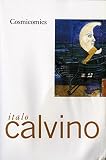
Each story in Calvino’s luminous collection begins with a real scientific deduction about the origins of the universe: the distance of the Moon in prehistoric times, the formation of chemical elements in the primordial void, or the movement of dinosaurs across drifting tectonic plates: and immediately introduces the ancient narrator Qfwfq, who was personally there to witness it all.
In the famous opening tale, “The Distance of the Moon,” Qfwfq describes how, billions of years ago, the Moon passed so close to the Earth that on calm nights, fishermen could row out in rowboats, prop up a wooden ladder, and climb up onto the lunar surface to scrape sweet, thick “lunar milk” off the crater walls. Calvino turns astronomical physics and evolutionary biology into pure, sparkling, romantic myth.
- The Mechanism of Wonder: Hard cosmological facts translated into childlike, poetic physical comedy: climbing into space on stepladders and playing marbles with galaxies.
- Audience & Tone: Adult / Crossover; witty, brilliant, imaginative, and endlessly charming.
- Collector Edition: Explore Cosmicomics on Amazon
The Master Matrix of Wonderland and Surreal Fiction
To help you choose your next journey beyond the looking-glass, here is how all eighteen masterworks align across primary strange mechanisms, narrative tones, and central imaginative legacies:
| Book Title | Author | Primary Strange Mechanism | Narrative Tone | Key Imaginative Legacy |
|---|---|---|---|---|
| The Annotated Alice | Lewis Carroll / Martin Gardner | Chess Problems & Parodied Logic | Sharp, Satirical & Cerebral | The foundational monument of English nonsense |
| The Phantom Tollbooth | Norton Juster & Jules Feiffer | Literalized Idioms & Number Mines | Buoyant, Joyful & Brilliant | The American classic of wordplay and curiosity |
| The Eyre Affair | Jasper Fforde | Physical Page Jumping & Footnotes | Deadpan, Bookish & Comic | Literature treated as an interactive physical habitat |
| Haroun and the Sea of Stories | Salman Rushdie | Liquid Currents of Spoken Story | Musical, Lyrical & Triumphant | An unforgettable defense of free imagination |
| Piranesi | Susanna Clarke | Infinite Tidal Halls & Statues | Reverent, Atmospheric & Still | Sacred solitude inside a benevolent labyrinth |
| Invisible Cities | Italo Calvino | Fifty-Five Architectural Paradoxes | Crystalline, Poetic & Geometric | Cities constructed out of human desire and signs |
| The Starless Sea | Erin Morgenstern | Honey Seas & Painted Keyhole Doors | Lush, Romantic & Puzzle-Like | Subterranean sanctuaries for eternal stories |
| The Third Policeman | Flann O’Brien | Atomic Bicycle Physics & Purgatory | Darkly Comic, Absurd & Singular | Irish surrealist masterpiece of pushed logic |
| Captain Bluebear | Walter Moers | Zamonian Zoology & Dark Academies | Encyclopedic, Wild & Joyful | Torrential visual worldbuilding and comic genius |
| Fairyland… | Catherynne M. Valente | Wyveraries & Green Wind Portals | Sumptuous, Baroque & Brave | High literary fairy-tale craft and moral independence |
| Un Lun Dun | China Miéville | The Abcity of Discarded Objects | Brisk, Witty & Subversive | Deconstructing heroic prophecy with urban surrealism |
| Finn Family Moomintroll | Tove Jansson | Hobgoblin Hat Transformations | Cozy, Gentle & Philosophical | Domestic sanctuary embracing strange magic |
| The Hearing Trumpet | Leonora Carrington | Winking Abbesses & Cake Bungalows | Anarchic, Feminist & Visionary | Radical surrealist liberation through late-life wit |
| The Master and Margarita | Mikhail Bulgakov | Demonic Cat & Flying Broomsticks | Operatic, Satirical & Deep | Russian masterpiece where manuscripts never burn |
| The Manual of Detection | Jedediah Berry | Bureaucracy of Dream Crimes | Stylish, Rainy & Noir | Kafkaesque clockwork mystery in endless rain |
| The Book of Lost Things | John Connolly | Decaying Folktales & Garden Portals | Dark, Bittersweet & Mythic | The painful transition from childhood into reality |
| Momo | Michael Ende | The Men in Grey & Time Lilies | Timeless, Moving & Gentle | A profound fable on the sacred art of listening |
| Cosmicomics | Italo Calvino | Climbing to the Moon on Ladders | Whimsical, Scientific & Cosmic | Astronomical science transformed into romantic poetry |
The Joy of Turning One More Page
Why do these impossible worlds continue to draw us back across generations?
Because ordinary life is often weighed down by the gray expectation that everything must be efficient, predictable, and explained. Stepping through a mirror, climbing an impossible staircase, or drinking from a bottle labeled Drink Me reveals that the universe is vastly weirder, more colorful, and more playful than our everyday routines allow us to see.
When a writer has the courage to invent a world whose rules are strange: where time flows backwards on Tuesdays, where shadows have their own postal system, or where words taste like peppermint: they are not lying to us. They are inviting our minds to stretch, to laugh, and to rediscover the electric thrill of curiosity.
To continue your exploration of imaginative literature, discover our curated studies across Wolfesque Books, explore classic portals in Portal Fantasy Books, explore dark whimsical adventures across Books Like Coraline, explore illustrated editions in Best Illustrated Fantasy Books, or immerse yourself in practical creature craft across 80s Fantasy Movies.