There is a distinct, spine-prickling feeling that belongs only to stories in the tradition of Neil Gaiman’s Coraline.
It is not the blunt shock of adult horror, nor is it the colorful romp of conventional middle-grade portal fantasy. It is the eerie, magnetic atmosphere of the uncanny domestic: the sudden realization that the hallway you have walked down a thousand times has one extra door, and that behind that door lives a mother who is just slightly too attentive, whose fingers are just slightly too long, and whose eyes are made of black coat buttons.
What makes Coraline and its literary siblings so unforgettable is their profound respect for childhood emotional intelligence. These books understand that children do not want sanitized safety; they want stories that acknowledge the presence of real shadows, the unreliability of distracted adults, and the fierce courage required to choose a messy, imperfect reality over a seductive, predatory trap.
THE ANATOMY OF CORALINE-ADJACENT FICTION
The Uncanny Domestic
The Other House · The Holiday House
The familiar home turning predatory; the extra door in the parlor opening into a corrupted copy of domestic comfort.
Sinister Doubles
Button-Eyed Mothers · The Cavendish Home
Predatory hospitality offering a counterfeit paradise in exchange for the child's soul, autonomy, or physical identity.
Adult Unreliability
Distracted Parents · Captured Guardians
Adults who cannot see the danger or are trapped by it, forcing the child to rely on their own observational courage.
Physical Wrongness
Buttons for Eyes · Ticking Walls · Moving Scarecrows
Small tactile clues that reveal the reality is false: mirrors that lag, walls that whisper, and shadows that move independently.
If you are looking for books that capture the specific alchemy of dark whimsy, gothic suspense, and domestic mystery, here are twelve masterworks that explore the worlds waiting just behind the wallpaper.
1. Predatory Hospitality and the Seductive Trap
The central terror of Coraline is not violence; it is an alluring offer. The monster lures the child by promising everything their tired, busy parents forgot to provide: endless roasted chicken, glittering toys, and constant adoration.
The Thief of Always by Clive Barker
The Masterpiece of Stolen Seasons

Ten-year-old Harvey Swick is drowning in the gray boredom of a rainy February when a strange creature named Rictus invites him to the Holiday House. In this enchanted mansion hidden in the woods, every day brings four full seasons: spring mornings, summer afternoons, October dusks with trick-or-treating, and Christmas eves with personalized gifts by the hearth.
Like Coraline in the Other House, Harvey soon discovers that the house’s architect, Mr. Hood, is an ancient vampire of time. Every single day Harvey spends indulging in the house’s treats consumes a full year of his real life in the outside world. Barker’s spare prose and eerie pen-and-ink illustrations make this the closest spiritual cousin to Coraline in modern literature.
The Cavendish Home for Boys and Girls by Claire Legrand
Perfection Enforced Behind the Parlor Walls

In the spotless town of Ti习n, twelve-year-old Victoria Wright is determined to be the most immaculate, accomplished girl in school. Her only flaw is her friendship with Lawrence, an unkempt boy who plays the piano beautifully but cannot keep his shirt tucked in. When Lawrence disappears and nobody in town seems to notice or care, Victoria investigates the mysterious Cavendish Home.
Behind the polished mahogany doors of Mrs. Cavendish’s institution, children with bad habits are taken to be “reformed.” What Victoria discovers is a horrifying ecosystem of roaches behind the wallpaper, uncanny doubles, and children literally reconstructed into stiff, compliant dolls. Legrand captures the razor-sharp tension of a young girl fighting against an adult authority who smiles while consuming everything messy and human.
The Nest by Kenneth Oppel
The Parasitic Promise of a Flawless Replacement

Steve is an anxious boy whose baby brother is born with a congenital illness that leaves his parents exhausted and weeping. In his dreams, Steve is visited by a luminous, ethereal entity that speaks with gentle authority, promising to “fix” the baby and bring a fresh, healthy child into the cradle.
As the dream encounters become more demanding, Steve realizes the entity is not an angel, but the queen of a gigantic nest of predatory wasps building their hive beneath the house’s eaves. Like the Other Mother offering button eyes, the queen offers a smooth, painless counterfeit in exchange for letting her take the real, fragile baby. Oppel crafts an intensely claustrophobic masterpiece about the courage required to love something broken.
2. Houses with Secret Anatomies and Ancient Clocks
In Coraline’s world, the house itself is a labyrinth: an old partitioned Victorian mansion whose dry rot, drafty flues, and locked parlor doors harbor old secrets.
The House with a Clock in Its Walls by John Bellairs (Illustrated by Edward Gorey)
The Definitive Classic of Gothic Dark Whimsy

Following the death of his parents in 1948, ten-year-old Lewis Barnavelt moves into the rambling, turreted mansion of his eccentric Uncle Jonathan in New Zebedee, Michigan. Uncle Jonathan and his neighbor Mrs. Zimmermann are kindly, pipe-smoking magicians who spend their evenings playing poker and eating chocolate chip cookies.
Yet the house has an ominous heartbeat: Isaac Izard, the sinister warlock who previously owned the estate, hid a doomsday clock somewhere deep inside the stone walls before he died. Lewis’s attempts to impress a friend lead him to accidentally raise a vengeful spirit from her crypt on Halloween night. Enhanced by Edward Gorey’s iconic, scratchy ink illustrations, Bellairs balances cozy domestic warmth against genuine supernatural dread.
The Night Gardener by Jonathan Auxier
A Victorian Manor Rooted in Greed and Tree Magic

Two orphaned Irish siblings, Molly and Kip, take jobs as servants at the crumbling Windsor estate in Victorian England. The house is built around a colossal, gnarled tree whose roots grow directly through the dining room floorboards and into the bedrooms.
The tree grants the family members their deepest material wishes: bags of gold coins, glowing health, beautiful clothes: but demands their physical vitality in return. Every night, a spectral figure in a tall hat and muddy boots walks through the locked halls, watering the roots with the family’s stolen sweat and breath. Auxier weaves a rich, atmospheric fable about storytelling, addiction, and the bravery needed to chop down a cursed tree.
Uncle Montague’s Tales of Terror by Chris Priestley (Illustrated by David Roberts)
The Drafty Parlor and the Cursed Mantelpiece

Young Edward walks through dark, whispering woods to visit his reclusive Uncle Montague in his decaying stone house. Over cups of tea beside a dying fireplace, Uncle Montague points to various antique objects scattered about the room: a gilded frame, a brass telescope, an old doll: and recounts the chilling, fatal stories of how they came into his possession.
As the afternoon light fades into evening fog, Edward begins to realize that Uncle Montague’s house is not as empty as it appears, and that his uncle’s connection to these dark relics is far more personal than he claimed. David Roberts’s crosshatched illustrations evoke the classic Edward Gorey tradition, making this a supreme treasure of atmospheric fireside horror.
3. Autumn Mist, Secret Thresholds, and Ancient Bargains
Coraline’s world is fundamentally about contracts: counting the marbles, playing fair according to the old rules, and knowing that the smallest item in your coat pocket might save your life.
Small Spaces by Katherine Arden
Avoid the Places Where the Fog Gathers

Eleven-year-old Ollie is grieving the sudden death of her mother, finding solace only in books. When she encounters an agitated woman about to throw an antique black notebook into the river, Ollie snatches the book and runs. The notebook tells the history of Beth Hemlock and two brothers who made a bargain with a sinister entity known as “the Smiling Man.”
During a school field trip to an isolated farm, the school bus breaks down in the thick autumn mist at sunset. Ollie’s digital wristwatch begins displaying a single instruction: RUN. Together with two classmates, Ollie must navigate cornfields where scarecrows come alive and hide in the “small spaces” where the Smiling Man’s reach cannot touch them. Arden delivers an October ghost story of supreme craft.
Doll Bones by Holly Black
The Midnight Quest with the Queen of Bone China

Zach, Poppy, and Alice have spent years playing an elaborate, continuous roleplaying game with action figures, presided over by the “Great Queen”: an antique bone-china doll locked inside a glass display cabinet in Poppy’s living room.
When Zach’s father throws away his toys, forcing him to “grow up,” Poppy begins having vivid dreams of the dead girl whose ground-up bones were used to make the china doll. The three friends embark on a secret midnight bicycle quest to bury the doll in an empty grave. Holly Black captures the heartbreaking, eerie boundary between childhood imagination and adolescent reality: the exact threshold where Coraline lives.
The Ocean at the End of the Lane by Neil Gaiman
The Ancient Farmstead and the Predatory Tenant
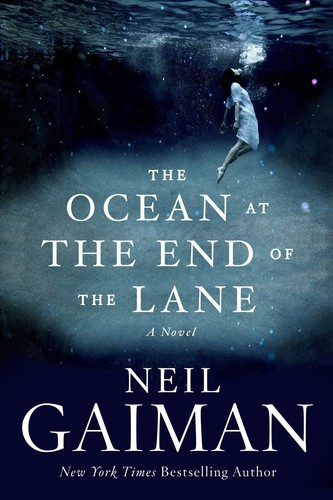
For adult readers seeking the emotional register of Coraline viewed through the lens of adult memory, Gaiman’s The Ocean at the End of the Lane is the definitive companion. Returning to his childhood home in Sussex for a funeral, a man finds himself drawn to the hempstock farm at the end of the road, remembering the terrifying events of his seventh year.
When an opal miner commits suicide in his father’s car, an ancient, parasitic entity named Ursula Monkton enters the boy’s home disguised as a charming housekeeper, seducing his parents and turning his own father against him. Gaiman’s portrayal of adult vulnerability and child isolation carries the exact same emotional weight as Coraline’s battle against the Other Mother.
4. Visual Masterworks of the Illustrated Macabre
Like Dave McKean’s scratchboard illustrations in the original edition of Coraline, the visual texture of dark whimsy requires high contrast, textured shadows, and sharp silhouettes.
Through the Woods by Emily Carroll
The Gothic Graphic Masterpiece of the Dark Forest

Emily Carroll’s five-story graphic collection is a landmark of modern gothic comics. Utilizing an arresting palette of pitch black, cold bone white, and violent scarlet, Carroll updates the traditional fairy-tale format into something deeply unsettling.
In stories like “Our Neighbor’s House” and “A Lady’s Hands Are Cold,” young protagonists wait in lonely cabins for fathers who never return, or marry wealthy gentlemen whose stone halls whisper with the voices of murdered wives. Carroll’s mastery of page-turn pacing: forcing the reader to turn the leaf to reveal a monstrous face smiling in the cellar: makes this essential reading for fans of illustrated horror.
A Monster Calls by Patrick Ness (Illustrated by Jim Kay)
Seven Minutes Past Midnight and the Truth of the Yew Tree

Thirteen-year-old Conor O’Malley is haunted by the same nightmare every night while his mother undergoes cancer treatment. But at seven minutes past midnight, an ancient yew tree monster walks into his backyard to tell him three dark, contradictory fables: and to demand Conor’s fourth story, which must be the absolute truth of his grief.
Jim Kay’s monumental black-and-white ink monoprints, splatters, and heavy textures create an unforgettable visual atmosphere. Like Coraline, the novel proves that monsters in literature do not exist to frighten us; they exist to show us how to survive when the world falls apart.
The Graveyard Book by Neil Gaiman
The Nursery Among the Headstones
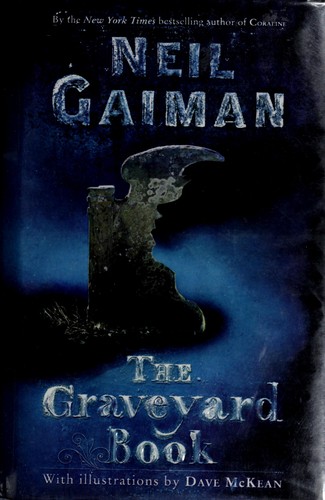
Following the murder of his family, an orphaned toddler crawls into a Victorian cemetery and is adopted by the resident ghosts, who name him Nobody “Bod” Owens. Raised by a pair of eighteenth-century ghosts and tutored by a nocturnal guardian named Silas, Bod learns the Freedom of the Graveyard: fading from human sight, sliding through shadows, and dreaming between worlds.
Winner of both the Newbery Medal and the Carnegie Medal, The Graveyard Book inverts the traditional horror equation: the graveyard is not a place of terror, but a loving community of sanctuary that protects a living child from the predatory violence of the outside world.
The Courage to Choose Imperfection
When Coraline Jones finally defeats the Other Mother, she does not do so through magic spells or superpowered strength. She wins through clear-eyed observational courage: counting the rooms, remembering her parents’ ordinary grumpiness, and understanding that a world where you get everything you want the moment you ask for it is not a paradise; it is a cage.
The stories on this shelf carry that exact wisdom. They trust the reader to walk into the shadowed room, look beneath the bed, find the key, and step back through the door into the sunlight, braver than before.
To explore further journeys into the illustrated macabre and threshold fiction, read our comprehensive guide to Dark Whimsical Picture Books, discover Books Like Alice in Wonderland, or study our reflections on The Doorway Feeling in Fiction.