A monster becomes interesting the moment fear ceases to be the only thing we feel: when the creature everyone ran away from turns out to be carrying a grief far heavier than its claws.
In ordinary adventure tales, monsters are simple obstacles: terrifying silhouettes designed to be hunted, slayed, and forgotten so civilization can celebrate its safety. But the stories that lodge permanently in the human imagination invert that dynamic. They step around the hero’s blazing torch and sit down beside the beast in the shadows.
What makes a monster sympathetic is rarely sentimental softening. The finest creature literature does not pretend the monster is harmless. Instead, it explores the profound friction of embodiment, exile, constructed identity, and the ache for communion:
THE SPECTRUM OF SYMPATHETIC MONSTERS
Constructed Beings
Frankenstein · The Iron Giant
The agony of being made without consent, abandoned by creators, and judged solely by physical silhouette.
Immigrant Folk
The Golem & Jinni · The Minotaur
Ancient supernatural entities attempting to pass as ordinary laborers in mortal cities, carrying ancient homesickness.
Autonomous Constructs
Murderbot · Hellboy
Weapons built to enforce violence who deliberately choose free will, empathy, and everyday human routines.
Cryptid Sanctuaries
Skellig · Cerulean Sea · Shape of Water
Fragile, misunderstood beings hiding in the margins of society who find healing through unconditional companionship.
Here is a curated reading roadmap across twelve landmark speculative works that explore why the creature at the edge of the woods often holds the deepest truth about what it means to be alive.
1. Constructed Beings and the Burden of Creation
When a creature is made rather than born, its existence is an unanswered question. Who owes it care? What right does a creator have to abandon what they assembled?
Frankenstein by Mary Shelley
The Foundational Monument of the Articulate Outsider

Nineteen-year-old Mary Shelley created the enduring blueprint for the sympathetic outsider. Her creature is not the grunting, flat-browed brute of early cinema; he is an articulate, highly sensitive philosopher who teaches himself language and ethics by secretly observing an impoverished cottage family through a chink in the wall.
When he attempts to introduce himself to the blind patriarch De Lacey, he is received with warmth and respect. But the moment the sighted family members return, they attack him with sticks, reacting entirely to his mismatched exterior. Shelley’s tragic insight is that monstrousness is often manufactured by rejection: “I was benevolent and good; misery made me a fiend. Make me happy, and I shall again be virtuous.”
The Iron Giant by Ted Hughes
The Innocent Machine from the Stars

Written by poet Ted Hughes (originally titled The Iron Man in the United Kingdom), this spare, resonant fable follows a colossal metal giant that falls from the sky, breaks upon seaside rocks, and slowly reassembles its limbs.
When the Iron Giant begins eating tractors and barbed wire out of pure mechanical hunger, terrified farmers trap him in a deep pit. It is a small boy named Hogarth who recognizes that the giant is not malicious: he is simply a stranger with different dietary needs. By providing the giant with a scrap-metal junkyard feast, Hogarth turns a perceived monster into humanity’s greatest defender when an even greater cosmic danger arrives.
2. Ancient Beings and Supernatural Immigrants
What happens when creatures from ancient myth survive into the modern world, navigating the mundane frictions of rent, employment, and human conversation?
The Golem and the Jinni by Helene Wecker
Clay and Fire in 1899 Manhattan

Helene Wecker weaves Jewish and Arab folkloric traditions in late-nineteenth-century New York. Chava is a golem made of clay, brought to life on a voyage from Poland, left masterless and overwhelmed by her innate ability to hear the private desires and anxieties of everyone around her. Ahmad is a jinni of pure fire, released from a brass flask by a Lower East Side tinsmith, trapped in human form and longing for the vast Syrian desert.
Neither is human, yet their shared condition as supernatural immigrants: forced to pass as ordinary laborers while concealing their true natures: creates a poignant bond. Their nocturnal walks through cobblestone streets capture the delicate grace of two outsiders finding understanding in an indifferent city.
The Minotaur Takes a Cigarette Break by Steven Sherrill
Five Millennia of Quiet Loneliness in the American South

Five thousand years after escaping the Cretan labyrinth, the mythical Minotaur (now named simply “M”) lives in a rundown trailer park in North Carolina and works as a short-order line cook at Grub’s Rib restaurant.
Sherrill treats this premise not as a punchline, but as a deeply moving meditation on aging, physical difference, and social anxiety. M has the heavy, horned head of a bull and the body of a man; he speaks only in grunts and gestures because his vocal cords cannot shape English vowels. Yet he is gentle, intensely conscientious, and quietly longs for connection. Watching this ancient monster fix a neighbor’s car or fall silently in love with an epileptic waitress named Kelly is an unforgettable masterclass in literary empathy.
3. Autonomy, Free Will, and the Refusal of Violent Purpose
Some of the most compelling monsters are those built specifically to be weapons who deliberately choose another path.
All Systems Red by Martha Wells
The Lethal Security Construct Who Just Wants Quiet
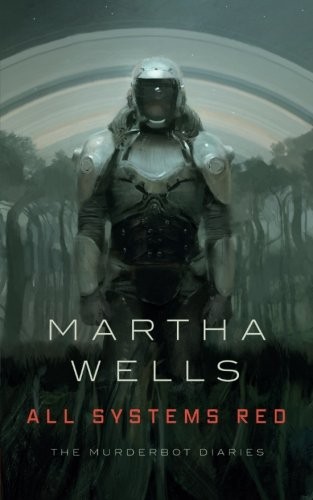
In a corporate-dominated spacefaring future, Security Units (SecUnits) are heavily armed cyborg constructs with organic human tissue grafted onto machine endoskeletons, strictly regulated by governor modules to ensure absolute obedience.
The narrator of Martha Wells’s The Murderbot Diaries hacked its own governor module long ago. It could easily become a mass murderer: the very nightmare humanity fears. Instead, it names itself “Murderbot,” suffers from crippling social awkwardness, spends all its free time downloading thousands of hours of entertainment serials, and quietly risks its own destruction to protect the clumsy, well-meaning human scientists under its care.
Hellboy: The Chained Coffin and Others by Mike Mignola
The Reluctant Harbinger of the Apocalypse

Summoned to Earth during a 1944 Nazi occult ritual to serve as the key that unlocks the end of the world (Anung Un Rama), Hellboy is discovered as an infant demon by Allied soldiers and raised with love by Professor Trevor Bruttenholm.
Mignola’s red-skinned, stone-handed demon actively rejects his apocalyptic heritage. He files his curling horns down to blunt stumps, wears a heavy trench coat, eats pancakes, and works as a field investigator for the Bureau for Paranormal Research and Defense. Hellboy’s enduring charm lies in his blue-collar exhaustion: he fights ancient folklore horrors not out of divine zeal, but because somebody has to do the job.
4. Biological Transformation and Posthuman Kinship
What happens when the monster is the next evolutionary step, or when companionship requires stepping outside the human species entirely?
The Girl with All the Gifts by M.R. Carey
A Polite Child and the End of the Human Era

In a Britain devastated by a mutated Ophiocordyceps fungal pathogen that turns infected humans into mindless, flesh-eating “hungries,” a group of second-generation infected children are kept under armed military guard in underground cells.
Ten-year-old Melanie is exceptionally bright, polite, and deeply in love with Greek mythology and her teacher, Miss Justineau. Melanie knows she is dangerous: she must be strapped into a wheelchair with chemical scent-blockers before entering the classroom: but her internal life is radiant with kindness. Carey’s novel avoids simplistic survival tropes, exploring instead what happens when humanity must yield the world to its children, even if those children are monsters.
The Shape of Water by Guillermo del Toro and Daniel Kraus
An Ancient River God and the Sanctuary of Silence

Set in 1962 Baltimore, this novel (developed alongside del Toro’s Oscar-winning film) follows Elisa Esposito, a mute cleaning woman working the night shift at the secretive Occam Aerospace Research Center. When a captured amphibious creature from the Amazon is brought to the laboratory in a tank, Elisa recognizes a fellow soul who exists outside the language and power structures of the Cold War.
Del Toro and Kraus celebrate the creature not as a pet or a freak, but as a fallen deity: lethal and unpredictable when threatened, yet capable of profound emotional reciprocity with those who see past his scales.
5. Cryptid Fragility, Manners, and Domestic Mystery
Monsters can also be fragile elders hiding in suburban dust, or aristocratic dragons observing strict Victorian inheritance laws.
Skellig by David Almond
The Arthritic Angel in the Crumbling Garage

When ten-year-old Michael moves into a dilapidated house with his parents and a critically ill premature baby sister, he wanders into the dangerous, spider-webbed garage and finds a creature huddled behind old tea chests.
Skellig is pale, filthy, bad-tempered, and suffering from severe arthritis. He feeds on bluebottle flies, Chinese takeout leftover noodles (number 27 and 53), and brown ale. Yet folded beneath his coat are genuine feathered wings. Almond’s lyrical prose captures the breathtaking intimacy of childhood wonder: the realization that miracles in the real world do not arrive in pristine splendor, but in dusty, coughing, imperfect packages that need our care.
Tooth and Claw by Jo Walton
A Victorian Novel of Manners Written for Dragons

Winner of the World Fantasy Award, Jo Walton’s Tooth and Claw is structured exactly like an Anthony Trollope or Jane Austen novel of courtship, property, and clergy disputes: except every single character is a scaly, gold-hoarding, flame-breathing dragon.
Walton makes her draconic society utterly foreign yet deeply sympathetic. Dragons grow in size only by eating the flesh of other dragons, meaning inheritance laws govern how a deceased patriarch’s body is divided and eaten by his children. By taking dragon biology seriously and wrapping it in strict Victorian propriety, Walton creates a masterclass in seeing the world through nonhuman eyes.
The House in the Cerulean Sea by TJ Klune
A Sanctuary for Misunderstood Magical Youths

Linus Baker is a by-the-book caseworker for the Department in Charge of Magical Youth (DICOMY), tasked with evaluating an isolated island orphanage housing six classified children deemed potentially catastrophic to society.
Among them are a polite six-year-old Antichrist named Lucy who loves vinyl records, a wyvern who collects shiny buttons, a forest sprite, and a gelatinous green blob who dreams of becoming a bellhop. Under the gentle guidance of caretaker Arthur Parnassus, Linus sheds his bureaucratic conditioning and discovers that the children do not need containment: they need love, safety, and a world that stops mistaking difference for danger.
Grendel by John Gardner
The Existential Retelling from the Cave

John Gardner’s 1971 novel retells the Old English epic Beowulf from the monster’s perspective. Watching the Danes from his subterranean lair, Grendel is both disgusted and enraptured by human civilization: their glorious poetry, their violent hypocrisies, and their desperate need to construct meaning in an indifferent cosmos.
Grendel’s tragedy is that he is trapped by his own role in the story. Even as he weeps at the beauty of the Shaper’s songs, he understands that human society requires a monster to define its own virtue. Gardner’s prose is razor-sharp and heartbreaking: a reminder that the outsider sees the boundaries of civilization with a clarity no insider can afford.
Why We Stand with the Monster
When we look into the eyes of a monster in literature, we are not looking at an evil force to be erased. We are looking at what human society has pushed outside the gate: our fears of the body, our grief over loneliness, our awkwardness in polite rooms, and our longing to be recognized beneath our scars.
The next time a story introduces a creature of iron, shadow, scales, or clay, step toward it. Listen to what it has to say. In its strange voice, you may hear the most human story on the shelf.
To explore further inquiries into creature craft, dark whimsy, and speculative lore, read our companion essay on Why the Best Fantasy Monsters Are Not Just Evil, study What Is a Bestiary: From Medieval Illuminated Manuscripts to Modern Fantasy Lore, or explore The Art of Dark Whimsy.