There is an instinctive, childlike ceremony that stays with us long into adulthood: the quiet habit of testing a boundary.
When you walk down an unfamiliar hallway in an old country house, you notice the locked oak paneling beneath the staircase. When you stand before a full-length mirror in a dimly lit guest room, your gaze lingers on the reflection, wondering for half a second whether the room on the other side is an exact copy of the room you stand in. When you push aside heavy wool overcoats in the back of a cedar wardrobe, your fingers reach forward, half-expecting the wood to give way to cold pine needles and the crisp, iron scent of falling snow.
That persistent longing is the living engine of portal fantasy.
Unlike traditional secondary-world fantasy, which begins and ends entirely inside an invented world, portal fantasy relies on the friction of juxtaposition. It places the impossible directly adjacent to the ordinary. It starts with damp wool coats, monotonous arithmetic homework, crowded commuter trains, or drafty bedrooms, and then, without warning, opens an unmapped threshold in the physical fabric of the everyday.
Here, we explore the finest portal fantasy books: masterworks of literature that transform wardrobes, mirrors, grandfather clocks, painted doors, and forgotten subway tunnels into invitations to another world.
What Gives a Portal Story Its Power?
A great portal novel is never merely an escape hatch; it is an architectural and emotional collision. Several craft elements separate a routine adventure from an unforgettable otherworld tale:
- The Weight of the Mundane Object: The threshold must emerge from something tangible, heavy, and recognized. A doorway made of generic magical energy feels weightless. But an iron key turned in a lock that smells of beeswax and cellar damp grounds the reader’s senses before the crossing even occurs.
- Sensory Dislocation on the Threshold: Master storytellers linger at the sill. They capture the sudden shift in barometric pressure, the drop in temperature, the scent of crushed moss, or the faint hum of a blade slicing through empty air.
- The Logic of the Second World: The secondary world must have its own internal grammar, ecological coherence, and cultural rules. It should feel ancient, indifferent, and complete, rather than a stage set built solely for the visitor.
- The Heartache of the Return: The crossing is only half the story. The truest portal fiction confronts the aftermath: whether the traveler can ever fit comfortably back into the mundane world once they have tasted wonder elsewhere.
The Lion, the Witch and the Wardrobe by C. S. Lewis
It is impossible to discuss threshold literature without honoring the volume that established the universal grammar of the portal: C. S. Lewis’s The Lion, the Witch and the Wardrobe.
Set during the wartime evacuation of London, four children are sent to an echoing manor in the countryside. On a rainy afternoon, young Lucy Pevensie explores an empty spare room furnished only with a large cedar wardrobe. Stepping inside to feel the soft fur coats, she pushes past the second and third rows of hangers, only to find that the back wall has vanished. Her shoes crunch on frozen snow, and she steps into the quiet winter woods of Narnia beneath a solitary gas lamp burning in the midnight dark.
Lewis understood that wonder requires sensory contrast: the shift from mothball-scented wool to midnight frost, and the jarring, brilliant image of an iron Victorian streetlamp standing among ancient pine trees.
- The Threshold: A cedar wardrobe filled with fur coats
- The World Beyond: The snow-blanketed country of Narnia under the White Witch’s winter
- Tone & Audience: Classic mythic fairy tale for all ages
The Ten Thousand Doors of January by Alix E. Harrow
Alix E. Harrow’s The Ten Thousand Doors of January is an astonishing love letter to the written word and the quiet subversiveness of thresholds.
Set in the early 1900s, the novel follows January Scaller, a ward of the wealthy and controlling collector Mr. Locke. In a secluded New England mansion filled with plundered artifacts, January discovers a strange, leatherbound book that smells of salt and cinnamon. The book tells of Doors: ancient, weathered thresholds hidden in sea-cliffs, ruined barns, and forgotten city walls that connect our world to countless other realities. As January learns to read and write between the lines, she discovers that her own past is intimately woven with these secret openings.
Harrow’s prose is richly textured, exploring how doors represent freedom, identity, and the courage to escape gilded cages.
- The Threshold: Painted, carved, and natural architectural Doors opened with written words
- The World Beyond: An interconnected network of distinct, wondrous, and perilous alternate worlds
- Tone & Audience: Lyrical, historical literary fantasy for adults and mature YA readers
Piranesi by Susanna Clarke
Susanna Clarke’s Piranesi is one of the crowning triumphs of twenty-first-century speculative fiction: a quiet, sublime mystery set inside a place that defies conventional geography.
The narrator, who calls himself Piranesi, lives in The House: an infinite, neoclassical labyrinth of countless halls, vestibules, and courtyards lined with thousands of unique marble statues. The lower halls are inundated by the tides of an ocean that crashes through stairwells; the upper halls are home to nesting birds and floating clouds. Piranesi tends to the bones of the dead, catalogs the migrations of the tides, and lives in profound reverence for the beauty and kindness of his world. But as notes from an enigmatic visitor known as the Other begin to appear, the true origin of the House and Piranesi’s past slowly unravels.
Clarke creates an atmosphere of pure, holy stillness. The House is not a trap; it is an architectural sanctuary of solitude, tides, and marble memory.
- The Threshold: A forgotten cognitive and physical gateway linking modern London to an infinite world of archetypal halls
- The World Beyond: The House, an oceanic and atmospheric neoclassical labyrinth
- Tone & Audience: Contemplative, architectural dark-academic mystery for adult readers
Coraline by Neil Gaiman
Neil Gaiman’s Coraline is a dark fairy-tale masterclass that explores the eerie danger of a doorway that offers everything you think you want.
Moving into an old divided manor on a dreary summer day, young Coraline Jones explores the drawing room and discovers a small wooden door in the corner. Behind it lies a solid brick wall. But when night falls and the house grows quiet, Coraline opens the door to find the bricks gone, replaced by a drafty, dark hallway with wallpaper that smells old and sour. Crawling through the passage, she emerges into a flat that looks identical to her own, inhabited by the Other Mother and Other Father, who have shiny black buttons for eyes and promise endless games, delicious meals, and constant attention.
Gaiman captures the uncanny horror of the distorted double: the terrible realization that not every threshold leads to a benevolent paradise, and that true bravery is turning your face back toward the difficult, imperfect ordinary world.
- The Threshold: A small locked parlor door behind the wallpaper
- The World Beyond: The Other House, a predatory mirror flat ruled by the button-eyed Other Mother
- Tone & Audience: Atmospheric dark whimsy and psychological gothic suspense for middle grade and adults
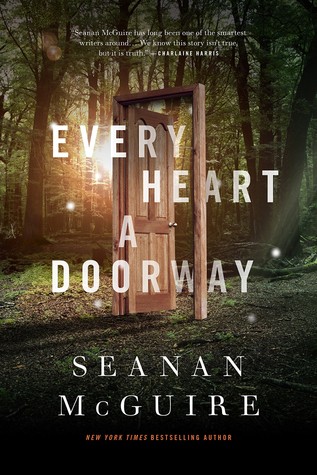
Every Heart a Doorway by Seanan McGuire
Most traditional portal fantasies conclude when the children return home to their families. Seanan McGuire’s Every Heart a Doorway begins with the devastating aftermath: what happens when you are forced to come back?
Set at Eleanor West’s Home for Wayward Children, the novella follows a group of teenagers who have tumbled through custom doors into disparate magical territories: worlds of high nonsense and confection, worlds of cold logic and clockwork, worlds of bones, twilight, and quiet skeletons. Having tasted true belonging in places calibrated to their deepest natures, the children are deemed broken and delusional by mundane society, living only for the chance to find their doors again. When a series of brutal murders shakes the sanctuary, newcomer Nancy must confront the dark consequences of longing for elsewhere.
McGuire writes with profound empathy about the ache of displacement and the beautiful, varied taxonomy of what makes a world feel like home.
- The Threshold: Tailored, impossible doors (shadows, trunks, puddles) appearing only for specific seekers
- The World Beyond: Multiple distinct metaphysical landscapes (High Nonsense, Underworld, Logic, Wicked)
- Tone & Audience: Poignant, dark-fantasy boarding school mystery for YA and adult readers
The Neverending Story by Michael Ende
Michael Ende’s The Neverending Story is one of the most sophisticated metanarrative fantasies ever conceived, transforming the physical book into the portal itself.
Bastian Balthazar Bux, an insecure, grieving schoolboy, ducks into an antiquarian bookshop to escape street bullies. There, he steals a clothbound volume stamped with two snakes biting each other’s tails: The Neverending Story. Hiding in his school’s dusty attic on a stormy day, Bastian reads of the land of Fantastica, where a creeping void called The Nothing is erasing landscapes and inhabitants because human beings have stopped dreaming. But as Bastian reads deeper, the boundary between reader and text begins to dissolve, until he realizes the characters are calling directly to the boy holding the book in the attic.
Ende demonstrates that a story is not a passive mirror; it is an active threshold that demands the reader’s courage and creative responsibility.
- The Threshold: An antique book read in a quiet, shadowy school attic
- The World Beyond: Fantastica, an infinite continent of dreamscapes, luckdragons, and ivory towers
- Tone & Audience: Philosophical, epic high fantasy for all ages
Alice’s Adventures in Wonderland and Through the Looking-Glass by Lewis Carroll
Lewis Carroll’s Victorian classics are the twin fountainheads of modern portal literature, establishing two of the most enduring threshold motifs in Western culture: the rabbit hole and the looking-glass.
In Alice’s Adventures in Wonderland, Alice follows a waistcoat-wearing White Rabbit down a deep burrow lined with cupboards, bookshelves, and marmalade jars, falling through an endless vertical space until she lands in a hallway of locked doors. In Through the Looking-Glass, she climbs onto the fireplace mantel, touches the silvered glass above the hearth, and feels the solid pane dissolve like a bright silvery mist, allowing her to step through into a world where chess pieces walk and nursery rhymes govern reality.
Carroll’s brilliance lies in his refusal to moralize. Wonderland and the Looking-Glass world operate on pure linguistic wit, mathematical satire, and dream logic, proving that the other side of the mirror is under no obligation to make sense to our waking rules.
- The Threshold: A vertical rabbit hole and a dissolving parlor looking-glass
- The World Beyond: Wonderland and the Looking-Glass Chessboard World
- Tone & Audience: Foundational surrealist classics for readers of all generations
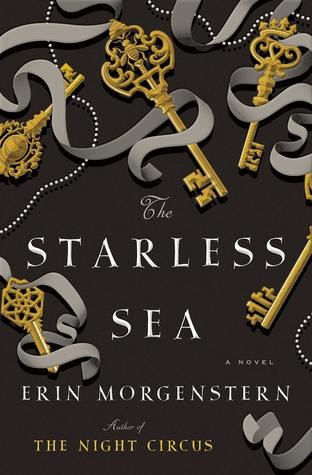
The Starless Sea by Erin Morgenstern
Erin Morgenstern’s The Starless Sea is a lavish, atmospheric sanctuary for readers who cherish books, whispered secrets, and hidden architecture.
Graduate student Zachary Ezra Rawlins discovers a mysterious book in his university library titled Sweet Sorrows. As he reads, he is shocked to find a precise, intimate description of a moment from his own childhood: the day he saw a door painted in blue on an ordinary alley brick wall and walked away without trying to turn the doorknob. Determined to understand how his secret ended up in a published volume, Zachary follows a trail of bees, keys, and swords that leads him to a hidden doorway in Manhattan. Stepping through, he enters the Harbor on the Starless Sea: a vast, subterranean sanctuary of towering bookshelves, glowing ballrooms, lost ships, and catacombs beside a dark, honeyed subterranean ocean.
Morgenstern constructs a world that feels like an endless autumn evening, celebrating the timeless ceremony of finding a door that was waiting only for you.
- The Threshold: Doors painted onto urban brick walls and iron cellar hatches
- The World Beyond: The Harbor on the Starless Sea, a subterranean library and story sanctuary
- Tone & Audience: Lyrical, atmospheric, romantic literary fantasy for adult readers
A Darker Shade of Magic by V. E. Schwab
V. E. Schwab’s A Darker Shade of Magic turns threshold crossing into a high-stakes, kinetic art of parallel urban geography.
In Schwab’s universe, there are four parallel Londons occupying the exact same geographical space, separated by thin walls of reality: Grey London, a dreary, magicless city ruled by King George III; Red London, a vibrant, flourishing empire built along the crimson waters of the river Isle; White London, a brutal, starved city where tyrants fight for scraps of fading magic; and Black London, a fallen world consumed by dark magic and sealed away forever. Kell is one of the last Antari: rare magicians with one black eye who possess the ability to travel between the Londons using blood tokens and spatial doorways. When a dangerous artifact from Black London falls into his hands, Kell must cross borders to prevent all worlds from collapsing.
Schwab’s magic system makes the physical act of crossing feel visceral: stamping an antique coin into floorboards, uttering command words, and stepping through a wall from the fog of one city into the sunlight of another.
- The Threshold: Spatial doors opened with Antari blood magic and talismanic tokens
- The World Beyond: Four distinct, parallel incarnations of London
- Tone & Audience: Fast-paced, atmospheric high fantasy and urban adventure for YA and adult readers
The Book of Lost Things by John Connolly
John Connolly’s The Book of Lost Things is a dark, haunting exploration of childhood grief, wartime trauma, and the menacing underbelly of traditional folklore.
Set in England during the height of the Second World War, twelve-year-old David is consumed by grief after the death of his mother. Struggling with his father’s remarriage and plagued by waking nightmares, David takes refuge in his bedroom books. But the books begin to whisper to him in the night. When an enemy bomber crashes into his family’s garden, David crawls through a crack in the sunken garden wall and emerges into an unfamiliar, twilight world governed by a dying king, an insidious Crooked Man, and twisted variations of traditional fairy tales.
Connolly does not soften the edges of the dark forest. His otherworld is dangerous, melancholic, and deeply rooted in the harsh psychological realities of growing up.
- The Threshold: A sunken garden wall shattered by a wartime plane crash
- The World Beyond: A dark, folkloric landscape of corrupted fables and shifting forests
- Tone & Audience: Melancholic, gothic dark fantasy for adult and mature YA readers
The Subtle Knife by Philip Pullman
In Philip Pullman’s His Dark Materials trilogy, the portal moves from a static piece of architecture to an instrument held in a human hand.
The Subtle Knife, the masterwork second volume of the saga, introduces Will Parry, a twelve-year-old boy from our Oxford who discovers a mysterious “window” in the air on a highway median. Stepping through the shimmer, Will finds himself in Cittàgazze, a deserted Mediterranean city where spectral Specters consume the souls of adults. There, he meets Lyra Belacqua and becomes the bearer of the Subtle Knife: a blade forged with one edge that can cut through any physical material, and a second, microscopic edge that can slice through the fabric between parallel universes.
Pullman gives the physical act of world-crossing an astonishing sensory precision: the hum of the blade against invisible threads, the delicate tactile search for the grain of reality, and the terrifying realization that every cut creates an opening that must eventually be stitched closed.
- The Threshold: Invisible windows in the air cut by a microscopic two-edged blade
- The World Beyond: Cittàgazze and countless interconnected parallel dimensions
- Tone & Audience: Monumental, philosophically rich epic fantasy for YA and adult readers
Tom’s Midnight Garden by Philippa Pearce
Philippa Pearce’s Tom’s Midnight Garden is a quiet, peerless English classic that treats the portal as a sanctuary of memory, childhood, and time.
Quarantined with his aunt and uncle in a dreary Victorian house that has been converted into modern flats, young Tom Long is restless and miserable. There is no garden, only a narrow paved backyard with dustbins. But one night, the grandfather clock in the hallway strikes an impossible thirteen. Creeping downstairs in his pajamas, Tom turns the back door latch and steps out into a vast, sunlit nineteenth-century garden of fir trees, lawn tennis courts, greenhouse melons, and apple orchards. There, he meets a lonely girl named Hatty, returning night after night to explore a lost era.
Pearce’s portal operates on the emotional resonance of nostalgia and connection, showing that the door between past and present is held open by human longing.
- The Threshold: A back hallway door opened when the grandfather clock strikes thirteen
- The World Beyond: A Victorian country garden preserved in memory and summer sunlight
- Tone & Audience: Gentle, atmospheric, time-slip classic for all ages
The Thief of Always by Clive Barker
Clive Barker’s The Thief of Always is a magnificent dark fable that examines the deceptive comfort of the idyllic portal.
Ten-year-old Harvey Swick is dying of boredom on a gray February afternoon when a creature named Rictus flies into his bedroom window and invites him to The Holiday House. Built by the mysterious Mr. Hood, the house is a child’s paradise: every morning brings the warm breezes of spring, every afternoon is high summer, every evening is Halloween with pumpkins and costumes, and every night is Christmas with presents under the tree. But as Harvey investigates the lake of dark water behind the orchards, he discovers the horrifying truth: for every day spent in the Holiday House, a full year of real time passes in the outside world.
Barker balances vibrant storybook whimsy with genuine, chilling stakes, reminding readers that a portal that demands no effort usually demands your life in return.
- The Threshold: A wall of thick gray mist and a wooden garden gate
- The World Beyond: The Holiday House, where four seasons cycle in a single day
- Tone & Audience: Dark whimsy and cautionary fable for middle grade and adult readers
Neverwhere by Neil Gaiman
Neil Gaiman’s Neverwhere transformed the portal subgenre by showing that the other world does not require a magical distant continent; it can exist in the blind spots of the city beneath our feet.
Richard Mayhew is a respectable, ordinary London businessman with a sensible desk job and a demanding fiancée. But when he stops on a rainy sidewalk to help a bleeding girl named Door, his predictable reality shatters. Richard falls through the cracks into London Below: a subterranean underworld of forgotten tube stations, medieval sewer barons, talking sewer rats, and black-velvet midnight markets held in the aisles of Harrods. Once you cross over into London Below, the upper world forgets you: your apartment key stops turning in the lock, and your colleagues look straight through you on the street.
Gaiman creates a gritty, darkly humorous urban threshold where history, myth, and the overlooked corners of daily life collide.
- The Threshold: Falling through the cracks of awareness and social indifference
- The World Beyond: London Below, an unmapped subterranean kingdom beneath the capital
- Tone & Audience: Witty, atmospheric, dark urban fantasy for adult readers
Fourteen Doors, and How to Choose the Right One
Fourteen books is a lot of doors to stand in front of at once, so treat this less as a syllabus and more as a set of keys sorted by what you actually want on the other side.
For the purest sensory wonder, the wardrobe feeling itself, start with Lewis or Harrow. For a world that never stops interrogating its own strangeness, choose Clarke’s silent, tide-flooded House. For danger dressed as domestic comfort, go to Gaiman’s Coraline or Barker’s Holiday House, the two doors on this list most likely to make you check the locks. For the ache of the door closing behind you, read McGuire. For portals that refuse metaphor and become physical mechanisms, a knife, a coin, a struck clock, read Pullman, Schwab, or Pearce. For the city that was strange all along and only needed you to fall through it, read Gaiman’s Neverwhere.
None of these fourteen doors open onto the same room twice. That is the actual argument for reading widely here rather than picking one: the genre’s power comes precisely from how differently a wardrobe, a knife, and a struck clock can each accomplish the same impossible thing.
The Threshold in the Wolfesque Universe
At Wolfesque, author A. P. Wolf and our studio artists revere the portal not simply as a convenient plot engine, but as the foundational emotional rhythm of our creative philosophy: The Doorway Feeling.
Across our broader storytelling archives, explored through the Wolfesque Books Catalogue and our Stories, we celebrate the borderland tension of standing with one foot on the familiar village hearthstone and the other foot hovering over the twilight path of an unmapped forest. We believe that wonder is sharpest when the boundary between the known room and the wild elsewhere is tangible, heavy, and close enough to touch.
Whether you are stepping through a winter wardrobe, cutting a window into empty air, or simply noticing that an antique key feels warm in your hand, these portal fantasy masterworks reveal why we continue to check the back of the cupboard.
To explore further journeys into threshold wonder, read our original treatise on The Doorway Feeling in Fiction, examine the Architecture of the Threshold, discover our guide to Books Like Alice in Wonderland, browse our curated guide to the Best Illustrated Fantasy Books, or explore our Books Catalogue to find your next world.