Old sea maps did not place monsters in the water because cartographers had run out of decorative ideas.
On sixteenth-century European maps, the ocean was still a moving uncertainty: currents, storms, shipwrecks, whales, reefs, bad soundings, rumors brought home by sailors, and huge blank spaces where measurement had not yet beaten fear into order. Some monsters were pure invention. Some were distorted reports of real animals. A whale’s back rising beside a wooden ship could become a beast with tusks, ears, and an appetite for hulls. The ocean did not need to be supernatural to be terrifying. It only needed to be larger than the evidence.
That is the tradition the best sea monster fantasy books inherit. The monster matters, but the deeper subject is the sea as a hostile medium: vertical, dark, cold, loud in unfamiliar ways, and separated from human life by the thinnest possible skin of wood, steel, glass, or pressure suit.
The Ocean Is Not a Setting
Land-based monsters usually arrive from somewhere. A forest. A crypt. A mountain pass. Oceanic monsters arrive from a direction human bodies are not built to understand. Below is not a floor. It is a country.
At depth, light vanishes, pressure rises, temperature drops, and distance becomes difficult to judge. Sound moves differently in water. A shipboard story also has a brutally simple architecture: inside is air; outside is drowning. That makes hulls, hatches, portholes, ballast, diving bells, and research vessels emotionally important objects. They are not props. They are the walls of the only room where lungs still work.
Historical sea monsters thrive in this uncertainty. Medieval and Renaissance map creatures were not always meant as navigational warnings in the modern sense; many decorated display maps, educated viewers, dramatized danger, or repeated the best available confusions of natural history. As oceanography, printing, navigation, and marine biology improved, monsters retreated from charts and returned in another form: literature, film, games, and the deep-sea imagination.
The abyss did not become less strange. It became measurable, which in some ways made it worse.
Four Books for the Abyssal Shelf
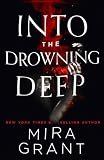
Into the Drowning Deep by Mira Grant
Mira Grant’s Into the Drowning Deep is the cleanest recommendation here for readers who want the creature-feature promise honored with scientific apparatus. A previous ship, the Atargatis, vanished near the Mariana Trench while filming a mockumentary about mermaids. Years later, a second expedition returns with scientists, media personnel, security, grief, ambition, and enough hubris to make the ocean seem almost patient.
The book belongs here because it rebuilds the mermaid as an apex predator. Its sirens are not decorative women with tails. They are pack hunters adapted to the water, and the novel’s terror grows from observation, autopsy, ship logistics, cameras, and the awful problem of studying something that is also studying you back.
Choose this for marine expedition horror, predatory sirens, claustrophobic shipboard danger, and a modern scientific frame. It is the most direct sea-monster entry in the set.
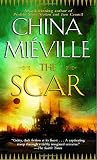
The Scar by China Mieville
China Mieville’s The Scar offers a different oceanic pleasure: not the single monster, but the political weirdness of living on water. Armada, the floating pirate city, is built from captured vessels lashed into a drifting metropolis. The sea is not empty space between ports. It is infrastructure, prison, frontier, and appetite.
This belongs in an oceanic fantasy guide because its central marvel, the avanc, is inseparable from scale. The creature is not there merely to be sighted. It becomes part of a scheme to move a city and approach a wound in reality. The book turns nautical fantasy into urban fantasy unmoored from land, with language, labor, captivity, biology, and governance all made unstable by the sea.
Pick this when you want baroque New Weird imagination, floating-city politics, strange species, and the feeling that the ocean has swallowed an entire civilization and kept it moving.
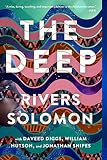
The Deep by Rivers Solomon
Rivers Solomon’s The Deep requires a different kind of care because its oceanic mythology is bound to historical atrocity. Inspired by the clipping. song, the novella imagines the wajinru, water-dwelling descendants of pregnant African women thrown overboard during the transatlantic slave trade. Yetu carries communal memory as historian, and that burden is both sacred and destructive.
The book belongs here not because it delivers sea-monster spectacle, but because it transforms the ocean from abyss into archive. The deep holds beauty, society, trauma, forgetting, and survival. Its speculative premise makes memory physical: something carried in one body until that body can hardly live under the pressure.
Recommend this to readers who want mythic ocean fantasy, Afrofuturist memory, lyric compression, and emotional seriousness. It should not be sold as a monster romp. Its darkness is historical and intimate.
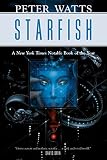
Starfish by Peter Watts
Peter Watts’s Starfish is hard science fiction with abyssal horror in its bones. The Rifters program sends modified humans to operate power infrastructure around the Juan de Fuca Ridge, kilometers beneath the Pacific. The premise is not “what if there were monsters down there?” but “what kind of human being would a system choose for a place no ordinary body or mind could survive?”
Watts makes pressure political. The deep sea is not romantic darkness. It is an industrial site, a biological frontier, and a psychological accelerator. A former marine biologist, he gives the abyss a clinical hardness: vents, darkness, adaptation, trauma, and organisms that do not care whether human civilization has a name for dread.
Read it when you want the ocean to feel least forgiving. It is bleak, intense, and far from cozy, but it may be the book here most committed to making the deep physically real.
What the Best Ocean Stories Understand
A lesser sea-monster story treats the creature as a large animal with dramatic teeth. The stronger version asks what the creature reveals about the medium around it.
Does the ship feel breakable? Does depth change what can be known? Does the story understand navigation, pressure, weather, current, food, air, or the social strain of being trapped together above black water? Does the monster belong to the sea, or could it be moved to a cave with minimal damage?
The old mapmakers filled the water with beasts partly because the ocean was still resisting explanation. Modern oceanic fantasy has better science, better charts, and better submersibles. It also has a larger terror: the knowledge that measurement does not make a place human.
To continue through oceanic lore and speculative water-worlds, explore Best Ocean Fantasy Books, Mermaid Fantasy Books, Cosmic Horror Beyond Lovecraft, or the Fiction Books Catalogue.