The shoreline is a threshold with a schedule. Twice a day it erases footprints. Lungs that work on one side of it fail on the other. Folklore noticed.
Hans Christian Andersen already owns the 1837 mermaid who pays in the body: tongue cut out, every step on land a blade, a soul that does not arrive as a wedding present. Disney later offered a happier climate. This page is for readers who typed mermaid fantasy books and meant the colder water, not a catalogue of every drowned city. Ocean fantasy remains the broader sibling. Sea-monster books own the leviathan shelf. The kelpie is a Scottish water-horse, adhesive hide, river warning: a cousin with hooves, not a mermaid with a comb.
What mermaid stories uniquely stage is the two-world ache. Hair and tail as a postcard are optional. The invoice is not.
The original physics
Andersen’s mermaid does not need another plot summary. She needs to stay attached to later novels as a set of physical rules. You cannot keep a voice and a human gait as free upgrades. Silence is a plot device with blood in it. Foam is an ending.
When a modern book forgets those rules, it is usually writing a costume. When it remembers them, even a court under the sea starts to feel like pressure, cold, and a hierarchy that has never heard of a tourist.
A court that calls obedience love
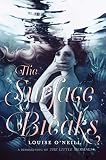
Louise O’Neill’s The Surface Breaks (2018) takes the Andersen bargain and strips the remaining varnish. Gaia lives under a Sea King whose power is domestic and total. The glimpse of land is not a rom-com meet-cute. It is a bid for a mouth that is allowed to speak.
O’Neill is tactile about the underwater palace: bone, kelp, the sense that beauty is a discipline enforced on girls. The witch’s price does not hide behind sparkles. If you want the mermaid novel that is still in a shouting match with 1837, start here.
Memory stored in someone else’s skull
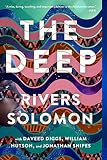
Rivers Solomon’s The Deep (2019) is a different ocean. It was written with Daveed Diggs, William Hutson, and Jonathan Snipes, expanding a song by the group clipping., which itself drew on the Drexciya myth: an underwater people descended from pregnant African women thrown overboard during the transatlantic slave trade. Credit the chain. The book is not a free-floating “Atlantic mermaid” invention.
The wajinru live in the deep. To survive origin-pain, they appoint a Historian, Yetu, to hold the memories the rest cannot swim with every day. Yetu’s skull becomes an archive until it cannot. Surface and depth are not romance settings. They are a problem of whether a culture can live without its dead.
Solomon’s sentences have the slow light of a trench organism. The Deep is mermaid-adjacent and more. It is why this query cannot be answered with a pretty shoreline and three interchangeable hunters.
A tank, a ticket, a gaze
Christina Henry’s The Mermaid (2018) puts the creature in American show business. A woman who is not pretending is displayed, argued over, and sold as a wonder in a climate that includes P. T. Barnum’s appetite for the fake Feejee mermaid: the infamous monkey-fish composite that taught crowds to pay for a lie about the sea.
The folkloric mermaid and the carnival mermaid are different jobs. One lives in the surf as a two-world ache. The other lives under glass as an attraction. Henry’s novel is useful here because it makes looking expensive. The reader is in the crowd, then uncomfortably near the tank. Sirens, in the older Greek sense, are another cousin entirely: bird-women in some tellings, singers who wreck sailors, not Andersen’s mute girl with a tail. Keeping those species apart is part of treating the query honestly.
What the surf still teaches
A mermaid at the edge of the water is an emblem of incompatible breathing. That is enough to keep the figure alive in 2026, in novels, in songs, in arguments about whose history the ocean is allowed to hold.
If you take one noticing habit away, make it this. The next time a mermaid is sold as sparkle, ask what she is no longer allowed to say, and what it would cost her feet to stand where you are standing. Andersen already knew. The better books have not forgotten the salt in the wound.