Land fantasy has a horizon. Ocean fantasy has a ceiling of light that dies as you descend, and a floor you may never see.
The search term best ocean fantasy books is broad on purpose. People mean mermaids, selkies, drowned cities, pirate metropolises, ships made of bone, weeks of weather between ports, climate-flooded London, gods whose corpses are a mining industry. A single elegant essay about “the sea as metaphor” will fail them. A twenty-title catalogue will also fail them. What they need is a constellation: enough distinct mechanisms that the map has coasts.
Mermaid fantasy already owns the two-atmosphere ache, Andersen’s invoice, O’Neill, Solomon’s The Deep and the Drexciya chain. Do not rebuild that shoreline here. The kelpie owns the adhesive Scottish water-horse. Sea-monster books own the leviathan shelf. This page is the remaining volume: water as country.
A submarine is a building with a grudge
Jules Verne taught adventure fiction to travel with instruments. Twenty Thousand Leagues Under the Sea (serialized 1869–1870, book 1870) is still the cleanest demonstration that the ocean can be a traversable interior. The Nautilus is architecture. Nemo is a political wound with a kitchen. Coral, wrecks, a burial at sea that is also a boast: the book keeps handing you objects. If you came here for “ocean fantasy” and feel cheated that the ancestor is scientific romance, stay anyway. Later fantasy keeps renting his permission to stay down there without drowning the plot.
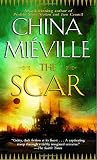
China Miéville’s The Scar (2002) is what happens when the city itself refuses the coast. Armada is lashed together from captured ships, a pirate metropolis with districts, factories, and a hunger large enough to tow. The sea is not scenery around a quest. It is the ground the quest is nailed to. New Weird, Bas-Lag, mosquito-ridden possibilities: call the labels later. The image to keep is a city that has to negotiate with currents.
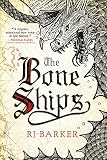
R. J. Barker’s The Bone Ships (2019) makes the navy out of extinct dragons. Ribs, jaws, a carpentry of war in an archipelago that has already used up its living timber of monsters. The ships have a smell and a politics. You can feel the weight of a keel that used to be an animal.
Weeks of weather between ports
Shannon Chakraborty’s The Adventures of Amina al-Sirafi (2023) treats the sea as a road you work. Amina is a captain with a crew: first mate, navigator, the jobs a ship actually has. She takes the Marawati back onto a twelfth-century Indian Ocean of ports, weather, and days of labor between harbors. Myth turns up along the route, not under a hatch and not as a city lashed together from prizes. Treat the history as the novel’s weather, not as a reconstruction you can cite to a dockyard. Nobody is living in a sealed interior. They are sailing.
When the water takes the street
J. G. Ballard’s The Drowned World (1962) floods London into a Triassic dream. Treat the solar and climate machinery as the novel’s premise, not as a lecture you can cite in a lab. What the book wants is regression: heat, lagoons, a psychology that slides backward while the water rises. It is ocean fantasy by drowning, not by mermaid.
Frances Hardinge’s Deeplight (2019) mines dead sea-gods. Divers, relics, an archipelago whose religion has become a salvage economy. The sacred is a carcass with a market. Patricia A. McKillip’s The Changeling Sea (1988) is the lyrical coastal opposite: a hex thrown at indifferent water, a dragon, a prince, a shoreline that answers in riddles. Both belong because both refuse to treat the sea as a highway.
Skins, hooves, and a pointer next door
Margo Lanagan’s The Brides of Rollrock Island (2012) is selkie tragedy without souvenir-shop softness. Seal-skins, a witch, an island economy of stolen wives. World Fantasy Award recognition followed. It is folklore with a body count of ordinary cruelty.
Maggie Stiefvater’s The Scorpio Races (2011) puts carnivorous water-horses on an autumn beach. That creature is a kelpie cousin. Read it, then go to the locked kelpie essay if you want the Scottish teeth rather than the race.
Robin Hobb’s Liveship Traders novels give ships a memory that is also timber and blood. Mention them as the sentient-vessel strain. Do not open a second epic here.
Julia Armfield’s Our Wives Under the Sea (2022) is literary weirdness about a submersible, a marriage, and a homecoming that has taken on water. Ray Nayler’s The Mountain in the Sea (2022) is first-contact with octopuses. Both sit on the speculative edge of this query. They are not interchangeable with Armada. They keep the search honest.
John Langan’s The Fisherman is a reservoir and a grief that opens onto something older than sport. Cosmic water, not a mermaid. It already has a home in cosmic horror beyond Lovecraft. Point. Do not restage.
The souvenir is vertical, and also horizontal. Next time you look at a harbor, a flooded underpass, or a map’s innocent blue, ask which floor of the water you are imagining: surf, city, bone-keel, a working road of weather, drowned street, or the dark where light has a job it is already failing. Ocean fantasy is the literature of that extra dimension. Mermaids can visit. They do not get to own the whole sea.