Ask a fantasy reader to define grimdark and dark fantasy, and you will usually get the same answer twice: both are the sad, violent, morally grey stuff, as opposed to the cheerful stuff with the dragons on the cover. That answer is close enough for a bookstore shelf label. It is wrong in the one way that actually matters to a reader deciding what to pick up next.
The real dividing line has nothing to do with body count. It is a question of what each mode believes is still possible inside a broken world.
Grimdark, as a critical term, exists as a reaction to the Tolkien-descended tradition of legitimate kings, clear-eyed heroes, and quests that resolve into meaningful victory. In grimdark’s harshest examples, goodness is not merely threatened, it is functionally unavailable: every institution runs on corruption, every apparent kindness conceals an angle, and the horror on the page is generated by human beings doing what human beings, stripped of consequence, actually do to each other. Dark fantasy runs the same darkness through a different filter. It says yes to the possibility of uncomplicated goodness surviving inside the dark, and it keeps faith with something grimdark deliberately abandons: wonder. A tallow candle in a ruined shrine. A bronze ring pulled from a riverbank. An old magic that still, against every cynical expectation, works.
The distinction sounds academic until you notice what it does to plot. In grimdark, the twist is usually that the noble thing was rotten all along. In dark fantasy, the twist is that the noble thing was real, and now someone has to pay what it actually costs.
The Four Cornerstones of Consequential Wonder
The landmark works of dark fantasy that take permanent root in a reader’s memory share four disciplines that keep wonder and dread in the same room without either one cancelling the other out.
1. The Economy of the Sacred Debt
In commercial escapism, magic behaves like electricity: abundant, neutral, drawn from thin air at no social or physical cost. Dark fantasy restores the older, colder logic of folklore covenant. Power demands payment in blood, sanity, memory, or years of life, and every spell casts a shadow of equal mass. This is not grimdark’s blanket cynicism about power; it is a ledger. The debt is specific, and it is always collected.
2. Deep Atmospheric Chiaroscuro
A world of unrelenting pitch darkness is exactly as flat as a world of relentless midday sun. Dark fantasy’s power comes from contrast: fragile hearthside warmth placed directly against an encroaching, ancient night. Wolfe stages this literally: Severian’s memory of a walled garden preserving extinct species under glass means nothing without the dying, decaying Urth pressing in on every side of it. The darkness exists to make the light legible, which is the opposite of grimdark’s project, where the light is usually revealed as a lie.
3. Antiquity Woven into Physical Architecture
Dark fantasy’s landscapes are heavy with deep time. Castles rise on the cyclopean foundations of vanished empires; forest roads follow the lines of highways whose builders are forgotten; village dialects preserve fragments of dead ritual tongues. The setting feels excavated, not painted, which gives its wonders the weight of something recovered rather than invented.
4. Psychological Restraint Over Visceral Shock
True dread is built through patient pacing and moral ambiguity rather than relentless gore. When violence lands, it lands with permanence, because the author made room for the wonder first. Strip the wonder out entirely, and what remains is closer to grimdark’s flatter, harder register: still dark, but no longer paying the specific tax this genre is built to collect.
Landmark Volumes Where the Wonder Survives
The Book of the New Sun by Gene Wolfe (1980-1983)
Gene Wolfe’s four-volume epic (The Shadow of the Torturer, The Claw of the Conciliator, The Sword of the Lictor, The Citadel of the Autarch) is set on Urth under a bloated, dying red sun so far in the future that ancient technology has decayed into unrecognizable myth. Severian, an apprentice in the Guild of Torturers, narrates his own exile with an unreliability so total that readers spend the whole series unsure whether they are reading history, confession, or self-justification. What keeps the book from grimdark’s flatness is that the decayed world is still, stubbornly, wondrous: an alzabo that eats memories along with flesh, a garden where extinct species survive under glass, a sword that may or may not be older than the sun itself.
Tales from the Flat Earth by Tanith Lee (1978-1987)
Tanith Lee’s mythic sequence (Night’s Master, Death’s Master, Delusion’s Master) reads like an uncensored, poetic Arabian Nights crossed with Mesopotamian cosmology. Centered on Azhrarn, Prince of Demons, who rises from the Underearth to meddle in mortal affairs, Lee builds a world where beauty and cosmic tragedy are inseparable, and where cruelty is delivered with an aesthetic precision that never curdles into grimdark nihilism. The wonder is never in doubt. It is simply, consistently, expensive.
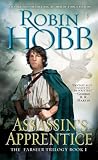
The Farseer Trilogy by Robin Hobb (1995-1997)
Robin Hobb demonstrates that magic should hurt without ceasing to be magic. Through FitzChivalry Farseer, a royal bastard trained as a court assassin, Hobb runs two distinct systems: the aristocratic, mind-linking Skill and the ancient, beast-bonding Wit. Using the Skill burns vitality and courts addictive madness; the Wit invites social ostracism and physical danger. Both remain, unmistakably, wonders, which is exactly what keeps Farseer out of grimdark territory even at its most devastating: Fitz’s suffering is the cost of something real, not evidence that nothing was ever real to begin with.
Jonathan Strange and Mr Norrell by Susanna Clarke (2004)
Clarke’s historical masterpiece proves the same rule works in a comedy of manners as easily as in an epic. Reviving the practical magic of nineteenth-century England requires making pacts with entities that do not understand human ethics. The Gentleman with the Thistledown Hair is not a symbol of a rotten world; he is a genuinely wondrous, genuinely dangerous fact about it, cold, ancient, and bound to the shadowy reign of the Raven King.
The Shadowed Path in the Wolfesque Sensibility
In the Wolfesque studio tradition, author A. P. Wolf shapes dark fantasy around the solemnity of forgotten agreements and the dignity of human courage, the wonder-first register this genre depends on.
In The Hollow Bell, an ancient woodland bell tower marks the threshold between human villages and primeval covenant lands, a reminder that looking into the deep woods demands patience, respect, and moral clarity rather than cynicism about whether anything past the tree line is real.
To explore further inquiries into shadowed literature, examine our Dark Fantasy shelf and browse our study on Gothic Fantasy Novels: Ruined Castles, Dark Romance & Supernatural Dread.