A gothic story starts to matter when the house refuses to stay furniture.
Wallpaper can be dark for a hundred pages and still be decorating. The shudder arrives when an heir realizes the portrait is not proud of them, or when the land will not let a buried thing stay buried. Classic gothic fiction built that architecture: abbeys, family madness, the past as an unwelcome tenant.
Gothic fantasy novels keep the house and change the physics. The curse can be a fungus with a genealogy. The castle can be so large it has become a polity. The dead can be a profession. A plague year can be a war in Heaven. The question is not whether the candles are pretty. It is whether the building is still a metaphor, or whether it has started collecting.
If you wanted a seventeen-title shopping arcade, that is the old draft of this page. What the search actually needs is the distinction, then a short street of books that honor it.
The castle that ate the kingdom
Mervyn Peake’s Gormenghast novels (Titus Groan, 1946; Gormenghast, 1950; Titus Alone, 1959) remain the unignorable pile. The castle is not a backdrop for a chosen one. It is a ritual machine the size of a city, with kitchens, ivy, and a timetable of ceremonies no one can explain without becoming the ceremony. Dust on a banister is plot. Steerpike climbs through the social architecture as if it were a drainpipe. Titus is born into a role the stones already filled. There is little “magic” as a sparkler. There is a world so enclosed it behaves like a spell.
Gothic houses that will not stay in the background is the locked architectural essay. Peake is that essay wearing a thousand rooms. Later gothic fantasy keeps stealing his permission: the building may be the plot.
The manor as organism
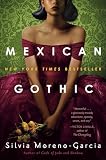
Silvia Moreno-Garcia’s Mexican Gothic (2020) takes a 1950s socialite, Noemí Taboada, from Mexico City to High Place, a rotting English house in the Hidalgo mountains. Oil lamps. Cold corridors. A patriarch obsessed with bloodlines. The twist is not a sheeted ghost. It is a fungus, a colonial biology, a mansion that has learned to reproduce a family the way a parasite reproduces a host.
That is gothic fantasy in the strict sense. The supernatural is not a guest. It is the estate’s metabolism. Isabel Cañas’s The Hacienda (2022), in the aftermath of Mexican independence, works a neighboring room: a bride, a priest who knows something of witches, a house with a violent memory. Historical gothic and speculative gothic share a porch here. The gothic fiction guide can keep the purely earthly keys and locked drawers. This page keeps the houses that have grown a second biology.
Alix E. Harrow’s Starling House (2023) puts a spiteful Kentucky manor in a dying coal town and lets a young woman and a reclusive heir negotiate with a building that has preferences. American gothic often wants soil and money. Harrow lets the house join the bargaining table.
T. Kingfisher’s What Moves the Dead (2022) retells Poe’s Usher as a fungal event. A retired soldier, a wet estate, harebells, and a landscape that is trying to think. It is almost a joke about how little you have to add to Usher to make it biology. The addition is the point.
The year as a ruined abbey
Christopher Buehlman’s Between Two Fires (2012) does not need a family name on the lintel. France, 1348: a knight ruined after Crécy, a girl who speaks with angels, a road toward Avignon while the Black Death is happening as if Heaven and Hell had opened a second campaign. The gothic structure is the year. Churches, relics, saint-statues that refuse to stay furniture. Subtract the angels and you do not have a sensation plot about a will. You have a landscape that has lost its physics. That is why it belongs here, and why the earthly-keys sibling can keep the locked drawers without a quarrel.
Necromancy still needs a hallway
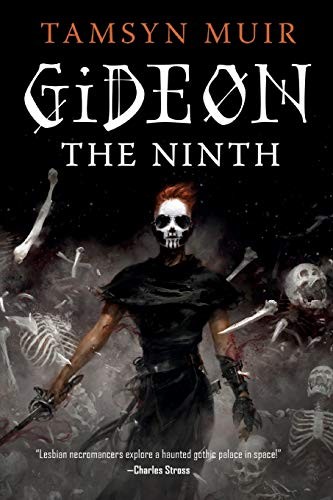
Tamsyn Muir’s Gideon the Ninth (2019) looks like a joke (lesbian necromancers in space) until you notice the pile. A decaying Canaan House, locked rooms, cavaliers, bone as craft, a murder mystery that still requires echoes. The science-fictional frame does not cancel the gothic. It relocates the abbey off-world and keeps the damp.
Do not confuse Muir’s Ninth with Leigh Bardugo’s Ninth House, which the dark academia article already uses as Yale’s occult infrastructure. Different nines. Different creditors. One is a seminar’s secret. The other is a planetary funeral home with a sword.
Around this core, neighbors rather than a second catalogue. Carlos Ruiz Zafón’s The Shadow of the Wind is a postwar Barcelona labyrinth of books; more literary gothic mystery than fantasy, and worth knowing as a cousin who does not cast spells. Laura Purcell’s The Silent Companions is painted wooden figures that move, a Victorian ghost grammar. Hannah Whitten, Adalyn Grace, S. T. Gibson: gothic-romantasy rooms where love enters the house anyway. They can satisfy a related search. They should not define this one. Gothic gardens own the overgrown outdoor half.
The test is portable. If you can remove the speculative element and still have a Brontë pastiche, you may be holding costume. If you remove it and the house dies as an idea, you are in gothic fantasy. Gormenghast without ritual is an empty quarry. High Place without the fungus is a rude weekend. Buehlman’s France without the war in Heaven is a plague chronicle. Canaan House without necromancy is a damp student housing problem.
The souvenir is architectural. Tomorrow, in any old building with a reputation, ask whether you are being shown scenery or introduced to a creditor. If the second, stay for the terms. Gothic fantasy is simply the literature that lets the creditor speak, grow fruiting bodies, demand a cavalier, or treat a plague year as a campaign, without pretending the mortgage was only a mood.