Snow does something to a house that a closed door cannot.
It is not just insulation, though it is that too. Fresh snow is a fantastic acoustic absorber: its structure is full of tiny air pockets that trap and dampen sound waves, especially the higher frequencies that carry footsteps, voices, and traffic. A landscape under a few inches of fresh snow genuinely goes quieter, in a way a microphone can measure and not just a mood can claim. That is why a snowbound night feels different from an ordinary quiet one. The world is not merely still. It has had its higher registers physically removed.
Cozy winter fantasy is the genre built on the inside of that silence. It is not simply “cozy fantasy” with a snowfall painted on the cover. It depends on a specific, physically real contrast: an exterior that is actively, measurably hostile, and an interior, firelight, a bowl of something hot, another voice in the room, that only means something because of what is being kept out.
Why Winter Produced This Folklore and Not Summer
It is not an accident that some of the richest hearth-and-frost storytelling in this genre comes out of Russian and broader Slavic tradition. A culture that spends a third of its year facing genuinely lethal cold develops a correspondingly serious relationship with the boundary between outside and inside.
The domovoi is a household spirit in Slavic folklore, traditionally imagined living behind the stove or under the threshold, fed with small offerings and treated as a kind of resident ancestor who keeps the house in order. Morozko, Grandfather Frost, or Father Frost, appears across Slavic winter tales as a frost demon or winter king who tests travelers found on the road: reward the polite and patient, freeze the rude and greedy. These are not decorative names borrowed for atmosphere. They are load-bearing folklore, describing a real cultural practice of negotiating with winter rather than merely enduring it.
Katherine Arden’s The Bear and the Nightingale draws directly on both figures. Vasya, the novel’s protagonist, still leaves bread for the domovoi long after her Christianized household has been told the old habit is superstition, and the frost king Morozko is not a metaphor in the text, he is a character with a stated job, negotiated with rather than simply feared. Arden’s medieval Rus is cold in a way that has consequences: characters die of exposure, animals are lost, a hard winter is a real threat the plot has to solve, not an aesthetic.
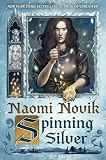
Naomi Novik’s Spinning Silver takes the Rumpelstiltskin bargain, spin ordinary material into wealth, or pay an impossible price, and hands it to the Staryk, an aristocracy of literal winter: beings of living ice whose roads, once they cross a mortal field, freeze the crop standing in it. Novik’s cold is political. It has borders, treaties, and casualties measured in ruined harvests, which is a more interesting kind of winter danger than a simple blizzard.
When Winter Is the Whole Premise
Eowyn Ivey’s The Snow Child (2012), a Pulitzer Prize finalist, goes furthest of the three. It retells Snegurochka, the Russian folk tale of the snow maiden: a childless couple builds a girl out of snow in a moment of grief-stricken playfulness, and something answers. Ivey relocates the tale to early-twentieth-century Alaska, where the winter is not folklore-flavored scenery but the actual, unforgiving physical condition the homesteading couple is trying to survive. The novel never fully resolves whether the girl who appears is a wonder or a delusion born of isolation and cold, and that ambiguity only works because the Alaskan winter around it is rendered with total, unsentimental accuracy. You cannot get the magic without first getting the frostbite.
The Season Doing the Work
What unites these three books is not comfort for its own sake. It is that each one treats winter as an active force with its own folklore, its own casualties, and its own terms, and then places something warm, human, and worth protecting directly inside that danger. The fire matters because the cold is real. The bread left for the domovoi matters because the house genuinely needs looking after. The girl built from snow matters because Alaska in January does not forgive sentimentality.
That is the specific pleasure of reading this kind of book on an actual snowbound night: the quiet outside your own window is doing some of the same acoustic work the folklore describes, and for a few hours, the distance between the story and the room you are sitting in gets very small.