October has a talent for making ordinary rooms feel staged.
The light lowers. Apples bruise in bowls. Porches acquire straw, carved faces, and theatrical warnings that no one is truly expected to obey. A ghost story told in July can feel like a performance. A ghost story told when the evenings are shortening feels like the house itself has leaned closer to listen.
That is the secret behind cozy Halloween books and autumn fantasy. They borrow the old materials of fear (dark roads, witches, graveyards, strange neighbors, doors after dusk) and change the contract. The reader is allowed to approach the uncanny because the story keeps a hearth somewhere in view.
This is not pumpkin-spice decoration. Seasonal reading works because autumn has always carried a double meaning in story: harvest and decline, abundance and rot, festival and threshold. Halloween traditions, ghost-story customs, witch imagery, and harvest imagery all sit on that hinge. The best cozy autumn fantasy understands the hinge instead of merely hanging orange bunting on the prose.
Why Some Books Feel Autumnal Without Being About Halloween
An autumnal book usually has contrast at its center. It gives the reader darkness with a reliable shelter, danger with ritual boundaries, death imagery softened by memory, or magic that smells faintly of kitchens, gardens, libraries, and old coats drying near a stove.
The cover design may help, of course. Publishers know what amber windows, black cats, copper leaves, teacups, mushrooms, and moonlit houses promise to a browsing reader. But the stronger signal is structural. Does the book make safety feel earned because the world outside is cold? Does it let the supernatural become neighborly without becoming toothless? Does it give ordinary rituals (baking, sweeping, tending graves, opening a shop, caring for a child) narrative weight?
The three recommendations below answer those questions in different ways: one through building a public room, one through family and botanical magic, and one through turning a graveyard into a community.
Legends and Lattes by Travis Baldree
Travis Baldree’s Legends & Lattes is not a Halloween novel, which is exactly why it teaches something useful about cozy autumn fantasy. Its seasonal feeling comes from construction, warmth, and appetite. Viv, an orc warrior with a long career behind her, arrives in Thune with a dream that sounds almost absurd in a high-fantasy city: open a coffee shop where no one knows what coffee is.
The book treats peace as physical labor. Viv’s second life requires sanding, counters, recipes, money, trust, signs, chairs, and the nerve to let strangers become regulars. Thimble’s baking and Tandri’s steady competence turn the cafe into a room the reader can almost inhabit. That room matters because Viv has known a life of weapons. Warmth has consequence when it is chosen by someone who could have remained dangerous.
Read this when October makes you want low-stakes fantasy, found family, hot drinks, and the pleasure of watching a sanctuary assemble board by board. It distinguishes itself from the other recommendations by having almost no gothic threat. Its magic is the moral oddity of an ex-warrior learning to make a place where people linger.
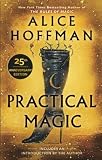
Practical Magic by Alice Hoffman
Alice Hoffman’s Practical Magic carries the autumn signal more openly: New England, old family reputation, whispered witchcraft, garden knowledge, sisterhood, and a house that seems to remember every rumor ever attached to it. The Owens women have been blamed for what goes wrong in their Massachusetts town for more than two hundred years, which gives the novel its durable tension: domestic magic is comforting inside the house and socially dangerous outside it.
Hoffman earns a place in a cozy Halloween guide by treating witchcraft as atmosphere, inheritance, and daily practice rather than theatrical spectacle. The novel’s pleasures are herbs, kitchens, gossip, love, family damage, and the stubborn work of repair. Its autumnal quality does not depend on jump scares. It comes from the feeling that every cupboard contains a history and every garden plant may have been kept for a reason.
Choose this if you want witchy fiction with literary texture, sisterly loyalty, romance, old-house weather, and a stronger emotional ache than Legends & Lattes. It is cozy, but not weightless. Family love here is protective because family history has teeth.
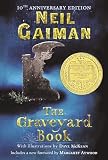
The Graveyard Book by Neil Gaiman
Neil Gaiman’s The Graveyard Book performs one of the neatest reversals in modern dark fantasy: it turns the graveyard, one of gothic literature’s stock locations of dread, into the safest neighborhood in the story. Nobody Owens is raised by ghosts after surviving a terrible act of violence; the dead become caretakers, teachers, neighbors, and guardians.
The book belongs here because it understands that cozy does not mean nothing frightening ever happens. The living world remains dangerous. The graveyard is safe because its community has rules, affection, memory, and limits. Bod learns by moving among headstones, crypts, epitaphs, and older customs, so the book’s autumnal feeling comes from moss, stone, moonlight, and the unexpected tenderness of being watched over by those who are already gone.
This is the strongest recommendation here for readers who want a book that is spooky but not cruel, melancholy but not despairing, and suitable for a wide age range without talking down to young readers. It satisfies the Halloween promise most directly, yet its real subject is belonging.
The Warm Edge of the Dark
Cozy Halloween reading is sometimes misunderstood as horror with the sharp parts removed. The better version is subtler. It keeps the sharp parts in view and changes where the reader is standing.
In Legends & Lattes, the shelter is newly built. In Practical Magic, it is inherited, argued with, and reluctantly reclaimed. In The Graveyard Book, it is made from memory and stone. Each book lets the dark press against the window so the lamplight has something to answer.
That is the small seasonal test worth carrying to the shelf: if the autumn symbols vanished, would the book still know why shelter matters? If yes, it may be more than a seasonal mood. It may be an October room you can return to. Wolfesque’s announced projects The Lantern Keeper and The Crooked Country share that interest in thresholds, roadside shelter, borderland light, and the dignity of small warmth near large darkness.
Related reading: Cozy Fantasy Books for When You Want the World to Feel Kinder, The Unmapped Inn, and Picture Books That Leave a Small Light Burning After They Close.