The first books most people fall in love with do not have chapters. They have a lap, a lamp, and a page that is almost too stiff for small hands.
Words and pictures, at this scale, are not supposed to parrot each other. The prose can be a thin melody. The picture can carry the bass, the joke, the extra fox in the corner the adult has not noticed yet. A child is being taught, among other things, how to look.
Why children need the dark woods already owns the moral case for letting stories be a little frightening. This page is the object on the quilt: paper, a turn, a return.
A hinge you can hold
Trade picture books are often thirty-two pages, because printing likes signatures: a parent sheet folded into gatherings. Often, not always. Twenty-four and forty exist. The constraint still trains the maker. There are only so many times you can ask a wrist to turn.
That turn is a dramatic hinge. A character looks off the right-hand edge. A shadow arrives a page before its owner. An unanswered question sits in the gutter. Narrative silhouette owns the craft of the cut-out figure. Here the cut is temporal. The next spread is a held breath.
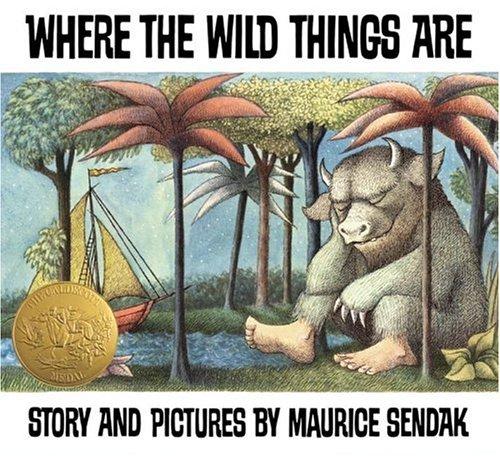
Maurice Sendak’s Where the Wild Things Are (1963) remains the clearest lesson in pacing as architecture. Max’s room begins as a modest rectangle in a field of white margin. As anger and imagination grow, the pictures eat the white. Trees take the walls. Then come three consecutive, wordless, full-bleed spreads of rumpus. No adult lecture. No caption. When Max has had enough, the white margins come back, and supper is still hot.
That last fact is domestic physics as tenderness. Someone kept the food warm while a private weather system passed.
The dark that lives in the house
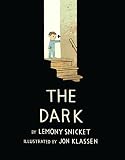
Lemony Snicket’s text and Jon Klassen’s pictures in The Dark (2013) refuse the cheap basement monster. Laszlo is afraid of the dark, which occupies the creaky house the way a tenant occupies a room: as a smooth, velvet presence in corners. Klassen’s gouache makes emptiness look designed. When the dark speaks and leads Laszlo to a drawer with a spare bulb, the book is not saying fear is silly. It is saying the dark can be a place where useful things wait.
The truce is the point. Courage, here, is going downstairs with a flashlight and coming back with a fact.
Aaron Becker’s Journey (2013) has no narrator at all. A lonely girl in a sepia city draws a red door on a wall and steps into canals, aqueducts, airships. The red crayon is the only loud color at first, which is a magician’s trick: you always know where the agency is. Golden Age fairy-tale illustration owns an older, ink-heavy inheritance. Becker’s watercolor palaces are a contemporary cousin: inspection-time architecture for a child who is allowed to stare.
Beth Krommes’s scratchboard for Susan Marie Swanson’s The House in the Night (2008) is worth a look even if you only came for Sendak. Black ink, carved lines, gold watercolor on lamp and moon. The book is a cumulative rhyme. The souvenir is material. Light, in a children’s book, can be a substance you scrape into existence.
What remains after the lamp
A good bedtime picture book does not dump a child in the wilderness. The arc usually walks them home: bed, water glass, the social fact of being wanted. That is not the same as a sermon. Sendak lets Max be furious first.
If you are choosing a book tonight, try the object test. Do the pictures know more than the sentences. Does a turn withhold something. Does the last page leave a small, specific light: a bulb, a hot meal, a crayon, a moon over a roof. If it does, the book has done the job literature always wanted to do at this scale. It has made the dark of the room next door slightly more inhabited.
No lantern from an unfinished Wolfesque story is required. The lamp on the real nightstand is enough, provided the paper earned it.