Put two books on a table.
One is the kind of fantasy that needs its own tote bag. Spine as wide as a brick. Map folded into the front like a treaty. Book One of a sequence that has already reserved the next five years of your life.
The other is slim enough to vanish under a scarf. It still has a coastline in it. Or a dynasty. Or a childhood that will not stay buried.
The thick book looks like a world because it occupies space. The thin one has a harder job. It has to become a world before you have time to doubt it.
That is why the best fantasy novellas feel slightly unfair. They refuse the usual payment of genealogies, army chapters, and three inns before the plot begins. They also refuse the apology that a short book is only a sample. A finished novella is not a novel that lost its nerve. It is a story that already knew what it could live without.
How Short Is Short?
Publishers love the word novella because it sounds like a jewel. Award rules are less romantic. In the major English-language speculative awards, a novella generally lives between about 17,500 and 40,000 words. Below that, the work is usually a novelette or a short story. Above that, it is a novel, even if the hardcover still looks polite on a nightstand.
Page count is a worse ruler. Typeface, leading, and paper can turn the same text into 120 pages or 200. A “short fantasy novel” in a bookstore may be a true novella, a short novel, or a marketing mood. The useful question is not how thin the object is. It is whether the world is being compressed or merely abbreviated.
Compression means the writer has chosen a smaller aperture and then filled it. One road. One household. One archive. One stretch of coast. The rest of the planet can still exist, but it has to leak in through weather, rumor, objects, and the way people talk as if the unseen part is already obvious.
Abbreviation is the opposite trick. Names pile up. Kingdoms flicker past. A prophecy is mentioned so the map will feel expensive. You finish the book knowing that a larger story was promised and never quite arrived.
A great short fantasy does the first thing. It makes omission feel like design.
What the Writer Has to Leave on the Floor
An epic can introduce a city by walking you through its markets, temples, and tax system. A novella often has to let one doorway do that work. The hinge is rusted. The guard is bored. Someone has carved a joke into the lintel in a language the protagonist only half knows. Suddenly the city has age, class, humor, and danger, and nobody spent a chapter on municipal history.
That is the craft problem hiding under the charm.
If there is no room for a council scene, politics has to live in a meal, a marriage contract, or a servant who knows which cups are poisoned. If there is no room for a travelogue, geography has to live in sore feet, a change of salt in the air, or a road that simply stops. If there is no room for a magic encyclopedia, the system has to be visible in what it costs the person using it.
The reader does the rest. Not because the writer was lazy, but because a short form can treat the reader’s imagination as a second architect. The book supplies load-bearing beams. The reader hangs the unseen rooms on them.
This is also why some short fantasies feel larger after they end. The world keeps unfolding in the silence where the extra four hundred pages would have been.
A Short Sharp Shock by Kim Stanley Robinson
Kim Stanley Robinson is usually associated with long, technically serious science fiction. In 1990 he published A Short Sharp Shock, a compact fantasy that behaves like a fever remembered in daylight.
A man wakes in surf with almost no memory. The world he has washed onto is not a continent with interiors. It is a narrow spine of land wrapped around a planetary ocean, a coastline that never quite becomes a country. He walks. He meets people who live as if this ribbon is enough. A companion travels with him whose body has already begun to grow into the landscape.
The book belongs on a novella shelf because its worldbuilding is a single ruthless idea: if the planet is mostly edge, then plot, culture, and metaphysics all have to happen on that edge. There is nowhere to hide a subplot in the hinterland. There is no hinterland. Monasteries, tribes, and coastal power sit on the same thin path, and the walking itself becomes the history.
Robinson’s sentences stay muscular and strange rather than ornamental. The dream-logic works because the physical facts stay stubborn: wet rock, hunger, distance, the width of the land underfoot. A longer novel might have explained the spine. The novella lets you inhabit it until explanation would feel like a tourist brochure.
Choose this when you want a complete secondary world that can be crossed on foot, and when you are willing to be a little lost in exchange for that completeness.
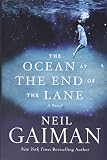
The Ocean at the End of the Lane by Neil Gaiman
Honesty first: The Ocean at the End of the Lane was published and awarded as a novel. The U.S. first edition runs under two hundred pages; the word count sits above the usual novella ceiling. It won the Locus Award for Best Fantasy Novel. It is here anyway, and it should be labeled as the exception it is.
The reason is not convenience. The book is one of the clearest recent demonstrations of what short fantasy can do when it refuses epic furniture. An unnamed man returns to Sussex for a funeral, walks down a country lane, and falls back into the seventh year of his life. The Hempstock farm is still there. Lettie Hempstock is still the kind of girl who can make a duck pond behave like an ocean. The terror that entered his house once, wearing the face of a nanny, is still waiting in the exact place childhood puts its monsters: in the kitchen, in the bath, in the room where adults have all the keys.
Gaiman does not build a continent. He builds a lane, a farm, a house, and a memory that has been lying about its own size. The cosmic part arrives through domestic objects and country women who talk as if the moon is a recent acquaintance. That is compression as intimacy. The world feels ancient because the Hempstocks remember further back than the narrator can stand to look, not because a prologue listed ages of the earth.
If you came here strictly for books inside the novella word-count, treat this as a neighboring short novel that uses the same muscle. If you came here for the feeling of a complete otherworld that can be read in a sitting, it earns the chair.
The Empress of Salt and Fortune by Nghi Vo
Nghi Vo’s The Empress of Salt and Fortune is the cleanest formal novella in this set, and it won the Hugo Award for Best Novella in 2021. It also solves the short-world problem with a method so elegant it feels like a magic trick until you notice it is archival labor.
Chih, a cleric from the Singing Hills abbey, arrives at a decaying palace in the marshes to record what official history preferred to forget. Rabbit, an elderly woman who once served the exiled northern empress In-yo, will talk. She will not give a chronicle. She gives objects. Coins. A handkerchief. A tea strainer. A jar of salted plums. Each thing opens a room in a life that court historians had already sealed.
The empire becomes visible through household inventory. That is not a cute constraint. It is how power actually leaves residue. A princess married into a hostile court does not always get a battlefield. She gets kitchens, gardens, gifts, silences, and the people who carry trays through those silences. Vo lets those people and those objects rebuild a revolution from the inside of a cupboard.
The prose is jeweled without becoming syrup. In a little over a hundred pages, the book makes dynasty, gender, loyalty, and weather feel load-bearing. You could expand it into a six-volume court saga. The point is that you do not need to. The marsh palace already contains the missing volumes as shadows.
Read this when you want short fantasy that treats history as something assembled by hands, not announced by maps.
The Evening Test
A doorstopper can be a glory. Some worlds really do need the extra distance, the extra winter, the extra army. Length is not the enemy. Unexamined length is.
When a short fantasy works, you can feel the decisions. The writer picked a spine of land, a lane, or a palace inventory and then refused to leave that choice. The world still breathes beyond the page, but it breathes through the page: through a companion with trees in her shoulders, a pond that is an ocean, a jar of plums that remembers an empress.
The useful test, in a shop or at the shelf, is almost rude.
Could this story lose a chapter and still be itself? If yes, it may only be abbreviated. If no, if every scene is holding up a wall, you are probably holding compression.
That is the secret pleasure of the form. You get the whole journey before the tea goes cold. Then you look at the brick-wide Book One beside it and start asking a better question than “Is it epic enough?”
You ask whether the world needed all that room, or whether it only needed a writer brave enough to stop.