In 1999, a road crew in County Clare, Ireland, stopped work on a stretch of the new M18 motorway because of a single whitethorn bush growing in a field at Latoon.
The bush stood on what local tradition held to be a fairy path, a route between two raths, or fairy forts, and folklorist Eddie Lenihan warned in a letter to the Irish Times that cutting it down would bring “death and great misfortune” to drivers on the finished road. The letter reached the New York Times, then the BBC and CNN. Later accounts disagree about how much the bush itself determined the engineering decision, but the supportable public fact is simpler and stranger: the tree was not cut down, and the finished road still bends around that field rather than through it.
That’s not a story about credulous villagers in a distant century. That’s 1999. And it’s the actual, useful starting point for reading fae fiction with any seriousness: the Fair Folk were never a costume choice. They were, and in places still functionally are, a set of rules people organized real behavior around.
Documented Folklore, Regional Tradition, and Later Convention: Not One Thing
Before going further, a caution the genre itself rarely bothers with: there is no single, universal “Celtic fairy law.” Folklore scholar Katharine Briggs, whose An Encyclopedia of Fairies (1976) remains the standard reference collecting these beliefs, was working across distinct regional traditions (Scottish Highland, Scottish Lowland, Irish, Welsh, English) that often echo one another but disagree sharply on specifics.
The clearest example: the Seelie and Unseelie Courts, now genre shorthand for “the nice fae” and “the cruel fae,” did not originate as a pan-Celtic concept at all. The terminology is specifically Scottish Lowland, appearing comparatively late (the late medieval to early modern period), and it doesn’t reliably describe Irish, Welsh, or Highland tradition, where the moral lines drawn around the Good Neighbors are considerably blurrier. Most modern fantasy imports Seelie/Unseelie wholesale as if it were ancient and universal. It’s neither. It’s one specific regional court system, roughly as old as Shakespeare, that later fiction generalized far beyond its origin.
That distinction matters, because the four rules below mix genuinely old, widely attested folk practice with details that are regional, later literary habits, and modern fantasy convention layered on afterward. Worth knowing which is which before you trust any of it.
Four Rules of Encounter
1. The Trap of the Exact Word
In many British and Irish folk retellings, and even more strongly in later literary and modern fantasy convention, the Fair Folk are most dangerous when they avoid simple falsehood and do their harm through omission, double meaning, and exact, punishing literalism: promising a traveler will “never suffer harm in this castle,” and honoring the letter of it while turning him to stone at the stroke of midnight. What terrifies is not ordinary dishonesty. It is a scrupulous precision applied with zero mercy for what you assumed the words meant.
2. The Tyranny of the Accepted Gift
Documented across Irish, Scottish, and English sources: nothing offered by the Otherworld is free. Take the wine, the silver comb, the single dance on the hill, and a debt attaches: often payable in seven years of silent service, a portion of one’s sight, or a memory surrendered outright. This is closer to a hospitality code with teeth than a curse; the danger isn’t in refusing, but in accepting without understanding what acceptance binds you to.
3. Iron, Rowan, and the Threshold: Regional, Not Universal
Here the genre tends to flatten what folklore keeps distinct. Cold iron as a ward is broadly attested. Rowan protection is especially prominent in Scottish practice: twigs bound in red thread over a door with the charm “Rowan tree and red thread, will put witches to their speed,” or loops of rowan cut on May Day at Strathspey and driven through by the cattle for protection. In Irish fairy lore, the guardian tree is more often the lone hawthorn, standing on or near a rath, marking a path the Good Neighbors are still, apparently, using. That’s the folklore the Latoon bush belongs to: not a metaphor, a living road hazard whose exact civic force is debated but whose survival is not.
4. Time That Runs on Different Rules Inside
Widely attested, and the single detail that has migrated most cleanly into fiction unchanged: a night spent dancing inside a fairy ring or a hollow hill can cost a mortal decades, or a mortal lifetime can pass in what felt, inside, like a single evening. The mechanism differs by source; the outcome, a return to a world that has moved on without you, does not.
Four Books That Understand the Rules Are the Point
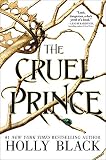
The Cruel Prince by Holly Black
Black’s High Court of Elfhame runs entirely on Rule 1. Every character in Jude Duarte’s world knows the fae can’t lie outright, which means every conversation is a contract negotiation in disguise, and the tension of the book is watching a mortal girl learn to speak fae-precise sentences fast enough to survive court politics that would otherwise flay her.
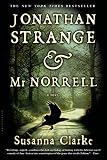
Jonathan Strange and Mr Norrell by Susanna Clarke
The Gentleman with the Thistledown Hair is Rule 2 given a face. He hosts eternal, exhausting balls at Lost-hope entirely convinced he’s doing his mortal guests a magnificent favor: because in his accounting, the debt they owe him for the privilege of attending is simply, obviously, owed. Clarke’s genius is writing his cruelty as sincere hospitality rather than villainy; he never once believes he’s the monster in the story.
Emily Wilde’s Encyclopaedia of Faeries by Heather Fawcett
Fawcett’s structural joke is turning a folklorist loose inside her own material. Emily Wilde treats Rules 1 through 4 as a professional field taxonomy, cataloging exactly which regional Hidden Folk observe which conventions, which makes this the rare fae novel that shares this article’s own caution about not flattening tradition into one rulebook.
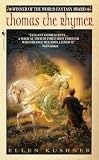
Thomas the Rhymer by Ellen Kushner
Kushner’s novel is built entirely around Rule 4: seven years inside Elfland’s silent court, bound by the terms of an accepted kiss under the Eildon Tree, cost Thomas his art, his voice, and his ordinary relationship to truth before he’s returned to the mortal world he left behind.
Reading With the Rules On
Open a fae novel with these four in mind and the genre stops being interchangeable pretty parties full of pointed ears. It becomes readable as a contract: what promise gets made in chapter one, what’s been quietly accepted, what threshold gets crossed, and how much time the story is secretly asking its characters to spend. Keep an eye on the wording. In the traditions and later novels that make verbal precision central, the Fair Folk are listening to exactly what you said, not what you meant.