There is a particular kind of fae story where the danger hides behind a plain, ordinary face, and the reader is warned to look past appearances. This is not that story.
The fae fiction gathered here runs the opposite experiment. The beauty is not camouflage for something uglier underneath. The beauty is the thing. A face so symmetrical it stops conversation, a voice pitched to a frequency the body answers before the mind can object, a kingdom so exquisitely made that starving inside it feels, for a while, like an upgrade. These are books where you are meant to want exactly what is going to hurt you, because wanting it correctly is the whole mechanism.
That is a different craft problem than the one folklore’s rules of encounter solve. A story about not accepting the wrong gift or not saying the wrong word is a story about vigilance. A story about beauty with teeth is a story about appetite, about how badly you want the thing that is visibly, admittedly dangerous, and what it costs to want it anyway.
Four Books, Four Kinds of Beautiful Danger
The Perilous Gard by Elizabeth Marie Pope
Start at the root. Elizabeth Marie Pope’s 1975 Newbery Honor novel is one of the most faithful literary treatments of the ballad “Tam Lin” ever published, and it plays its danger almost entirely through beauty and comfort rather than menace. Kate Sutton, banished to a remote Elizabethan manor, discovers the local legend of the People of the Hill is not legend at all: an undying folk living beneath the earth, ruled by a Lady whose hollow court is dazzlingly lovely and quietly starving for something mortal to keep it from going stale. Every seven years, the Hill owes a tithe to a darker power, and the horror of the book is not that the underground kingdom is ugly. It is that it is genuinely, seductively beautiful, right up until the night the tithe comes due.
Pope’s restraint is the lesson every later book on this list learned from, whether its authors knew her name or not: withhold the monster, and let the loveliness itself do the frightening.
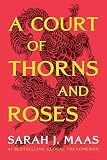
A Court of Thorns and Roses by Sarah J. Maas
Maas built the book that made “beautiful, dangerous fae court” into its own modern shelf category, and she built it, by her own account, out of the same ballad Pope used forty years earlier, Tam Lin, braided together with Beauty and the Beast and the Norwegian tale “East of the Sun and West of the Moon.” Feyre, a mortal huntress, kills a wolf in the woods and is dragged to Prythian to answer for it, only to find her captor, Tamlin, is a High Lord whose court is a spectacle of gowns, masks, and impossible gardens laid directly over a curse that is slowly devouring everyone inside it.
What Maas understands, and what made the book a genre-defining commercial phenomenon rather than a niche one, is pacing beauty like a drug: each gorgeous room, each masked revel, arrives a beat before its cost does. The reader is meant to fall for Prythian exactly as fast as Feyre does, which is the entire point.
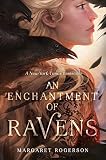
An Enchantment of Ravens by Margaret Rogerson
Rogerson inverts the usual power dynamic with a single, elegant premise: her fair folk are immortal, magnificent, and catastrophically unable to create. They cannot bake bread, weave cloth, or set pen to paper without their perfect hands crumbling into dust, so they buy human Craft instead, and hunger for it the way mortals hunger for immortality. Isobel, a portrait painter, makes the mistake of painting genuine sorrow into the eyes of Rook, the autumn prince, a flaw so unbearable to fae vanity that it is treated as a capital offense.
The beauty here is explicitly, structurally hollow: gorgeous, endless, and missing the one thing that would make it whole. Rogerson turns “beauty with teeth” into an actual plot mechanism, a court that will kill to protect an aesthetic perfection it privately knows is a kind of poverty.
Wintersong by S. Jae-Jones
Jae-Jones fuses two very different sources, Christina Rossetti’s 1862 narrative poem “Goblin Market” and the visual grammar of the 1986 film Labyrinth, into a novel where the Goblin King’s underground realm is a place of music, mirrors, and hunger. Liesl bargains her freedom for her sister’s life and becomes the Goblin King’s bride in a kingdom that is, by any honest description, gorgeous and slowly starving, its beauty maintained at a cost the story keeps making Liesl look directly at.
The novel’s clearest inheritance from Rossetti’s original poem is the danger of appetite itself: the goblin fruit that Rossetti’s sisters cannot stop craving becomes, in Jae-Jones’s hands, an entire underground world built to be craved.
Why the Beauty Has to Be Real
It would be easy to write these four books off as variations on “hot and dangerous,” and readers who only want that will still get it. But the craft achievement underneath all four is more specific: none of them let the beauty turn out to be fake. Prythian’s gardens are real gardens. The Hill’s court is genuinely, not deceptively, magnificent. Rook’s autumn kingdom is not a trick of the light.
That commitment is what separates beauty-with-teeth fiction from a simple bait-and-switch plot. If the loveliness were revealed as an illusion in chapter twenty, the danger would have been the lie all along, and the reader’s earlier admiration would look like a mistake to be corrected. These books refuse that exit. The beauty stays beautiful straight through to the last page. What changes is only the reader’s understanding of what, exactly, that beauty was built to cost.
Readers who want the folklore mechanics underneath fae danger, the actual rules of promise, gift, threshold, and time that these courts are quietly obeying, should continue to Fae Fantasy Books Where the Fair Folk Are Dangerous, Beautiful, and Ancient. To keep exploring the border between wonder and appetite, browse our guide to Best Books About Faeries or our Fiction Books Catalogue.