Almost everyone has a single afternoon in their life they would revisit if a door opened for five minutes.
It might be a quiet kitchen where someone who is now gone was pouring tea. It might be a sunlit street corner in a city before the old buildings were torn down. It might be a crossroads where you made a choice you have spent twenty years turning over in your mind, wondering what branch of reality unfolded along the path you left behind.
That human ache: the realization that the river of time flows in only one direction and sweeps every conversation, glance, and landscape into the past: is the true engine of time travel fiction.
The dials, levers, wormholes, and paradoxes are merely the keys that unlock the door. Once the door opens, time travel literature becomes a profound exploration of regret, memory, consequence, and love.
THE SPECTRUM OF TEMPORAL LITERATURE
Mechanical Vehicles & Foundational Causality
H. G. Wells · Ray Bradbury · Isaac Asimov
Brass levers, the delicate crushed butterfly of prehistoric time, and reality-correcting eternity.
Repeated Lives & Temporal Loops
Ken Grimwood · Claire North · Stuart Turton
Replaying decades with accumulated memory, recursive lifetimes, and body-hopping murder mysteries.
Historical Immersion & Temporal Grief
Jack Finney · Connie Willis · Octavia Butler · Stephen King
The Dakota building thresholds, Blitz bomb shelters, 1815 Maryland slavery, and 1963 Texas.
Intimate Nonlinear Romance & Longing
Audrey Niffenegger · Amal El-Mohtar · Max Gladstone
Genetic temporal drift, epistolary letters left across braid strands of falling empires.
When H. G. Wells published The Time Machine in 1895, he achieved something revolutionary: he transformed temporal displacement from a supernatural dream or magical slumber (as seen in Washington Irving’s Rip Van Winkle or Mark Twain’s A Connecticut Yankee in King Arthur’s Court) into a mechanical science. By treating time as a fourth dimension through which a vehicle could navigate, Wells gave birth to a whole new universe of speculative imagination.
From mind-bending causality loops and repeated lifetimes to historical heartbreak, comic Oxford misadventures, and delicate Tokyo coffee shops, here are twenty landmark time travel novels across five thematic movements.
Movement I: Foundational Machines, Temporal Bureaucracies, and Causal Logic
These are the foundational texts that mapped the theoretical mechanics of the genre: stories that treat the timeline as an architectural structure with strict, unyielding laws of causality.
The Time Machine (1895)
By H. G. Wells
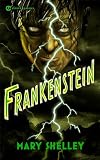
H. G. Wells’s seminal novella is the fountainhead of all modern time travel literature, though not, as the genre’s own folklore sometimes claims, the first mechanical time machine on paper. Wells had already sketched the idea seven years earlier in a rougher 1888 story, The Chronic Argonauts, and Spanish playwright Enrique Gaspar y Rimbau beat him to a steam-powered vehicle entirely with El Anacrónopete (1887). What Wells actually did in 1895 was give the device an argument: rather than characters reaching the future by falling asleep or being cursed by fairies, he grounded time travel in geometry and physics, declaring time to be the fourth dimension of space through which a human-built machine could travel at will.
His unnamed Victorian Time Traveller steps into his apparatus of brass, nickel, and quartz in a Richmond parlor and pulls the starting lever. He watches days flicker past like blinking eyelids until he arrives in the year 802,701 AD: a pastoral paradise inhabited by the delicate, childlike Eloi, who live in terror of the predatory, subterranean Morlocks. Wells combines dizzying evolutionary speculation with a chilling critique of Victorian class division.
- The Deep-Time Horizon: Wells does not stop at the year 800,000; he travels thirty million years into the dying twilight of Earth, watching giant crabs scuttle beneath a bloated, dying sun.
- Ideal Audience: Readers who cherish foundational science fiction and the philosophical origins of time travel.
- Collector Edition: Explore The Time Machine on Amazon
The End of Eternity (1955)
By Isaac Asimov
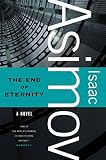
Isaac Asimov’s greatest stand-alone science fiction novel is the supreme exploration of temporal engineering. Outside of normal human time exists Eternity: a vast organization of Technicians, Observers, and Computers who travel up and down the centuries along temporal shafts, calculating subtle “Reality Changes” to eliminate wars, plagues, and catastrophic suffering from human history.
Technician Andrew Harlan is a master at making minute alterations: shifting a toy on a desk or misplacing a letter: that ripple outward to save millions of lives. But when Harlan falls in love with Noÿs Lambent, a woman from a century scheduled for a Reality Change that will erase her existence, he begins to realize the terrible cost of eliminating human risk.
- The Philosophy of Safety vs. Stagnation: Asimov asks whether a humanity protected from every disaster loses the drive to reach the stars.
- Ideal Audience: Fans of grand conceptual science fiction and intricate institutional worldbuilding.
- Collector Edition: Explore The End of Eternity on Amazon
The Man Who Folded Himself (1973)
By David Gerrold
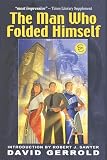
David Gerrold’s Hugo and Nebula-nominated novel is widely regarded as the ultimate, uncompromising examination of time-travel paradoxes. Daniel Eakins inherits a mysterious belt studded with glowing crystals from his uncle. The belt allows him to jump forward and backward through time at will.
Rather than visiting historical figures, Daniel begins jumping back a few hours to have lunch with yesterday’s version of himself. Soon, the timeline is populated by dozens of Daniels from different days, weeks, and alternate choices, holding parties, arguing over life decisions, and falling in love with alternate versions of their own identity. Gerrold handles complex causal loops with playful elegance and psychological depth.
- The Supreme Paradox Exercise: Takes the concept of the bootstrap paradox and personal identity to its absolute logical extreme.
- Ideal Audience: Readers who love dense, clever, mind-bending causality puzzles.
- Collector Edition: Explore The Man Who Folded Himself on Amazon
Movement II: Time Loops, Repeated Lives, and Rewritten Realities
In this territory, time is not an open road, but a closed circle. Characters live through decades, die, and awaken at the beginning with all their memories intact, wrestling with how to give meaning to an eternity of repetition.
The First Fifteen Lives of Harry August (2014)
By Claire North
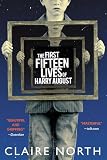
Claire North’s Costa Book Award-nominated novel is one of the most brilliant speculative fiction works of the modern era. Harry August is an “ouroboran” (or kalachakra): a rare human being who, upon dying, is immediately reborn in the exact same body in the exact same year (1919, in the ladies’ room of a Newcastle train station) with every memory of his previous lives intact.
Across his first few lives, Harry explores medicine, war, religion, and quiet solitude. But on his eleventh deathbed, a little girl whispers a message passed down from the future: “The world is ending, as it always must. But the end of the world is getting faster.” A rogue ouroboran is accelerating scientific discovery across centuries, threatening to unravel reality itself.
- The Architecture of Living History: Harry accumulates masteries of languages, combat, and physics across centuries, creating an astonishing portrait of memory.
- Ideal Audience: Readers who cherish rich literary prose, historical intelligence, and high-stakes cat-and-mouse suspense.
- Collector Edition: Explore Harry August on Amazon
Replay (1986)
By Ken Grimwood
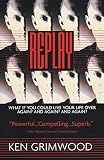
Ken Grimwood’s World Fantasy Award-winning Replay is the definitive ancestor of the modern life-loop genre. In 1988, forty-three-year-old radio journalist Jeff Winston dies of a massive heart attack: and immediately wakes up in his eighteen-year-old body in his college dorm room in 1963, retaining every memory of the next twenty-five years.
Jeff uses his future knowledge to build financial empires, prevent historical disasters, and pursue missed loves, only to die of a heart attack again in 1988 and wake up in 1963 once more. Over successive replays, Jeff encounters Pamela, another “replayer,” and together they explore the existential weight of living multiple lifetimes while searching for the meaning behind their temporal condition.
- The Deep Nostalgia of Second Chances: Captures the bittersweet texture of re-experiencing 1960s music, old relationships, and youth with adult wisdom.
- Ideal Audience: Anyone who has ever wondered what they would do if they could live their life over from the beginning.
- Collector Edition: Explore Replay on Amazon
Recursion (2019)
By Blake Crouch
Blake Crouch constructs a relentless, heart-pounding exploration of memory and reality rewrite mechanics. Neuroscientist Helena Smith invents a device intended to preserve the memories of Alzheimer’s patients. But in the hands of private defense contractors, the machine is modified into a sensory-deprivation tank that allows a person to project their consciousness back into an earlier vivid memory, resetting the timeline and creating an alternate present.
The consequence is False Memory Syndrome: sudden, devastating psychic shocks where entire populations remember lifetimes they lived in timelines that were subsequently erased. Crouch builds the tension with mathematical precision as the world fractures into cascading reality collapses.
- The Emotional Anchor: Behind the blistering pace lies a heartbreaking meditation on grief, regret, and the moments we wish we could undo.
- Ideal Audience: Fans of high-concept, page-turning thrillers and mind-bending physics.
- Collector Edition: Explore Recursion on Amazon
This Is How You Lose the Time War (2019)
By Amal El-Mohtar & Max Gladstone
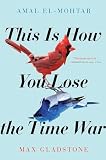
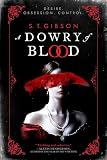
This astonishing, multi-award-winning novella is one of the most romantic and lyrically dazzling time travel stories ever written. Across the tangled “braid” of alternate timelines, two rival empires fight an endless temporal war: the technological Agency and the organic, biomorphic Garden.
Their elite operative agents, Red and Blue, travel up and down the centuries assassinating leaders, shifting battles, and altering historical seeds. Along the way, they begin leaving secret, poetic letters for each other hidden in lava, birds’ beaks, sumac seeds, and dying stars. What begins as a taunting game of wits between deadly adversaries slowly blossoms into an all-consuming, forbidden love.
- The Poetic Prose Style: Rich, vibrant, and overflowing with dazzling sensory metaphors that elevate the genre into high art.
- Ideal Audience: Readers who love lyrical literature, fierce romance, and innovative speculative structures.
- Collector Edition: Explore This Is How You Lose the Time War on Amazon
Movement III: Historical Heartbreak and the Weight of the Unyielding Past
In these novels, time travel is not an academic game; it is an intimate, visceral encounter with history. The past is not easily bent to human will; it has gravity, danger, and an unyielding memory of its own.
Kindred (1979)
By Octavia E. Butler
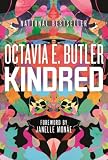
Octavia E. Butler’s Kindred is one of the most powerful and important American novels of the twentieth century. In 1976, Dana, a young African American writer celebrating her twenty-sixth birthday in Los Angeles, is suddenly overcome by dizziness and pulled across time and space to an antebellum Maryland plantation in 1815.
She arrives just in time to save a drowning white boy named Rufus, who she quickly discovers is her own slave-owning ancestor. Whenever Rufus’s life is in danger, Dana is yanked backward into the brutal reality of slavery; whenever her own life is threatened, she snaps back to 1976. Butler strips time travel of all romantic fantasy, confronting the physical, psychological, and generational trauma of American history.
- The Physical Reality of Time: Dana returns to 1976 bearing real scars, bruises, and permanent physical loss.
- Ideal Audience: Essential reading for everyone; lovers of profound historical fiction and speculative literature.
- Collector Edition: Explore Kindred on Amazon
11/22/63 (2011)
By Stephen King
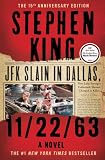
Stephen King’s massive, mesmerizing novel takes a classic time-travel premise and grounds it in rich historical immersion and emotional depth. Jake Epping, a high school English teacher in Maine, is shown a pantry portal inside a friend’s diner that leads directly to September 9, 1958, at 11:58 AM. Every trip takes two minutes in the present, but resets any previous changes upon re-entry.
Jake embarks on a multi-year mission to live in 1958 America, track Lee Harvey Oswald, and prevent the assassination of John F. Kennedy on November 22, 1963. But King establishes a terrifying rule of temporal physics: “the past is obdurate.” The past does not want to be changed, and it will throw car crashes, heart attacks, and coincidences in your path to stop you.
- The Living Texture of the Past: King captures the taste of 1950s food, the smell of cigarette smoke, the music on car radios, and the slow beauty of small-town life.
- Ideal Audience: Readers who love rich historical detail, suspenseful storytelling, and tender, unforgettable love stories.
- Collector Edition: Explore 11/22/63 on Amazon
To Say Nothing of the Dog (1997)
By Connie Willis
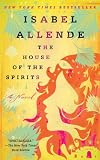
Connie Willis is the undisputed queen of Oxford time-travel literature, and To Say Nothing of the Dog is her most joyous, sparkling, and witty comedy. Set in 2057 Oxford, the university’s time-travel historians are exhausted from catering to a wealthy dowager rebuilding Coventry Cathedral, demanding the retrieval of an awful Victorian artifact known as “the bishop’s bird stump.”
Historian Ned Henry is sent back to 1888 to recover from severe “time-lag” (a disorientation caused by excessive temporal jumps) by taking a restful boating holiday on the Thames, inspired by Jerome K. Jerome. But when a fellow historian accidentally brings a live Victorian cat forward into 2057, threatening to collapse the space-time continuum, Ned must fix the causality error while dodging eccentric Victorian aristocrats, mediums, and croquet games.
- The Comedy of Historical Manners: Sparkling dialogue, romantic misunderstandings, and a profound love of Victorian literature.
- Ideal Audience: Readers looking for laugh-out-loud comedy, cozy mystery, and charming romance.
- Collector Edition: Explore To Say Nothing of the Dog on Amazon
Time and Again (1970)
By Jack Finney

Jack Finney’s Time and Again is the supreme literary monument to nostalgic temporal immersion. Advertising artist Simon Morley is recruited by a secret government project attempting time travel not through machinery, but through intense psychological conditioning: immersing a subject in an authentic historical environment until their mind naturally slips into the past.
Stationed in an apartment inside the iconic Dakota building in Manhattan, Simon steps out into the snowy streets of January 1882. Illustrated with authentic nineteenth-century photographs, newspaper clippings, and woodcuts, the novel creates an unforgettable portrait of gas-lit New York: horse-drawn sleighs in Central Park, gas lamps flickering against brownstones, and the quiet dignity of a slower era.
- The Magic of Archival Texture: Finney’s inclusion of real historical photographs makes the temporal boundary feel miraculously thin.
- Ideal Audience: Lovers of historical New York, gentle mystery, and richly atmospheric writing.
- Collector Edition: Explore Time and Again on Amazon
Doomsday Book (1992)
By Connie Willis
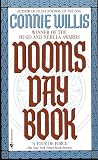
In stark contrast to her comedy To Say Nothing of the Dog, Connie Willis’s Doomsday Book is a devastating, deeply moving exploration of human resilience during catastrophe. Oxford history student Kivrin Engle prepares for an observational drop into the fourteenth century, expecting to land in 1320.
Due to a slippage in the temporal coordinates and an influenza outbreak in 2054 Oxford that knocks out the laboratory team, Kivrin arrives in 1348: the exact arrival year of the Black Death in England. Stranded and unable to call for rescue, Kivrin is taken in by a humble village family. Willis crafts an unforgettable portrait of love, medical desperation, and the profound sanctity of human kindness in the face of inevitable tragedy.
- The Deep Empathy for Ordinary People: Willis treats medieval villagers not as backward caricatures, but as living, feeling souls with immense grace.
- Ideal Audience: Readers who appreciate powerful emotional literature, deep historical research, and profound themes of compassion.
- Collector Edition: Explore Doomsday Book on Amazon
Movement IV: Nonlinear Lives, Domestic Intimacy, and Temporal Portals
Time travel does not require an army or an empire. In these stories, the temporal shift happens in kitchens, living rooms, and quiet coffee shops, exploring how love survives when time refuses to run in order.
The Time Traveler’s Wife (2003)
By Audrey Niffenegger
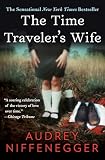
Audrey Niffenegger’s debut novel is one of the most beloved modern love stories in contemporary literature. Henry DeTamble is a Chicago librarian with a rare genetic disorder called “Chrono-Displacement”: during times of stress, he involuntarily vanishes from the present, landing naked in disparate years of his own past and future.
Clare Abshire meets Henry when she is six and he is thirty-six, visiting her in the meadow behind her childhood home; but Henry meets Clare for the first time when he is twenty-eight and she is twenty. Niffenegger constructs a brilliant, emotionally devastating nonlinear narrative that examines how two people build a marriage when their timelines cross out of sequence.
- The Nonlinear Structure: The chapters are dated by Henry and Clare’s respective ages, turning their relationship into an intricate temporal mosaic.
- Ideal Audience: Readers who cherish deep character studies, emotional intimacy, and unconventional love stories.
- Collector Edition: Explore The Time Traveler’s Wife on Amazon
Before the Coffee Gets Cold (2015)
By Toshikazu Kawaguchi

Toshikazu Kawaguchi’s enchanting Tokyo novel brings a gentle, contemplative Japanese aesthetic to temporal fiction. In a quiet, subterranean cafe called Funiculi Funicula in an alley of Tokyo, there is a legendary seat where customers can travel back in time to talk with someone from their past.
However, the cafe imposes strict, inescapable rules: you cannot move from the seat, you can only meet people who have visited the cafe, nothing you do can alter the present: and you must drink your entire cup of coffee and return before it gets cold, or you will become a ghost trapped in the chair forever. Across four interconnected stories, Kawaguchi explores forgiveness, unspoken apologies, and the courage to accept what cannot be changed.
- The Beauty of Acceptance: Since travelers cannot alter the present, the journey is purely about healing the human heart.
- Ideal Audience: Readers seeking cozy, gentle, and deeply moving stories about family, regret, and forgiveness.
- Collector Edition: Explore Before the Coffee Gets Cold on Amazon
Sea of Tranquility (2022)
By Emily St. John Mandel
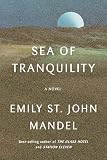
Emily St. John Mandel (Station Eleven) weaves a quiet, luminous masterpiece of temporal interconnectedness. Across four centuries: from an English aristocrat exiled to Vancouver Island in 1912, to an author on a book tour in 2020, to a time investigator living in a lunar colony in 2401: multiple individuals experience the exact same impossible sensory anomaly: a sudden darkness, a brief flash of a train station, and the distant sound of a violin playing in a forest.
Time Institute investigator Gaspery-Jacques Roberts is dispatched across the centuries to investigate whether this anomaly indicates a tear in reality or evidence of a simulated universe. Mandel writes with quiet grace, exploring art, pandemics, isolation, and the sacred fragility of moments.
- The Melancholic Beauty of Scale: Explores how individual human lives remain precious even when viewed across half a millennium.
- Ideal Audience: Readers who love elegant literary science fiction, quiet mysteries, and philosophical depth.
- Collector Edition: Explore Sea of Tranquility on Amazon
Oona Out of Order (2020)
By Margarita Montimore

Margarita Montimore’s Oona Out of Order is a vibrant, heartwarming high-concept novel about a woman living her life entirely out of chronological sequence. On New Year’s Eve 1982, on the eve of her nineteenth birthday, Oona Lockhart faints at midnight and wakes up in the year 2015: inside the body of her fifty-one-year-old self.
Every year at the stroke of midnight on New Year’s Eve, Oona leaps into a different random year of her life: waking up at twenty-seven, then forty-four, then thirty-two. With letters left by her previous selves and the enduring love of her mother, Oona must navigate romance, grief, motherhood, and career without knowing what year comes next.
- The Pop-Culture Kaleidoscope: A joyous journey through 1980s punk, 1990s grunge, 2000s tech, and future decades.
- Ideal Audience: Readers looking for an uplifting, engaging, and emotionally resonant celebration of life’s unpredictability.
- Collector Edition: Explore Oona Out of Order on Amazon
Movement V: Temporal Noir, Cosmic Investigation, and Erased Realities
In this territory, time travel is dark, dangerous, and atmospheric. Investigators pursue killers across decades, military operatives fight for the future of history, and the timeline itself threatens to collapse into the abyss.
The Gone World (2018)
By Tom Sweterlitsch

Described as Inception meets True Detective and Interstellar, Tom Sweterlitsch’s The Gone World is one of the most intense, chilling, and brilliant science-fiction thrillers of the century. Special Agent Shannon Moss works for NCIS’s covert Deep Waters division, which uses classified technology to travel into the future: known as “Inceptions”: to gather forensic evidence to solve crimes in the present.
These future timelines are real to those inside them, but vanish into non-existence the moment the investigator returns to the present. While investigating the brutal murder of a Navy SEAL’s family in 1997, Moss discovers that every future timeline she visits is getting closer to the Terminus: an apocalyptic cosmic entity consuming humanity from the future backward into the past.
- The Chilling Scientific Rigor: Uncompromisingly dark, fast-paced, and filled with mind-bending temporal physics.
- Ideal Audience: Fans of hard science fiction, psychological horror, and dark procedural mysteries.
- Collector Edition: Explore The Gone World on Amazon
The Shining Girls (2013)
By Lauren Beukes
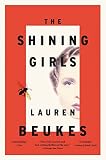
South African author Lauren Beukes crafted a gripping, genre-defying supernatural thriller set in Chicago. In 1931, Harper Curtis, a drifter and killer, stumbles upon a mysterious, dilapidated house that opens doors into different decades of the twentieth century. The house commands him to kill “the shining girls”: women throughout the century who burn with creative potential and intelligence.
Harper leaves bizarre, anachronistic objects from other decades at each crime scene (a 1950s sports card in 1931; a 1980s plastic toy in 1974). But in 1989, young Kirby Mazrachi survives his brutal attack. Years later, Kirby becomes an investigative reporter at the Chicago Sun-Times, piecing together the impossible trail of temporal clues to hunt down the monster who tried to kill her.
- The Inverted Hunter Narrative: Empowers the survivor, focusing on the vibrant lives of the victims and the tenacity of justice.
- Ideal Audience: Readers who love dark historical crime, supernatural suspense, and fierce female protagonists.
- Collector Edition: Explore The Shining Girls on Amazon
The Future of Another Timeline (2019)
By Annalee Newitz
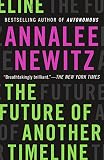
Annalee Newitz’s exhilarating, timely alternate-timeline novel reimagines time travel as a fierce ideological struggle for human rights. Throughout Earth’s geology exist ancient, mysterious subterranean rock machines left behind by an unknown civilization, allowing travelers to slip into the past to make “edits” to history.
Tess is a temporal sociologist fighting in an underground war against a faction of misogynist extremists who are traveling into the past to erase women’s rights and education from the historical record. From the mosh pits of a 1992 riot grrrl punk scene in California to the 1893 Chicago World’s Fair, Newitz weaves a passionate, propulsive story about collective action, friendship, and the ongoing struggle to shape the future.
- The Geology of Time: Treats time travel as a natural planetary phenomenon intertwined with Earth’s tectonic memory.
- Ideal Audience: Fans of feminist science fiction, 1990s alt-rock nostalgia, and political alternate history.
- Collector Edition: Explore The Future of Another Timeline on Amazon
Slaughterhouse-Five (1969)
By Kurt Vonnegut
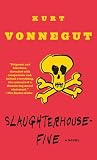
Kurt Vonnegut’s masterpiece is one of the most celebrated novels in world literature. American soldier Billy Pilgrim has “come unstuck in time.” He goes to sleep a senile widower and wakes on his wedding day; he walks through a door in 1955 and comes out of another one in 1941; he experiences the catastrophic firebombing of Dresden as a prisoner of war and his captivity in an alien zoo on the planet Tralfamadore simultaneously.
The Tralfamadorians see all of time at once, like a vast mountain range where every moment: past, present, and future: exists permanently and eternally. Vonnegut uses this radical temporal framework to process the unspeakable horror of war, mortality, and trauma with heartbreaking wit, profound fatalism, and enduring tenderness.
- The Unstuck Consciousness: A profound literary device exploring how trauma breaks the human mind free from linear time.
- Ideal Audience: An essential classic for all readers of twentieth-century literature and philosophy.
- Collector Edition: Explore Slaughterhouse-Five on Amazon
Master Synthesis Matrix: The Spectrum of Temporal Literature
| # | Title | Author(s) | Year | Temporal Mechanism | Core Emotional / Narrative Theme | Primary Classification |
|---|---|---|---|---|---|---|
| 1 | The Time Machine | H. G. Wells | 1895 | Mechanical Ivory/Quartz Vehicle | Deep Time & Victorian Class Evolution | Foundational Scientific Romance |
| 2 | The End of Eternity | Isaac Asimov | 1955 | Reality-Altering Temporal Shafts | Institutional Safety vs. Human Stagnation | Classic Temporal Engineering |
| 3 | The Man Who Folded Himself | David Gerrold | 1973 | Crystal-Studded Timebelt | Causal Paradoxes & Self-Identity Loops | Mind-Bending Paradox Classic |
| 4 | Harry August | Claire North | 2014 | Kalachakra Ouroboros Reincarnation | Accumulation of Memory & Catastrophe | Repeated-Life Literary SF |
| 5 | Replay | Ken Grimwood | 1986 | Consciousness Life-Loop Reset | Second Chances, Nostalgia & Mortality | Life-Loop Classic |
| 6 | Recursion | Blake Crouch | 2019 | Sensory Memory-Deprivation Tank | False Memory Syndrome & Reality Erasure | High-Octane Sci-Fi Thriller |
| 7 | Time War | Amal El-Mohtar & Max Gladstone | 2019 | Temporal Braids & Secret Epistles | Ideological War & Forbidden Love | Lyrical Epistolary Romance |
| 8 | Kindred | Octavia E. Butler | 1979 | Involuntary Ancestral Time Slip | Visceral Survival & Historical Slavery | Historical Temporal Classic |
| 9 | 11/22/63 | Stephen King | 2011 | Diner Pantry ‘Rabbit Hole’ Portal | The Obduracy of the Past & JFK Mission | Epic Historical Time Travel |
| 10 | To Say Nothing of the Dog | Connie Willis | 1997 | Oxford University Time Drops | Time-Lag Confusion & Victorian Comedy | Hugo-Winning Period Comedy |
| 11 | Time and Again | Jack Finney | 1970 | Psychological Hypnotic Immersion | 1882 Gas-Lit Manhattan Nostalgia | Illustrated Historical Immersion |
| 12 | Doomsday Book | Connie Willis | 1992 | Oxford University Time Drops | 1348 Black Death & Human Compassion | Heartbreaking Historical SF |
| 13 | The Time Traveler’s Wife | Audrey Niffenegger | 2003 | Chrono-Displacement Genetic Disorder | Nonlinear Marriage & Involuntary Visits | Contemporary Romantic Classic |
| 14 | Before the Coffee Gets Cold | Toshikazu Kawaguchi | 2015 | The Specific Cafe Seat & Warm Coffee | Forgiveness, Healing & Acceptance | Cozy Tokyo Fable |
| 15 | Sea of Tranquility | Emily St. John Mandel | 2022 | The Time Institute Investigations | Violin Anomaly Across 400 Years | Luminous Interconnected Literary SF |
| 16 | Oona Out of Order | Margarita Montimore | 2020 | Annual New Year Random Jump | Living Life Out of Sequence | Pop-Culture Heartwarming Drama |
| 17 | The Gone World | Tom Sweterlitsch | 2018 | NCIS Deep Waters Inceptions | Murder Mystery & Approaching Terminus | Temporal Cosmic Noir |
| 18 | The Shining Girls | Lauren Beukes | 2013 | Trans-Dimensional Chicago House | Survivor Hunting a Decade-Hopping Killer | Supernatural Historical Thriller |
| 19 | Another Timeline | Annalee Newitz | 2019 | Subterranean Geological Rock Machines | 1990s Riot Grrrls Fighting History Erasure | Feminist Alternate History |
| 20 | Slaughterhouse-Five | Kurt Vonnegut | 1969 | Unstuck Fourth-Dimensional Sight | War Trauma, Dresden & Fatalism | American Modernist Masterpiece |
The One Afternoon
Twenty books, five very different engines for getting there, and underneath all of it the same single ask: is there an afternoon you’d give almost anything to stand in again?
That’s the actual test worth applying to any new time-travel novel before buying it. Not whether the paradox mechanics are airtight: Novikov’s self-consistency, branching multiverses, and the grandfather paradox are all just different ways of answering “what happens if I try.” The better question is whether the book knows what it’s really about the moment the clever machinery stops being the point: a kitchen where someone who’s gone was still pouring tea, a street corner before the buildings came down, the one choice you’ve spent twenty years turning over. Every book on this list, however it gets there, is built to put you back in that room.