There is a specific physical sensation that occurs when a book suddenly makes the ceiling above your head feel fragile and temporary. You are sitting in an ordinary chair under ordinary electric light, turning paper pages with your fingers, and without warning your perspective is pulled backward through the roof, past the clouds, beyond the blue envelope of the atmosphere, and cast adrift into a silence so immense that the entire history of human civilization looks like a single grain of dust caught in a sunbeam.
That vertigo is the core engine of cosmic science fiction.
While other genres ask what lurks within the ancient woods or behind the heavy oak door of a crumbling house, cosmic speculative fiction turns the telescope outward. It asks what happens when our radio telescopes intercept a signal older than the human voice. It asks what intelligence looks like when it evolves across millions of years without bone, lungs, or language. It asks how human grief, curiosity, and love endure when measured against the dizzying scales of deep time and light-years.
True cosmic science fiction is not simply about starships with laser cannons or military empires painted in gray steel. At its highest pitch, it is a literature of intense curiosity, philosophical courage, and cosmological awe. It reveals that reality is infinitely stranger, older, and more beautiful than our daily routines suggest.
For readers seeking books that expand the mind and restore that rare, shiver-inducing sense of universal scale, here are eighteen extraordinary masterworks spanning six profound movements of the speculative imagination.
Movement I: The Silence of First Contact and Incomprehensible Minds
Most popular media imagines first contact as a theatrical invasion: saucer fleets descending over capital cities or rubber-masked extraterrestrials speaking English through universal translators. The most profound cosmic literature recognizes that true alien intelligence would likely be so fundamentally different from terrestrial life that the very act of communication would test the outer limits of human psychology, philosophy, and biology.
THE SPECTRUM OF COSMIC FIRST CONTACT & ALIEN ENCOUNTER
The Sentient Ocean & Epistemological Limits
Stanislaw Lem (Solaris) · Arthur C. Clarke
Encountering planetary intelligences whose thoughts can never be translated into human language.
Non-Linear Linguistics & Simultaneous Time
Ted Chiang (Story of Your Life) · Ursula K. Le Guin
Grammar that perceives past, present, and future as a unified geometric landscape.
Non-Conscious Intellect & Hard Biological Dread
Peter Watts (Blindsight) · Greg Egan
Super-intelligent evolutionary entities operating at maximum efficiency without self-awareness.
The Theological Chasm & Cultural Rupture
Mary Doria Russell (The Sparrow) · Cixin Liu
The devastating collision of human spiritual assumptions with alien biological reality.
Solaris by Stanislaw Lem
Translated from the Polish by Joanna Kilmartin and Steve Cox
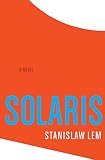
When psychologist Kris Kelvin arrives at the research station hovering above the planet Solaris, he finds the small human crew broken by madness, isolation, and terrifying private visitations. Below them churns a living, colloidal ocean that covers the entire globe: a single colossal organism capable of manipulating gravity, creating impossible mathematical wave structures, and reaching into the deepest, most repressed memories of the human observers to construct physical, flesh-and-blood replicas of their past traumas.
Stanislaw Lem crafts what remains the ultimate philosophical critique of anthropocentric science. Humanity travels across the stars claiming to seek alien life, but what humans truly seek is a mirror: another creature that thinks like us, speaks like us, and validates our moral assumptions. In Solaris, humanity confronts an entity so utterly nonhuman that decades of scientific research yield nothing more than elaborate catalogs of incomprehensible ocean geometry. It is a haunting, melancholic masterpiece about the tragic boundaries of human understanding.
- Key Focus: Sentient alien ocean, psychological manifestations, limits of scientific taxonomy.
- Why It Expands the Mind: It refuses the easy comfort of mutual understanding, forcing the reader to contemplate an intelligence that owes nothing to human thought.
- Find the Volume: Explore Solaris on Amazon
Stories of Your Life and Others by Ted Chiang
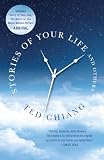
The centerpiece of this luminous collection is Story of Your Life, the novella that inspired the film Arrival. When enigmatic heptapod spacecraft appear in orbit around Earth, linguist Dr. Louise Banks is enlisted by the military to decode their written language. What she discovers is that the heptapods do not experience time as a sequential forward arrow of cause and effect; instead, they perceive time simultaneously, seeing the beginning, middle, and end of events as a single, unified whole.
As Louise learns their radial, non-phonetic script, the language begins to reshape the neurological architecture of her own brain. She begins to remember her future: experiencing the profound joy and inevitable, heartbreaking loss of her unborn daughter while choosing to walk that path anyway. Chiang combines immaculate scientific rigor with astonishing emotional warmth, delivering an intellectual revelation that lingers long after the book is closed.
- Key Focus: Semasiographic linguistics, Fermat’s principle of least time, simultaneous consciousness.
- Why It Expands the Mind: It proves that a mathematical and linguistic shift in perspective can transform how we understand love, mortality, and free will.
- Find the Volume: Explore Stories of Your Life and Others on Amazon
Blindsight by Peter Watts
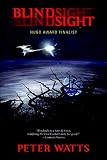
In the late twenty-first century, thousands of coordinated alien probes burn through Earth’s upper atmosphere, photographing the planet in a single blinding flash before evaporating into ash. In response, humanity dispatches the explorer ship Theseus toward the icy darkness of the Oort cloud to investigate the source of the signal. The crew is a crew of extreme posthuman specialists: a linguist with surgically partitioned personalities, a synthesized prehistoric predator as captain, and a baseline human observer whose brain hemisphere was removed in childhood to eliminate emotional bias.
What they discover aboard the alien artifact Rorschach is terrifying not because the entities want to conquer Earth, but because of what their biology reveals about the universe. The aliens, dubbed “scramblers,” possess hyper-advanced computational intelligence, problem-solving mastery, and technological dominance, yet they completely lack subjective self-awareness. Watts delivers an electrifying hard-SF argument that human consciousness is not the crown of evolution, but an expensive, parasitic metabolic glitch that most of the universe discarded long ago.
- Key Focus: Evolutionary neurobiology, the Chinese Room argument, radical posthuman modification.
- Why It Expands the Mind: It strips away human self-flattery, delivering an unsettling, intellectually ferocious inquiry into whether the ego is an evolutionary liability.
- Find the Volume: Explore Blindsight on Amazon
The Sparrow by Mary Doria Russell

In 2019, the radio telescope at Arecibo intercepts undeniable proof of extraterrestrial life: haunting, polyphonic music broadcasting from the planet Rakhat in the Alpha Centauri system. Rather than waiting for government consensus, the Society of Jesus quietly mounts a private expedition, sending a hand-picked crew of astronomers, botanists, physicians, and linguist-priest Father Emilio Sandoz to make peaceful, scientific contact with the singers.
Years later, Father Sandoz returns as the sole survivor: physically mutilated, spiritually shattered, and facing accusations of horrific crimes. Structured as a brilliant dual-timeline mystery, The Sparrow explores how genuine goodwill, cultural curiosity, and intellectual brilliance can lead directly to tragedy when human assumptions collide with an alien social ecology governed by biology we failed to comprehend.
- Key Focus: Anthropological field methodology, acoustic musicology, theological crisis.
- Why It Expands the Mind: It demonstrates how easily good intentions can unravel when we project terrestrial ethics onto an alien biosphere.
- Find the Volume: Explore The Sparrow on Amazon
Movement II: Alien Ecologies and Nonhuman Perception
To truly experience the wonder of the cosmos, we must look at worlds where the rules of life were written by an entirely different branch of biochemistry. These masterworks immerse the reader in ecosystems where language is spoken through scent, light, or vibrational silk, and where nonhuman creatures build civilizations without ever resembling a vertebrate.
Children of Time by Adrian Tchaikovsky
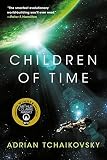
In the dying days of the first human interstellar era, a terraforming mission seeds a pristine green world with an engineered nanovirus designed to accelerate the evolution of primates into a new civilization. But disaster strikes: the primate cargo is destroyed upon entry, and the evolutionary virus settles instead upon the world’s jumping spiders (Portia labiata). Across thousands of years, the spiders evolve from solitary hunters into an intelligent, cooperative, and deeply sophisticated technological civilization.
Tchaikovsky crafts one of the most astonishing feats of alien worldbuilding in modern literature. We witness the development of spider mathematics, web-based information networks, chemistry-driven communication, and biotechnology that harnesses ants and fungi rather than metallurgy and combustion engines. Alternating chapters follow the desperate, generation-spanning voyage of the last surviving ark ship of dying humanity as it arrives at the world, creating an unforgettable clash of evolutionary destinies.
- Key Focus: Invertebrate cognitive evolution, biotechnology vs mechanical engineering, inter-species diplomacy.
- Why It Expands the Mind: It teaches the reader to empathize with a non-human way of seeing the world, turning creature design into high civilization.
- Find the Volume: Explore Children of Time on Amazon
Dawn (Lilith’s Brood) by Octavia E. Butler
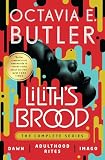
Lilith Iyapo awakens from centuries of induced sleep inside a living, fleshy organic vessel orbiting a ruined Earth. A nuclear holocaust has destroyed human civilization, and the survivors have been rescued by the Oankali: an ancient, nomadic extraterrestrial species covered in sensory tentacles who perceive the universe through deep chemical manipulation of DNA.
The Oankali are not conquerors; they are compulsive genetic traders. They offer humanity life, health, and a restored Earth, but at a non-negotiable price: humanity must merge its genetic material with the Oankali, creating a new hybrid species and permanently leaving behind baseline human biology. Butler’s genius lies in making the Oankali genuinely benevolent yet fundamentally terrifying. Dawn forces the reader to confront what it truly means to be human and what we are willing to sacrifice to survive among the stars.
- Key Focus: Genetic trade, third-sex Ooloi biology, symbiosis vs assimilation.
- Why It Expands the Mind: It is one of the few science-fiction novels where the aliens’ absolute kindness is more challenging to human dignity than malice.
- Find the Volume: Explore Dawn on Amazon
Semiosis by Sue Burke

Fleeing an ecologically devastated Earth, a small group of human pacifists establishes a colony on the pristine world of Pax. The colonists intend to live in harmony with the local fauna, only to discover that on Pax, the dominant intelligent species are not animals, but plants. The flora of Pax produces specialized biochemicals, poisonous seeds, and rapid cellular mutations to domesticate and manipulate animal populations to serve their ecological needs.
Spanning several human generations, the novel tracks the delicate, uneasy partnership that forms between the settlers and Stevland: a sentient, predatory bamboo-like tree with immense intelligence and a territorial drive. To survive harsh winters and foreign predators, humans and Stevland must learn to communicate through colored lights, chemical vapors, and shared nutritional trade. Burke delivers an exhilarating celebration of botanical intelligence that completely inverts conventional notions of dominance.
- Key Focus: Botanical consciousness, biochemical communication, generational colonization.
- Why It Expands the Mind: It shifts the definition of intelligence away from brains and nervous systems toward roots, seeds, and photosynthetic patience.
- Find the Volume: Explore Semiosis on Amazon
Movement III: The Scale of Deep Time and Galactic Monuments
When we step outside the human lifespan, time ceases to be measured in decades and begins to be measured in orbital cycles, galactic revolutions, and the lifespan of stars. These books immerse the reader in colossal temporal architecture, ancient megastructures, and cosmic history that stretches across millions of years.
FIELD GUIDE & SPECTRUM
- THE RAMA CYLINDER (50 km long) -> Indifferent ancient transit
- TRISOLARIS CRISIS (450 years) -> Paranoia across centuries
- THE LINE OF GENTIAN (6 million yrs)-> Galactic circumnavigations
- STAR MAKER VISION (Cosmic span) -> Complete history of creation
Rendezvous with Rama by Arthur C. Clarke

In the twenty-second century, an artificial object fifty kilometers long and twenty kilometers in diameter enters the solar system traveling at incredible speed from interstellar space. Named Rama by astronomers, the massive dark cylinder appears completely inert. A human survey ship, the Endeavour, is dispatched on an urgent mission to dock with the craft and explore its interior before its gravitational slingshot around the sun flings it back into the galactic dark.
Inside Rama, the astronauts descend an eight-kilometer staircase into a vast, silent, cylindrical world complete with frozen seas, artificial cities, and enigmatic mechanical maintenance units called biots. Clarke’s prose is pure architectural awe. There are no villainous monsters or melodramatic speeches; the drama stems entirely from the sheer joy of exploration, the thrill of deciphering an abandoned cosmic machine, and the humbling realization that Rama’s creators were entirely indifferent to humanity’s presence.
- Key Focus: Rotational gravity physics, artificial interior biomes, ancient derelict technology.
- Why It Expands the Mind: It captures the quiet majesty of exploration without needing conflict, proving that curiosity alone is enough to sustain great fiction.
- Find the Volume: Explore Rendezvous with Rama on Amazon
The Three-Body Problem by Liu Cixin
Translated from the Chinese by Ken Liu
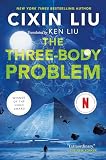
Against the backdrop of China’s Cultural Revolution, astrophysicist Ye Wenjie makes a fateful decision at a secret military radar base: she broadcasts an amplified radio transmission toward the stars, inviting extraterrestrial intelligence to intervene in human affairs. Four light-years away, in a chaotic triple-star system where civilization has been destroyed and reborn hundreds of times by unpredictable gravity, the Trisolaran civilization answers.
What follows is an epic of jaw-dropping conceptual ambition. Liu Cixin weaves together virtual reality games simulating orbital mechanics, multidimensional proton supercomputers unfolded into planetary size, and the chilling axioms of “Cosmic Sociology,” which posit that the universe is a dark forest where every civilization is an armed hunter stalking through the trees in absolute silence. It is a monumental modern classic that reshapes how we contemplate the safety of the night sky.
- Key Focus: The three-body gravitational problem, quantum dimensional unfolding, the Dark Forest theory.
- Why It Expands the Mind: It scales from intimate historical trauma to universal physics with terrifying philosophical clarity.
- Find the Volume: Explore The Three-Body Problem on Amazon
House of Suns by Alastair Reynolds
Six million years in the future, the Milky Way has seen thousands of human and alien civilizations rise, achieve technological greatness, and crumble to dust. Navigating this vast graveyard of history are the “Lines”: families of posthuman machine clones who travel in sub-light starships around the circumference of the galaxy, taking two hundred thousand years to complete a single circuit. Every circuit, the clones meet for a thousand-year reunion to pool memories, art, and scientific discoveries.
Campion and Purslane, two members of the ancient Gentian Line, arrive late to their thirty-second reunion only to discover that their family has been ambushed and nearly eradicated by an unknown enemy wielding impossible, star-killing technology. Reynolds constructs a universe of staggering temporal scale where characters measure friendships across millions of years, construct ringworlds out of shattered planets, and navigate ancient machines left behind by extinct machine intelligences.
- Key Focus: Sub-light relativistic space travel, deep time continuity, stardam megastructures.
- Why It Expands the Mind: It normalizes a timescale where the rise and fall of whole human empires is treated as an afternoon footnote.
- Find the Volume: Explore House of Suns on Amazon
Star Maker by Olaf Stapledon

Sitting upon a suburban hill on a quiet autumn night, a narrator feels a sudden metaphysical detachment from his physical body and finds himself propelled upward into the night sky. Traveling through space at impossible speeds, his disembodied consciousness joins with other wandering minds across the galaxy, merging into a single vast collective intelligence that observes the biological, social, and spiritual history of every civilization that has ever existed or will ever exist in the cosmos.
First published in 1937, Star Maker is widely regarded by writers from Arthur C. Clarke to Jorge Luis Borges as the single most visionary work of speculative imagination ever put to paper. Stapledon casually invents concepts that would define science fiction for the next century: Dyson spheres, terraforming, genetic engineering, symbiotic alien ecologies, intelligent nebulae, living stars, and multiple interconnected cosmos created and discarded by an indifferent cosmic artist. It reads like a sacred scripture written for the modern astronomical age.
- Key Focus: The life cycle of galaxies, planetary minds, the ultimate purpose of creation.
- Why It Expands the Mind: It achieves an unmatched philosophical scale, taking the reader all the way from suburban loneliness to the eternal mind of the universe.
- Find the Volume: Explore Star Maker on Amazon
Movement IV: Philosophical Wonder and Sociological Worlds
Science fiction is at its most powerful when it uses the vastness of the universe as a laboratory to examine the most intimate questions of human existence: how we organize our societies, how language shapes our perception of reality, and what happens when two cultures with completely different moral foundations attempt to share a world.
The Left Hand of Darkness by Ursula K. Le Guin
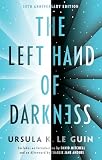
Genly Ai is a solitary envoy sent by the Ekumen, a peaceful federation of humanoid worlds, to the bitter, ice-bound planet of Gethen. His mission is to persuade the nations of Gethen to join the galactic league. But Gethen is unique: its inhabitants are ambisexual, possessing no fixed biological sex or gender roles until they enter a monthly fertile cycle called kemmer, during which any individual can become either male or female.
To navigate the subtle court politics of the kingdom of Karhide and the bureaucratic state of Orgoreyn, Genly must unlearn all of his terrestrial preconceptions about power, masculinity, and pride. Through his fraught, deepening friendship with the exiled prime minister Estraven, the two embark on a desperate, deadly trek across the Gobrin Glacier: an epic journey across snow and crevasses where silence, mutual respect, and pure human empathy overcome the cold.
- Key Focus: Genderless sociology, Taoist philosophy of light and shadow, sub-polar survival.
- Why It Expands the Mind: It demonstrates that exploring an alien culture is ultimately a mirror that forces us to question our deepest social conventions.
- Find the Volume: Explore The Left Hand of Darkness on Amazon
Embassytown by China Miéville
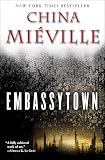
On the extreme fringe of explored space lies Embassytown, a human enclave situated on the homeworld of the Ariekei, an enigmatic host species known simply as the Hosts. The Hosts possess a unique biology: they speak Language with two mouths simultaneously, and to them, words are not abstract symbols that represent things. Their speech can only state literal, existing facts; they are physiologically incapable of lying or speaking in metaphor.
To communicate with them, human diplomats must engineer genetically identical clone pairs called Ambassadors, trained to speak simultaneously with one shared mind. But when a new, non-identical Ambassador arrives whose voice operates like an addictive drug upon the alien biology, the city collapses into linguistic delirium. Miéville constructs an astonishing masterclass in speculative semiotics, exploring how the invention of metaphor and the ability to say what is not can transform an entire civilization.
- Key Focus: Structural linguistics, alien bio-architecture, the philosophy of metaphor.
- Why It Expands the Mind: It turns the very act of speaking into an exhilarating, high-stakes exploration of consciousness and art.
- Find the Volume: Explore Embassytown on Amazon
Contact by Carl Sagan
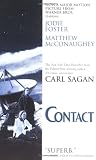
Dr. Eleanor Arroway has dedicated her career to radio astronomy, listening for faint patterns in the cosmic static at the Argus array in New Mexico. One night, the telescope locks onto a coherent, pulsed radio signal originating twenty-six light-years away from the star Vega. The signal carries the prime numbers from one to one hundred, followed by television video frames from the 1936 Berlin Olympics, and beneath that, fifty thousand pages of encoded technical blueprints for a machine designed to carry human passengers into the unknown.
Carl Sagan brings his unmatched authority as a planetary scientist and his poetic humanism to this legendary novel. Unlike the film adaptation, the novel investigates the international politics, theological debates, and mathematical wonders of first contact. The novel’s transcendent conclusion reveals that messages of cosmic intelligence are not just traveling through radio waves across space, but are embedded directly into the fundamental mathematical constants of the universe itself.
- Key Focus: Radio astronomy protocols, mathematical encoding, science vs faith dialogue.
- Why It Expands the Mind: It is an inspiring tribute to the power of human curiosity and the sheer beauty of the physical laws that govern the cosmos.
- Find the Volume: Explore Contact on Amazon
Movement V: Far-Future Shadows and Ancient Mysteries
In these works, space exploration intersects with myth, history, and ancient ruins. They explore universes where high technology has aged across centuries into something resembling sorcery, and where characters must cross vast star-spanning empires and lost sectors to unravel mysteries left behind by ancient predecessors.
Hyperion by Dan Simmons
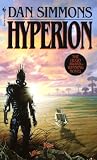
On the eve of an interstellar war between the human Hegemony and the genetically modified Ousters, seven pilgrims are selected to journey to the mysterious world of Hyperion. There, within the enigmatic valley of the Time Tombs, colossal structures moving backward in time are monitored by the Shrike: a four-armed creature of razor wire and chrome worshipped as the Lord of Pain.
Modeled explicitly on Chaucer’s Canterbury Tales, the novel is structured as six distinct personal stories told by the pilgrims during their voyage: the Priest’s tale of a parasitic cross, the Soldier’s tale of time-shifted warfare, the Poet’s tale of muses and massacre, the Scholar’s heartbreaking story of his daughter who is aging backward, the Detective’s hardboiled cyberpunk mystery, and the Consul’s tale of galactic colonialism. It is one of the most richly textured, structurally dazzling space operas ever written.
- Key Focus: Time debt and relativistic travel, artificial intelligence autonomy, poetic tribute to John Keats.
- Why It Expands the Mind: It effortlessly shifts between military action, gothic horror, cyberpunk noir, and tragic drama under the roof of a vast space opera.
- Find the Volume: Explore Hyperion on Amazon
A Fire Upon the Deep by Vernor Vinge
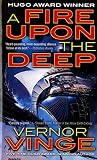
Vernor Vinge introduces one of the greatest conceptual frameworks in science fiction: the “Zones of Thought.” In this universe, the laws of physics and the speed of computation vary depending on how far you are from the galactic core. Near the core lies the “Unthinking Depths,” where even basic intelligence is sluggish. Further out is the “Slow Zone” (where Earth resides), where light-speed cannot be broken. Beyond that lies the “Beyond,” where faster-than-light travel and artificial super-intelligence flourish, and at the rim of the galaxy lies the “Transcend,” inhabited by god-like posthumans.
When an ancient archivist program accidentally unleashes a predatory super-intelligence called the Blight in the Transcend, a desperate refugee ship crash-lands on a world in the Bottom of the Beyond inhabited by the Tines: medieval pack-creatures who achieve individual consciousness only when four to six canine-like members stand near one another and synchronize through ultrasonic sound. Vinge weaves galactic internet newsgroups with intimate alien biology in a masterwork of modern hard space opera.
- Key Focus: Sonic pack-consciousness, variable computing speed across galaxies, cosmic network archaeology.
- Why It Expands the Mind: The concept of the Zones of Thought immediately turns the galaxy into a multi-layered landscape of intelligence.
- Find the Volume: Explore A Fire Upon the Deep on Amazon
Movement VI: Gentle Exploration, Wonder, and Intimate Cosmology
Cosmic science fiction does not always require terror or existential dread. Sometimes the vastness of the universe is a backdrop for quiet fellowship, scientific humility, and the warm satisfaction of finding home among strange constellations.
To Be Taught, If Fortunate by Becky Chambers
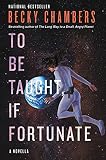
In the twenty-second century, rather than terraforming other planets to suit human biology, the Explorers of the Open Canvas mission uses “somaforming”: temporarily mutating the astronauts’ own bodies through gene therapy and symbiotic microbes to survive the extreme gravity, atmospheric pressure, and radiation of four distant worlds.
Told from the perspective of flight engineer Ariadne O’Neill, the novella is a luminous, peaceful ode to pure scientific discovery. The crew explores strange bio-luminescent ice caves, oceanic vents, and atmospheric spores without weapons, imperial claims, or commercial exploitation. Their only goal is to observe, record, and leave no trace. It is a deeply comforting, thoughtful counter-narrative to colonial space fiction, reminding us that reverence and curiosity are the greatest tools humanity can bring to the stars.
- Key Focus: Biological somaforming, non-colonizing scientific ethics, time dilation and cultural memory.
- Why It Expands the Mind: It proves that space exploration can be gentle, ethical, and profoundly inspiring without needing an enemy.
- Find the Volume: Explore To Be Taught, If Fortunate on Amazon
Way Station by Clifford D. Simak

Enoch Wallace is a veteran of the American Civil War living in a secluded, hand-built farmhouse in the rolling hills of rural Wisconsin. To his neighbors, Enoch is an eccentric recluse who strangely never ages. But inside the walls of his house, which has been modified with alien shielding to make it indestructible and timeless, Enoch acts as the official keeper of Earth’s only Way Station: an intergalactic transit point where extraterrestrial travelers materialize, rest for an hour, share coffee and conversation, and teleport across the stars.
Winner of the 1964 Hugo Award, Way Station is a masterclass in pastoral, philosophical science fiction. Enoch’s quiet days consist of recording alien manifests, playing cosmic chess with an ethereal entity named Ulysses, walking through autumn woods, and contemplating the fragility of human civilization against the vast backdrop of galactic peace. It is an unforgettable, heartwarming reminder that the cosmic and the intimate are two sides of the exact same doorway.
- Key Focus: Interstellar teleportation networks, pastoral quiet, galactic diplomacy in a rural parlor.
- Why It Expands the Mind: It grounds the wonder of the cosmos in the warmth of a coffee pot, a rocking chair, and a welcoming door.
- Find the Volume: Explore Way Station on Amazon
The Master Matrix of Cosmic Reading
To help you choose your next journey into the speculative unknown, here is how these eighteen masterworks align across narrative density, core themes, and aesthetic tone:
| Book Title | Author | Primary Subgenre | Core Scientific / Speculative Engine | Narrative Tone |
|---|---|---|---|---|
| Solaris | Stanislaw Lem | Philosophical SF | Sentient Plasmic Ocean / Psychological Projections | Melancholic & Unsettling |
| Stories of Your Life and Others | Ted Chiang | Speculative Novellas | Non-Linear Linguistics & Variational Principles | Intellectual & Emotionally Radiant |
| Blindsight | Peter Watts | Hard Sci-Fi | Non-Conscious Intelligence & Evolutionary Biology | Chilling & Hyper-Rigor |
| The Sparrow | Mary Doria Russell | Anthropological SF | Linguistic Misinterpretation & Jesuit Mission | Tragic, Beautiful & Deeply Human |
| Children of Time | Adrian Tchaikovsky | Evolutionary Hard SF | Uplifted Arachnid Technology & Deep Time Survival | Grand, Exhilarating & Vast |
| Dawn (Lilith’s Brood) | Octavia E. Butler | Xenobiology | Genetic Symbiosis & Third-Sex Ooloi Biology | Uncanny, Intimate & Challenging |
| Semiosis | Sue Burke | Botanical First Contact | Plant Intelligence & Generational Colonization | Inventive, Suspenseful & Grounded |
| Rendezvous with Rama | Arthur C. Clarke | Classic Hard SF | Cylindrical Megastructure Physics & Pure Exploration | Awe-Inspiring, Clean & Objective |
| The Three-Body Problem | Liu Cixin | Hard Space Opera | Chaotic Orbital Mechanics & Cosmic Sociology | Massive, Intense & Mind-Bending |
| House of Suns | Alastair Reynolds | Far-Future Space Opera | Six-Million-Year Sub-Light Galactic Circuits | Grand, Gothic-Tinted & Sweeping |
| Star Maker | Olaf Stapledon | Cosmological Fiction | Universal Consciousness & Complete Cosmic Life Cycle | Monumental, Transcendent & Poetic |
| The Left Hand of Darkness | Ursula K. Le Guin | Anthropological SF | Ambisexual Sociology & Polar Ice Survival | Poetic, Philosophical & Intimate |
| Embassytown | China Miéville | Linguistic SF | Non-Metaphorical Alien Language & Human Similes | Dazzling, Bizarre & Intellectual |
| Contact | Carl Sagan | Hard Sci-Fi / SETI | Radio Astronomy Protocols & Mathematical Transcendence | Hopeful, Rational & Wonder-Filled |
| Hyperion | Dan Simmons | Space Opera / Gothic SF | Time Tombs, The Shrike & Canterbury Framework | Mythic, Dazzling & Epic |
| A Fire Upon the Deep | Vernor Vinge | Space Opera | The Zones of Thought & Sonic Pack-Minds | Kinetic, Vast & Concept-Dense |
| To Be Taught, If Fortunate | Becky Chambers | Planetary Exploration | Biological Somaforming & Ethical Observation | Gentle, Curious & Comforting |
| Way Station | Clifford D. Simak | Pastoral SF | Interstellar Transit Hub in a Rural Farmhouse | Quiet, Nostalgic & Wise |
Expanding the Horizons of Imagination
The great gift of cosmic science fiction is that it permanently changes how you look at the world around you. When you close a great book of space and deep time, the ordinary walls of your room do not feel smaller; they feel like the warm interior of a sanctuary floating through a vast, starry silence that is waiting to be explored.
To continue exploring imaginative literature, visual craft, and worldbuilding across every medium, explore our guide to Best Steampunk Books & Clockwork Fantasy, explore our curated collections across The Books Hub, explore the craft of sound in Electronic Movie Soundtracks and Fantasy Film Scores, discover the visual wonder of Fantasy Art Books, or follow our ongoing investigations in Speculative Worldbuilding.