A theoretical physicist explaining time travel will draw a closed timelike curve. A careful novelist explaining it will tell you what the traveler’s coat weighed, what it was stuffed with, and how long it took to get properly wet through in a period downpour.
That second kind of detail is not decoration. It is the actual mechanism by which fiction makes “the past” stop being an idea and start being a place. Our companion guide to time travel fiction and grief explores what these journeys cost the traveler emotionally. This page asks a more physical question: what does it take to make a vanished century feel close enough to touch, rather than merely close enough to summarize?
The answer, across all three books below, is the same: real research, done before a word of the prose existed.
H. G. Wells: A Biologist’s Ending
The Time Machine (1895) is often taught as the genre’s founding text and just as often read purely for its plot mechanics, the brass-and-ivory sled, the Eloi, the Morlocks. What gets skipped is that Wells did not invent his vision of deep time from nothing. Between 1884 and 1887, he studied biology at the Normal School of Science in South Kensington under Thomas Henry Huxley, the naturalist known as “Darwin’s bulldog” for his fierce public defense of evolutionary theory. Huxley’s late-Victorian pessimism about where evolution was actually headed, not upward toward inevitable progress, but sideways, into whatever configuration survival happened to favor, sits directly underneath the novel’s central shock.
The Eloi are not simply a decadent aristocracy and the Morlocks are not simply monsters. They are a literalized class division that evolution has had eight hundred thousand years to finish sorting, exactly the kind of scenario Wells’s actual biology training would have made him take seriously rather than treat as costume. The novel’s final movement, the Time Traveller pushing forward past the Eloi and Morlocks entirely, to a dying beach under a bloated, dim red sun, is Huxleyan science taken to its logical, comfortless end: not a warning about robots or empires, but about the mathematics of a cooling star, which Wells would have understood as literal physics, not metaphor.
Octavia Butler: Research as Moral Obligation
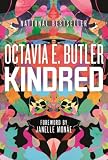
Octavia Butler’s Kindred (1979) is, among other things, an argument that time travel fiction has an obligation to get its history exactly right, because the history in question is slavery, and getting it wrong would be its own kind of violence.
Butler has explained that she began writing the novel partly in response to a conversation in the late 1960s and early 1970s, when a fellow student dismissed an older generation for having “put up with” slavery, as though it had simply been a failure of will. Butler, by her own account, did not believe her ancestors had failed at anything; she believed they had been immeasurably strong to survive what they survived, and she wanted to write a novel that would, in her words, make readers feel the history, the pain and the fear that Black people had lived through in order to endure. To do that responsibly, she took the money from selling an earlier novel and rode a bus to Maryland, so she could see the actual geography her protagonist Dana would be stranded in: how far the fields were from the house, how far the house was from a town, where a person running would actually be able to run to. She read slave narratives and the memoirs of plantation owners’ wives at the Los Angeles Public Library before writing a page.
The result on the page is a time-travel novel that refuses every convenient shortcut. Dana’s body accumulates real injuries that cross back with her into 1976. The plantation’s daily labor, its legal structures, its casual cruelties are rendered with the specificity of someone who went and looked rather than someone who imagined. This is a book that must be read with the moral seriousness Butler herself brought to researching it, not as atmosphere, and not as a metaphor softened for comfort, but as history that a novel is obligated to get right.
Connie Willis: Fourteenth-Century Logistics
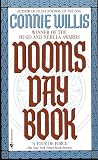
Connie Willis’s Doomsday Book (1992), winner of both the Hugo and Nebula Awards, sends an Oxford historian named Kivrin backward to observe what she believes will be a peaceful Christmas in a fourteenth-century English village. An equipment malfunction instead strands her in 1348, in the exact path of the Black Death.
What makes the novel’s medieval sections work is not atmosphere but logistics: Willis is precise about the material conditions of village life, what people ate before the harvest failed, how a household actually organized itself around illness, what a parish priest’s real responsibilities looked like when there was no explanation available for what was killing his congregation. The historian’s own modern preparation, designed for an entirely different and gentler visit, keeps colliding with a reality that does not care what she came expecting to observe. That friction between researched expectation and researched reality is the novel’s real engine, and it depends on Willis having done the historical homework twice over: once for the village Kivrin thought she was visiting, and once for the one she actually lands in.
What the Past Actually Weighs
Put these three together and a pattern appears that has nothing to do with time-travel mechanics and everything to do with authorial method: Wells brought a biologist’s training to a vision of the future; Butler brought a documented research trip and a stated moral purpose to a vision of the past; Willis brought the discipline of a historian’s precision to a plague year. None of them let “the past” or “the future” stay abstract. Each one did the work to make it weigh something.
That is the real promise of a good time travel novel, and it has nothing to do with paradoxes. It is the sensation, a hundred pages in, of realizing you now know something specific and verifiable about wool, or fever, or evolutionary time, that you did not know before you opened the book, and that the story could not have made you feel it without the research standing quietly underneath the sentence.