Portal fantasy begins with a dangerous suspicion: the ordinary world may have doors it has not disclosed.
That is why the form remains so powerful. A portal story does not ask the reader to begin in a fully invented kingdom. It begins in a spare room, a city street, a garden, a station, a wall, a painting, a book, a road, or a place everyone else has stopped noticing. Then the surface gives way.
The best portal fantasy books are not simply escape hatches. They are threshold stories. The door tests the person who enters, and the return, when it comes, tests them again.
Wolfesque already has a broader guide to portal fantasy books and doorways to another world. This page is more intimate. It is for readers who want the feeling of the door itself: the before, the crossing, the cost, and the ache of realizing that ordinary life may never become ordinary again.
What The Door Changes
A portal is one of fantasy’s cleanest devices because it makes transformation physical. A character does not merely decide to change. They cross a threshold and must live in a world where the rules reveal who they are.
The doorway usually does four kinds of work:
- It turns longing into geography.
- It makes childhood perception materially correct: the cupboard, platform, wall, or alley really was strange.
- It gives the other world a moral cost, not just scenery.
- It makes return complicated, because the traveler now belongs to two incompatible realities.
That last point is crucial. Weak portal fantasy treats the other world as a vacation. Strong portal fantasy understands that crossing changes the traveler even if the door later shuts.
Four Doorway Traditions
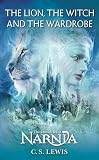
The Lion, the Witch and the Wardrobe by C. S. Lewis
C. S. Lewis’s The Lion, the Witch and the Wardrobe remains the central image of portal fantasy for many readers: children in an old house, an ordinary wardrobe, fur coats giving way to snowy branches, and a lamppost burning where no lamppost should be.
The power is sensory before it is allegorical or mythic. The transition from indoor furniture to winter forest makes the impossible feel touchable. Narnia arrives not as a map lecture but as cold air, texture, and surprise.
It is also a reminder that classic portal fantasy often begins with displacement. The children are away from home during wartime. The portal answers a condition of exile with another exile, stranger and more meaningful.
Phantastes by George MacDonald
George MacDonald’s Phantastes, published in the nineteenth century, belongs to the deeper ancestry of the form. It sends Anodos into a dreamlike fairy country where forests, figures, desires, and symbolic encounters reshape his inner life.
Modern readers may find its movement looser than later portal fantasy. That looseness is part of its historical value. The other world is less a plotted quest landscape than a moral and imaginative atmosphere. It shows portal fantasy before the genre became standardized around series machinery.
For readers interested in lineage, MacDonald helps explain why doorways in fantasy often feel like spiritual tests as much as adventures.
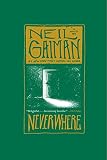
Neverwhere by Neil Gaiman
Neil Gaiman’s Neverwhere gives portal fantasy an adult urban form. Richard Mayhew helps an injured young woman named Door and falls out of official London into London Below: a hidden city of markets, stations, old names, dangers, and people the surface world has forgotten.
The portal here is not a single wardrobe moment. It is social invisibility. Richard becomes unreadable to the ordinary city. His life on the surface stops holding him, and the hidden world beneath the streets becomes both punishment and revelation.
That is the particular brilliance of urban portal fantasy: the other world is not elsewhere. It is under, around, and inside the city the reader already thought they knew.
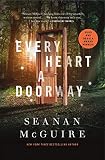
Every Heart a Doorway by Seanan McGuire
Seanan McGuire’s Every Heart a Doorway begins after the classic ending. The children have returned from their portal worlds, but return has not healed them. At Eleanor West’s Home for Wayward Children, they carry the grief of having found the place that made sense and then being sent back to a world that calls their truth delusion.
The novella’s taxonomy of doors is one of its pleasures: worlds of logic, nonsense, death, beauty, cruelty, rules, and desire. But the emotional achievement is sharper. McGuire understands that portal fantasy is also about belonging. What if the impossible world was not escape, but home?
How To Choose A Door
Choose Lewis if you want the pure wardrobe sensation: ordinary wood becoming winter. Choose MacDonald if you want the older fairyland current, dreamlike and inward. Choose Gaiman if you want the modern city to split open beneath your feet. Choose McGuire if you want the wound after wonder, when the door has closed and the traveler has to explain a true world to people who cannot see it.
Readers who want more childhood-facing darkness should continue to Why Children Need the Dark Woods. Readers who want threshold mood rather than book recommendations should read The Doorway Feeling in Fiction. For adult secondary-world hunger outside the portal structure, try Fantasy Books for Adults Who Want Another World.
The Door In The Wall
The lasting gift of portal fantasy is not that it lets the reader leave reality. It makes reality porous.
After the right book, a wardrobe is not just furniture. A subway map is not only transit. A garden wall is not only brick. A closed door becomes a question asked by the world: are you sure this is all there is?
That is why readers keep returning to portal stories. They preserve the suspicion that wonder is not far away. It is adjacent, waiting for the right hand on the panel.