A mythology retelling is a specific kind of argument.
Someone already told the story. A goddess, a giantess, a girl left on a mountain. The new novel does not want a vaguely misty “folk” feeling. It wants a fight with a name. Homer’s Circe. Apuleius’s Psyche. Angrboda in the Norse poems. The reader who typed mythology retelling books is often asking for that fight: gods who are still inconvenient, not a found-family Olympus with better lighting.
Greek mythology origins already owns the Olympian system as awe and trouble. Medusa already owns one figure’s long rewrite. Loki already owns the shape-shifter who will not stay filed. This page is the novel as a second telling. Ancient people did not share one psychology of divinity. Some cult was local, messy, and unlike a disaster film. Some encounters, in tragedy and hymn, are still closer to weather than to a charming boss. The books below take that difficulty seriously as fiction, not as a documentary of temples.
If you wanted landscape, household spirits, and a valley that remembers, that is the neighboring job: folklore books. Different query. Different furniture.
An island that is a laboratory
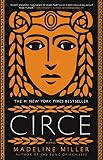
Madeline Miller’s Circe (2018) takes a figure who, in the Odyssey, is a dangerous host with a wand, and gives her centuries.
The Titans’ halls are beautiful and bored. Circe’s exile on Aiaia becomes work: herbs, grinding, the novel’s pharmakeia as hours, not sparkle. Gods in this book can look at a mortal the way a person looks at a tool. That is Miller’s Circe, not a reconstruction you could cite to an excavation. The reward is the texture of immortality as a social problem, and craft as the only dignity the exile is allowed.
Do not come here to reread Homer. Come to watch a witch insist that making is a kind of answer to being made.
A temple that will not be pretty
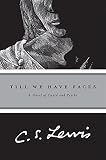
C. S. Lewis’s Till We Have Faces (1956) retells Cupid and Psyche from the ugly sister.
The kingdom is Glome, invented, iron-age, and uninterested in marble. Ungit is a faceless black stone in a close temple, smeared with offerings. Psyche is taken to the mountain. Orual spends a life prosecuting the gods for their silence, and for the love that was also a cage. Lewis, elsewhere on this site, is the wardrobe and the mothballs. This novel is the other Lewis: no lamp-post, a lawsuit against heaven, a goddess who smells like a room.
He sometimes said it was his best. That is an author’s preference, not a scholarly decree. What it does on this shelf is restore the old myth’s unfairness. The god does not owe Orual an explanation. The reader has to live with faces that are not ready.
A heart that was burned and kept walking
Genevieve Gornichec’s The Witch’s Heart (2021) centers Angrboda, who in the Norse tradition is the giantess associated with Loki’s monstrous children: wolf, serpent, the being who keeps the dead.
The novel begins after burnings. She goes to the Iron Wood. Love with Loki, in this telling, is not a quip. It is a household under a prophecy that has already filed the children as catastrophe. Gornichec cannot replace the Eddas. She can make frost, birch, and a mother’s refusal feel like a place. When you want the god himself as a problem of tidy myth, the locked Loki essay is the door. This book is the giantess’s weather.
The souvenir is a test for the next “Percy Jackson for grown-ups” blurb. Does the retelling still have a god you cannot manage. A stone that takes blood. An exile measured in herbs. A prophecy that does not care about your found family. If the divine has become a hot colleague, you are in a different genre that sometimes borrows the names. Mythology, in the novels worth this search, keeps a remainder that will not be domesticated. That remainder is the awe. It is also why the book is not safe.