Epic fantasy assigns magic a war. Cozy fantasy, as readers now use the phrase, assigns it a job that can be done in an apron.
The world may still contain swords. The point is that the protagonist has clocked out. Stakes shrink to a scale the nervous system recognizes: a leaking roof, a first customer, a lesson that has to stick, a rumor that could close the shop, a friend who might stay. Plot happens. Armageddon is no longer the only plot that counts.
The label is newer than the craving. People wanted hearthlight in secondary worlds before hashtags learned the word cozy. What changed in the 2020s is a visible shelf, a set of covers the color of pastry, and a few books that taught the market what to ask for by name.
This is not a second found family essay. Crews who choose each other can be cozy, or they can rob a city. Sanctuary already owns the architecture of a safe room inside an invented map. Cozy Halloween owns the October lamp. This page owns the shop, the kettle, the career change, and the household job that is not a counter.
If the question is how cozy fantasy makes the world feel kinder, the sibling essay follows labor, hospitality, and institutional repair. This guide keeps the broad shelf in view.
An orc learns espresso
Travis Baldree’s Legends & Lattes (2022, later taken up by Tor) is the book people mean when they say the genre out loud. Viv, a barbarian orc, walks away from dungeon work with a gnomish coffee machine and a plan that sounds, in a high-fantasy city, like a category error. Thune does not know what coffee is. That ignorance is the worldbuilding. The rebuilt livery, the cinnamon rolls, the succubus with a sketchbook, the ratkin baker: these are not jokes at the expense of adventure. They are what adventure looks like after someone survives it and still wants mornings.
Baldree’s sequel and neighbors proved the market. They did not invent kindness in fantasy. They made a counter you could stand at.
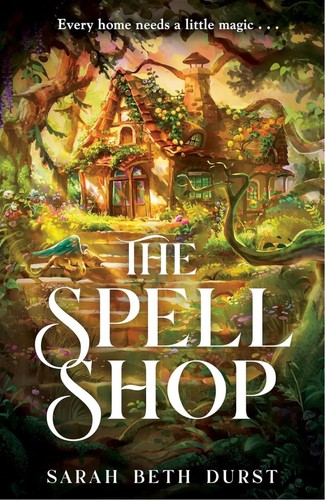
Sarah Beth Durst’s The Spellshop (2024) is cottage industry with a conscience. A librarian flees with a sentient plant and starts selling jam that is also slightly illegal magic. The island has weather. The revolution has leftovers. The charm is logistical: spells as recipes, recipes as risk.
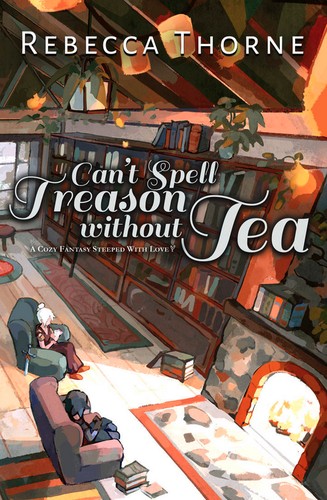
Rebecca Thorne’s Can’t Spell Treason Without Tea (early 2020s, depending on edition) is desertion as a floor plan. People with dangerous imperial jobs open a tea-and-book shop. Romance is in the room. The cozy move is still the change of employment. You can want both. You do not have to pretend the kettle is the only character.
A house that needs a teacher
Sangu Mandanna’s The Very Secret Society of Irregular Witches (2022) is the other floor plan. Mika Moon is a solitary witch, hired not to sell anything but to live at Nowhere House and teach three young witches how to keep their magic from becoming a household disaster. The job is care with a timetable: lessons, a remote estate, children whose power is a daily responsibility, adults already trying to keep the rooms standing. Belonging happens. The cozy mechanism is still the work of inhabiting a place: tuition, meals, the ordinary gravity of being answerable for someone smaller than you. Magic here is relational labor, not a menu. It is not a coffee shop with extra rain. The genre is allowed that job too.
Ancestors who will not fit the pastry palette
Diana Wynne Jones’s Howl’s Moving Castle (1986) is the older cousin everyone tries to claim. Sophie, a curse, a walking fortress, a fire demon with a contract. It is domestic in the sense that laundry and hats matter. It is not “low stakes.” Calcifer is not a latte art. Miyazaki’s 2004 film is a different object with its own weather; the Miyazaki essay owns that workshop. Keep the Jones book here as proof that whimsical houses predate the bookstore category. Do not file it as cafe-core.
Becky Chambers’s A Psalm for the Wild-Built (2021) is a tea monk and a robot in the wild, asking what a person needs. That is comfort with a philosophical spine. It is also solarpunk’s neighbor, not a cinnamon-roll clone. Point. Do not steal the ecological essay.
T. J. Klune’s The House in the Cerulean Sea (2020) is an orphanage, a caseworker, and administrative cruelty dressed as care. Warmth, yes. The locked found-family page already keeps that book as a chosen-crew exhibit. Mention it so the cozy searcher is not gaslit. Let that essay keep the case file.
Katherine Addison’s The Goblin Emperor (2014) is a half-goblin on a throne, kindness as a political technology. It is often recommended beside cozy shelves because readers finish it feeling less destroyed. It is still a court novel. Honesty means saying so.
Kay O’Neill’s The Tea Dragon Society (2017) is a graphic novel about raising small dragons who grow tea on their horns. Gentle craft, memory, apprenticeship. It earns a look if you wanted pictures with the kettle.
What the category is for
Cozy fantasy fails when it is only the absence of gore. It works when magic has been given a domestic problem that still has friction: a recipe, a rumor, a roof, a lesson, a household that has to remain standing, a town that might not want a new smell on the high street.
The souvenir is a reassignment. Next time a fantasy cover promises “low stakes,” ask what the protagonist’s new job is, and whether the world is allowed to remain standing if they do it well. The best cozy fantasy books are not naps. They are workplaces with wonder still on the clock.