Halloween got the plastic skeleton. Midwinter got the better ghost.
In The Winter’s Tale, a boy asks for a story and is told that a sad tale is best for winter, one of sprites and goblins. Shakespeare is not inventing a marketing season. He is noticing a habit. When the year thins and people stay in one lit room, the mind reaches for something that can use the dark without pretending the dark has gone away.
Modern shops have trained us to file the supernatural under late October. The older northern calendar filed it under the longest nights. Christmas, in that older weather, was not an argument against fear. It was a date when fear could be invited in, seated, and sent home before the fire died.
Why the Hearth Wanted a Spectre
A winter room is a small climate.
Labor that belongs to fields and roads has less to do. The household contracts toward whatever can be heated. Light comes from things that move: a coal fire, a candle, later gas that still flutters. Furniture at the edge of the circle becomes unreliable. A wardrobe is a wardrobe until the flame ducks, and then it is a possible shoulder.
None of that requires a theory of the soul. It only requires a body that has been looking at the same few objects for too many hours. The ghost story is what you do with surplus attention and a visible border between warm and not-warm. The tale makes the border interesting. It also makes the circle of heat feel like a decision rather than a default.
Agricultural Europe had other midwinter customs, church calendars, and older night-visiting figures that do not all collapse into one origin myth. The useful fact for a reader is simpler. People already knew how to be spooked in December. Print later gave that knowledge a shop window.
Dickens Turns a Custom into a December Product
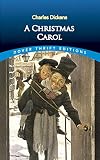
In December 1843, Chapman and Hall published Charles Dickens’s A Christmas Carol. Later adaptations have sanded it into a redemption comedy with extra snow. The novella itself is a ghost story with a payroll. Marley arrives first as a face in a knocker. Chains drag. The dead walk a London that will not let them help anyone. The moral landing is real, and so is the frost.
Dickens understood that the season had an appetite. Through Household Words and later All the Year Round, he made the Extra Christmas Number a recurring machine: a special issue you bought because December had a hole in it. Writers such as Wilkie Collins, Elizabeth Gaskell, and Amelia B. Edwards were asked for stories designed to be read aloud when the household was already in one room. The ghost became a periodical genre, not only a folk leftover. You could fail to keep a folk custom and still keep a subscription.
That is the Victorian contribution: not the invention of winter fear, but the industrialization of a December evening. You could buy the shiver in wrappers, take it home, and perform it.
If you read A Christmas Carol for this tradition, read it as the thing it was sold as. The sentiment is the aftertaste. The visitations are the meal.
A Cambridge Room, One Candle
The other English master of the winter telling did not work primarily for a family magazine.
M. R. James, medievalist, cataloguer of manuscripts, later Provost of King’s College, Cambridge, and later still of Eton, began in the 1890s to try new stories on friends and students at Christmas. The ritual, as it has come down, is almost embarrassingly practical. Rooms at King’s. A fire. Most of the lights out. A manuscript read aloud, sometimes with the pauses a listener would fill with a noise.
James’s published craft belongs to another Journal page: the whistle, the mezzotint, the quiet scholar who touches the wrong object. What belongs here is the social fact. He treated Christmas Eve as a laboratory for spoken fear. Ghost Stories of an Antiquary (1904) is what happens when those entertainments leave the room and become a book you can hold without the college.
The BBC later made a habit of putting James on winter television. Jonathan Miller’s Whistle and I’ll Come to You appeared in 1968. Lawrence Gordon Clark’s A Ghost Story for Christmas films followed in the 1970s. The medium changed. The date did not. Britain still knows, at some level, that December is allowed to be unnerving.
Henry James understood the same frame from the other side of the Atlantic. The Turn of the Screw (1898) opens as a holiday-house entertainment: a manuscript produced after other ghost stories have been told by the fire. The novella then refuses to behave like a fireside treat. That refusal is part of its quality. It uses the Christmas gathering as a doorway and then locks it.
A Small Winter Shelf
A recommendation page in this territory should not pretend every supernatural book is a Christmas book. The question is whether the volume can survive being read in a lit room while the year is ending.
Dickens is for readers who want the full Victorian apparatus: fog, bells, money, and a ghost that has a job. If you only know the story from a musical, the original prose will feel colder and more exact.
M. R. James is for readers who want the tale to begin in a library or a church chest and end with something that has texture. If you want the stories themselves taken apart, go to the James essay. If you want the December ritual in portable form, start with Antiquary.
Henry James is for readers who can tolerate ambiguity as the scare. It is not cozy. It is a Christmas frame around a problem that will not resolve into costume.
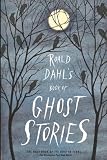
Roald Dahl’s Book of Ghost Stories (1983) is the odd one on purpose. Dahl read widely and kept little. The anthology is a winter sampler for someone who wants several voices in one evening rather than a single author’s climate. It does not replace Dickens or either James. It keeps the shelf from becoming a monument.
Read them aloud if the room will stand it. These stories were built for breath and interruption. Silent reading still works. The fire is optional. The sense of a border is not.
The Dark That Makes the Room
The winter ghost story is not a paradox and it is not a branding accident.
It is what a culture does when the calendar forces people into one lit pocket of a large cold building and then leaves them there with memory, weather, and extra hours. Dickens sold that pocket. James performed it. Later television remembered the date.
The point of inviting a spectre in December is not despair. It is contrast. A story that knows how to use the dark makes the remaining coal look like a fact worth keeping.