A carriage door slams shut at a wrought-iron gate as the afternoon light fails across the moors. The master of the house is sharp-tongued, clearly keeping vigils in a drafty gallery three corridors away. Every locked door in the north wing is quietly advising you to turn back.
Love enters anyway. That refusal to turn back, not the ruins, not the weather, is the actual engine of gothic romance, and it’s why the genre has survived two centuries of fashion changes intact.
The House Is Not Scenery
What separates real gothic romance from ordinary period melodrama is that the estate has a metabolism of its own. Thornfield, Manderley, High Place, Mount Mellyn: each one channels weather into sound through its own drafty corridors, keeps ancestral disapproval on the walls in portrait form, and physically contains (in a locked room, an attic, a cellar) the specific crime the plot exists to uncover. The newcomer has to out-navigate the house itself before they can reach the person in it.
Two things travel with that architecture in every strong entry in the genre: a secret carrying real legal, social, or supernatural weight (never a manufactured misunderstanding), and an isolation (sea fog, snowbound roads, social exile) total enough that the two leads have no outside court of appeal. Every glance across dinner ends up doing the work an entire subplot would do elsewhere.
Where the Genre Actually Comes From
Jane Eyre (1847) set the terms nobody since has managed to fully escape: a penniless governess arrives at Thornfield Hall with nothing but moral autonomy and a sharp intellect, and her slow, volcanic equality with Rochester across those shadowed corridors is still the standard the rest of the genre gets measured against. Daphne du Maurier’s Rebecca (1938) took the same architecture and turned the ghost into a woman who’s already dead: the nameless second wife arriving at Manderley to find every room still arranged around Rebecca’s memory by a housekeeper who has never once accepted a replacement.
What happened next is the part the genre rarely gets credit for. In 1960, Eleanor Hibbert, writing as Victoria Holt, published Mistress of Mellyn: governess Martha Leigh, the brooding widower of Mount Mellyn, and a first wife whose death doesn’t add up. It became the commercial engine of an entire mid-century paperback boom, spinning off a wave of Gothic romance imprints built on the same Brontë/du Maurier bones but printed fast, cheap, and by the shelf-load for a mass market that couldn’t get enough of the formula. That paperback wave is the direct, unglamorous ancestor of every contemporary gothic romance still being written today: the genre didn’t skip from du Maurier straight to now; it went through decades of drugstore-rack Holt imitators first, and that commercial engine is arguably why the shelf still exists at all.
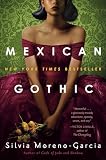
Silvia Moreno-Garcia’s Mexican Gothic (2020) is the clearest recent proof the bones still work: 1950s Hidalgo, a decaying mansion called High Place, a debutante named Noemí Taboada arriving to check on her cousin, and a colonial mining dynasty whose rot is literal as well as moral. It’s Brontë’s architecture with the specific historical violence of British colonial extraction built directly into the house’s foundations, and it’s the strongest recent evidence that gothic romance’s oldest structure (house as antagonist, secret as engine, isolation as pressure) hasn’t aged out of relevance at all.
Reading for the House, Not Just the Romance
The temptation with this genre is to read for the will-they-won’t-they and skim past the architecture. Resist it. The house is doing more narrative work than either lead: it’s the reason the secret stays buried as long as it does, the reason isolation forces the intimacy the plot needs, and, across four very different centuries of these books, the one element that never once needed updating to keep working.