Spread out a sheet of heavy grid paper on a wooden drafting table, uncap a bottle of waterproof black ink, and something remarkable happens to the imagination. You are no longer simply daydreaming a plot; you are constructing an interactive machine of spatial consequence, rule-bound tension, and player curiosity.
When aspiring creators begin studying game design, cartography, or interactive worldbuilding, they are routinely handed software tutorials that expire within three years. They are told which game engine to download, which shader graph nodes to link, or which digital brush packs to install.
Yet when you study the masterworks of veteran level architects, tabletop game masters, and literary cartographers, you quickly realize that software tools are merely temporary scaffolding. The enduring craft of worldbuilding lies in understanding human psychology, spatial pacing, environmental legibility, and the geographic logic of the imagination.
A great fantasy map is not decorative filler tucked before chapter one; it is an engine of narrative promise. A well-designed game mechanic is not a mathematical formula; it is a machine for generating genuine vulnerability, surprise, and agency.
To understand how interactive worlds, tabletop environments, and fictional geographies are brought to life, four masterwork volumes stand as essential cornerstones for any serious creative library.
The Four Cornerstones of the Worldbuilder’s Library
THE FOUR PILLARS OF INTERACTIVE WORLDBUILDING
Psychological Core
Jesse Schell · The Book of Lenses
Emotion, curiosity, and meaning generated inside the player's mind through interactive loops.
Spatial Promise
Huw Lewis-Jones · The Writer's Map
The map as an engine of discovery, geographic covenant, and authorial exploration.
Physical Space
Scott Rogers · Level Up!
Landmarks, weenie beacons, sightlines, combat telegraphing, and environmental wayfinding.
Systemic Life
Tynan Sylvester · Designing Games
MDA framework, procedural friction, resource scarcity, and emergent human pathos.
1. The Art of Game Design: A Book of Lenses by Jesse Schell
The Definitive Philosophy of Player Emotion and Interactive Psychology
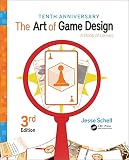
Jesse Schell, a former Disney Imagineer and Carnegie Mellon professor, created what is widely acknowledged as the philosophical masterwork of interactive design. Rather than organizing the book around programming languages or market genres, Schell begins with a fundamental revelation: the game is not the physical board, the software code, or the screen. The game is an intangible emotional experience taking place entirely inside the player’s mind.
To evaluate and refine that mental experience, Schell provides over one hundred distinct perspectives called Lenses. Each lens acts as a diagnostic mirror:
- The Lens of Meaningful Choice: Do the player’s decisions carry real emotional and mechanical weight, or are they cosmetic illusions?
- The Lens of the Inhabited World: Does the world feel like it existed before the player arrived and will continue after they leave?
- The Lens of Curiosity: What unanswered questions are pulling the player forward through the dark?
- The Lens of Essential Experience: What is the single core feeling the experience must deliver, and what unnecessary clutter is diluting it?
For fantasy authors, tabletop designers, and digital worldbuilders, this volume is an unmatched masterclass in how rules evoke wonder. It teaches you to stop thinking like an engineer and start thinking like a host welcoming an honored guest into an uncharted realm.
2. The Writer’s Map: An Atlas of Imaginary Lands by Huw Lewis-Jones
The Literary Map as an Engine of Narrative Promise
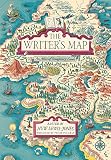
Published in a lavish, heavy clothbound format filled with archival color reproductions, The Writer’s Map is a monumental tribute to the maps that precede chapter one. Editor Huw Lewis-Jones brings together personal essays and original sketches from world-renowned authors including Philip Pullman, Ursula K. Le Guin, David Mitchell, and Robert Macfarlane.
The volume illuminates a profound truth of the creative process: writers frequently do not draw maps to illustrate an already completed story; they draw maps to discover where the story must go.
- Robert Louis Stevenson: On a rainy Scottish afternoon, Stevenson painted an elaborate watercolor island map with his young stepson Lloyd Osbourne, naming harbors and bays. Looking down at the painted coastline, the entire plot of Treasure Island crystallized in his mind. The map created the characters, not the other way around.
- J.R.R. Tolkien: Tolkien famously remarked, “I wisely started with a map, and made the story fit.” His son Christopher Tolkien spent months refining the red-and-black ink maps of Middle-earth, measuring exact marching distances between rivers to ensure the narrative timeline remained physically and geographically airtight.
- Ursula K. Le Guin: Drawing the scattered archipelago of Earthsea allowed Le Guin to balance open sea against landmass, ensuring that island cultures developed distinct linguistic and magical traditions based on their geographic isolation.
From Thomas More’s 1516 woodcut of Utopia to E. H. Shepard’s Hundred Acre Wood, this book shows that a map is a narrative covenant: it tells the reader that every mountain range has a name, every marsh has a boundary, and every journey will be earned.
3. Level Up! The Guide to Great Video Game Design by Scott Rogers
Spatial Architecture, Environmental Wayfinding, and Physical Pacing

Written with sharp humor and packed with hundreds of hand-drawn cartoon storyboards by veteran designer Scott Rogers (whose credits include God of War, Pac-Man World, and Maximo), this handbook demystifies the physical architecture of spaces where players act.
Rogers translates abstract game theory into concrete physical rules that apply equally to 3D video game levels, tabletop dungeon maps, and prose scenes:
- The “Weenie” Principle (Visual Focal Points): Borrowing Walt Disney’s classic Imagineering terminology, Rogers explains how towering architectural landmarks (a ruined spire on a cliff, a smoking volcano, an illuminated clocktower) serve as visual compass needles. They draw the traveler forward through unfamiliar terrain without requiring intrusive floating UI arrows.
- Environmental Wayfinding and Breadcrumbs: How to use lighting contrast, color temperature, trailing vines, broken stone paths, and architectural silhouettes to guide movement subconsciously.
- Combat Telegraphing and Fairness: The physics of readable motion: why enemy attacks must have a clear wind-up phase (anticipation), an impact frame (execution), and a vulnerable follow-through (recovery). A player must always understand why they failed.
Whether you are designing a digital ruin or writing a scene where characters navigate a foggy medieval port, Rogers teaches you how to stage physical space with complete cinematic legibility.
4. Designing Games: A Guide to Engineering Experiences by Tynan Sylvester
Systems Engineering, the MDA Framework, and Emergent Human Pathos
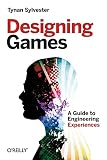
Written by Tynan Sylvester, the creator of the acclaimed survival colony simulation RimWorld, this book provides a rigorous systems-engineering analysis of emergent narrative.
Sylvester tackles the central paradox of interactive storytelling: scripted stories are emotionally precise but rigid, while procedural systems are dynamic but often lack emotional resonance. He dissects how simple mathematical constraints, resource scarcity, and conflicting character traits interact to produce unscripted dramatic narratives that feel profoundly authored.
He examines the Mechanics-Dynamics-Aesthetics (MDA) framework:
- Mechanics: The baseline rules (the decay rate of winter wood, the accuracy curve of an antique rifle, the mood impact of an unburied friend).
- Dynamics: The systemic behaviors that occur when mechanics collide in real time (a storm cuts off electricity, freezing the greenhouse, forcing a desperate decision).
- Aesthetics: The resulting emotional experience in the player (grief, sacrifice, relief, and enduring pride).
Sylvester demonstrates that worldbuilders do not need to script every tragedy by hand. If you construct an ecosystem of delicate rules and genuine friction, the world itself will generate unforgettable human stories.
Building the Architecture of Wonder
When you place these four volumes side by side on your desk, a unifying creative principle emerges: whether you are drawing a mountain pass in black ink on antique cotton paper, placing wooden miniatures on a tabletop grid, or programming a dynamic lighting system for a subterranean crypt, the underlying goal remains identical.
You are building a sanctuary where a human participant can step across the threshold of the familiar, read the landscape, make choices of genuine consequence, and return changed.
To explore further inquiries into spatial storytelling and physical artifacts, read our companion essay on The Art of Fantasy Cartography, study The Storytelling Power of Maps, Letters, and Archival Fragments, and explore our Interactive Cartography Hub.