Here are two facts that do not appear to belong in the same paragraph.
First: a ballad singer in the Scottish Borders could hold hundreds of lines of narrative verse in memory, word-perfect enough to perform on request, without ever having read them from a page. Second: a medieval illuminator, painting the Virgin Mary, kept placing her inside a small walled garden, roses and lilies enclosed by a low stone wall, even when nothing in the biblical text asked for a garden at all.
Both facts describe the same idea wearing different clothes. A ballad stanza and a walled garden are both enclosures: containers built by human beings to keep something precious intact while carrying it through time, one made of meter, one made of stone.
For writers, composers, worldbuilders, and collectors who want to understand this shared craft of containment, we have selected four essential masterworks. Two examine how the human voice encloses a story. Two examine how a wall encloses a landscape. Read together, they describe one instinct working in two different materials.
The Voice as a Container: Oral-Formulaic Memory
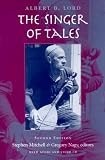
The Singer of Tales by Albert B. Lord
How living oral bards compose monumental verse without a page.
Before Albert Lord and his mentor Milman Parry conducted their landmark fieldwork among South Slavic guslars in the 1930s, classical scholars were locked in a stalemate over Homer: was the Iliad the work of a single literate genius, or a patchwork stitched together by later editors from fragments? Neither answer, it turned out, was correct. Parry and Lord found living singers in the Balkans who could perform epics of ten thousand lines or more, and who had never read a word of them.
The Singer of Tales (1960) explains how. The singers were not memorizing fixed texts word for word, the way a modern actor learns a script. They were composing in performance, using a stocked toolkit of formulaic phrases (“the wine-dark sea,” “swift-footed Achilles”), traditional type-scenes (the arming of the hero, the arrival of the messenger), and metrical templates that let a singer generate a metrically correct line on the fly, the way a fluent speaker generates a grammatically correct sentence without consciously applying rules. The formula was not a crutch for a weak memory. It was the actual machinery of a working, real-time compositional art form, and it is why oral epic sounds the way it does: repetitive, formulaic, built from interlocking modular parts, because those parts are what let the enclosure hold its shape under the pressure of live performance.
- Key Focus: Oral-formulaic composition, mnemonic epithets, South Slavic heroic songs, Homeric scholarship.
- Why It Matters: It demystifies the mechanics of oral storytelling, treating memory as an active, generative craft rather than passive recall.
- Find the Volume: Explore The Singer of Tales on Amazon
The English and Scottish Popular Ballads by Francis James Child
The five-volume catalogue that gave every traditional ballad a number.
If Lord explains the machinery of oral composition, Francis James Child’s monumental collection shows what that machinery actually produced on the ground in Britain and its diaspora. Between 1882 and 1898, the Harvard scholar assembled 305 ballad types drawn from hundreds of variant tellings, “Tam Lin,” “The Twa Sisters,” “Barbara Allen,” “The Wife of Usher’s Well,” sorting the chaotic, regionally scattered folk tradition into a numbered index that folklorists, folk musicians, and songwriters still cite by shorthand today: a version of “Tam Lin” is simply “Child 39.”
What the collection reveals, read as a whole, is how much survives inside the enclosure of ballad form even as the specific words drift from singer to singer, county to county, decade to decade. The refrain returns. The incremental repetition (three brothers asked the same question, three times, with one detail changing) returns. The tragic ending, delivered without editorial comment, returns. The container is stable even when its contents are in constant, living flux, which is the exact opposite of how a printed book behaves, and exactly why ballads survived centuries that destroyed far more official, better-funded literature.
- Key Focus: Traditional ballad taxonomy, incremental repetition, regional variants, the Child-number citation system.
- Why It Matters: Provides direct access to the raw structural units, refrain, repetition, riddle, that make a ballad recognizable across hundreds of unrelated performances.
- Find the Volume: Explore Child’s Ballads on Amazon
The Ground as a Container: Landscape and Enclosure
Landscape and Memory by Simon Schama
How forests, rivers, and stone become vessels for cultural memory.
Simon Schama’s landmark cultural history makes the argument that no landscape is ever simply topography. Every forest, mountain, and river a civilization returns to becomes, over generations, a container for that civilization’s myths, fears, and unfinished arguments with itself, exactly as a ballad becomes a container for a community’s unfinished grief or unresolved warning.
Schama traces how primeval woodland haunted Germanic and British imagination long after the actual old-growth forest had been logged for ships and houses, how sacred water bodies accumulated centuries of votive offerings and ghost stories, and how a single symbolically loaded hill or grove could organize a region’s entire relationship to its own past. For anyone building fictional worlds, or trying to understand why a real landscape feels weighted with more meaning than its geology explains, Schama supplies the missing mechanism: land becomes sacred the same way a story becomes traditional, through repeated, cumulative human attention that the physical container (tree, stone, water, wall) simply holds.
- Key Focus: Cultural geography, mythic forests, sacred stone, romantic wilderness, historical memory.
- Why It Matters: Essential for understanding why physical environments, real or invented, carry symbolic weight disproportionate to their raw material facts.
- Find the Volume: Explore Landscape and Memory on Amazon
The Inward Garden: Creating a Place of Beauty and Meaning by Julie Moir Messervy
The psychological architecture of the enclosed sanctuary.
There is a Latin phrase for what medieval illuminators kept painting around the Virgin Mary: hortus conclusus, the enclosed garden. It comes from the Vulgate Bible’s Song of Songs 4:12, “a garden enclosed is my sister, my spouse, a spring shut up, a fountain sealed,” and by the later Middle Ages it had become inseparable from an entire visual vocabulary: a low stone wall, roses without thorns, a fountain, a unicorn resting quietly inside the enclosure precisely because the enclosure kept out everything that would otherwise have hunted it. The wall was not decoration. It was the whole point. Enclosure was what made the garden a sanctuary rather than merely a plot of ground.
Landscape designer Julie Moir Messervy translates that same instinct into a practical, secular vocabulary for anyone designing real or fictional sanctuary space. She identifies recurring spatial archetypes, the Sea, the Cave, the Harbor, the Promontory, the Enclosed Courtyard, that recur across cultures and centuries because they answer the same underlying psychological needs Schama identifies in a forest and Lord identifies in a formula: the need for a bounded space where something vulnerable can be held safely while the wider world continues its business outside the wall.
- Key Focus: Landscape archetypes, spatial psychology, walled gardens, sensory wayfinding, garden sanctuaries.
- Why It Matters: A practical, structural guide to why enclosure, in a garden as in a ballad, reads as safety rather than confinement.
- Find the Volume: Explore The Inward Garden on Amazon
What the Wall and the Refrain Have in Common
Lay these four books side by side and a pattern emerges that none of them states outright. A ballad refrain and a garden wall are doing the identical job: they mark the boundary of a space where something valuable, a story, a grief, a virtue, a species of flower that could not survive the open field, gets to stay intact.
Here is the test that makes the idea usable rather than merely pretty. Try paraphrasing “Barbara Allen” in your own words, stripped of its refrain and repetition, and something goes missing that has nothing to do with plot: the song becomes a report instead of a wound that reopens on schedule. Now try describing a hortus conclusus without its wall: a bed of roses is just a bed of roses, no longer a place a unicorn, or a griever, or a secret, could actually be safe. Paraphrase either one and the container breaks, and what leaks out is the exact thing the form existed to protect.
That is worth carrying into any creative practice that touches memory or landscape. The next time a story resists being paraphrased, or a garden feels more like a room than a yard, ask Lord’s and Messervy’s question at once: what wall is doing the holding here, and what is it holding in?
To explore more curated literary recommendations and physical editions, visit our Books Catalogue, browse our critical inquiry into Why Some Stories Need to Be Sung, or walk through The Walled Garden.